Author: Fritz Oberlin

  • Lederer’s CIC 39mm: When Stubbornness Meets Genius

    Lederer’s CIC 39mm: When Stubbornness Meets Genius

    Some watchmakers chase beauty. Others chase sales numbers. Bernhard Lederer? He’s been chasing a problem that’s frustrated horologists for literally centuries. And judging by the CIC 39mm’s selection as an LVMH Watch Prize finalist, he might have actually caught it.

    The Problem Nobody Could Solve

    Let’s talk about the detent escapement. If you’re not a watch nerd, here’s what you need to know: it’s incredibly efficient at keeping time, but it has one massive flaw. At low amplitudes (when the watch is winding down or sitting at odd angles), it becomes unstable. Think of it like a bicycle – great when you’re moving, wobbly when you’re barely pedaling.

    The legends of watchmaking tried to fix this. Abraham-Louis Breguet took a swing at it. George Daniels gave it a shot. Both basically shrugged and moved on. The problem was just too fundamental.

    Lederer, who freely admits he wasn’t born into watchmaking, decided to be the guy who doesn’t know when to quit. Good thing, too.

    The Solution That Took Years (and Probably Some Aspirin)

    After years of failed experiments and recalculations, Lederer realized something crucial: you can’t refine your way out of this problem. You have to completely rethink it.

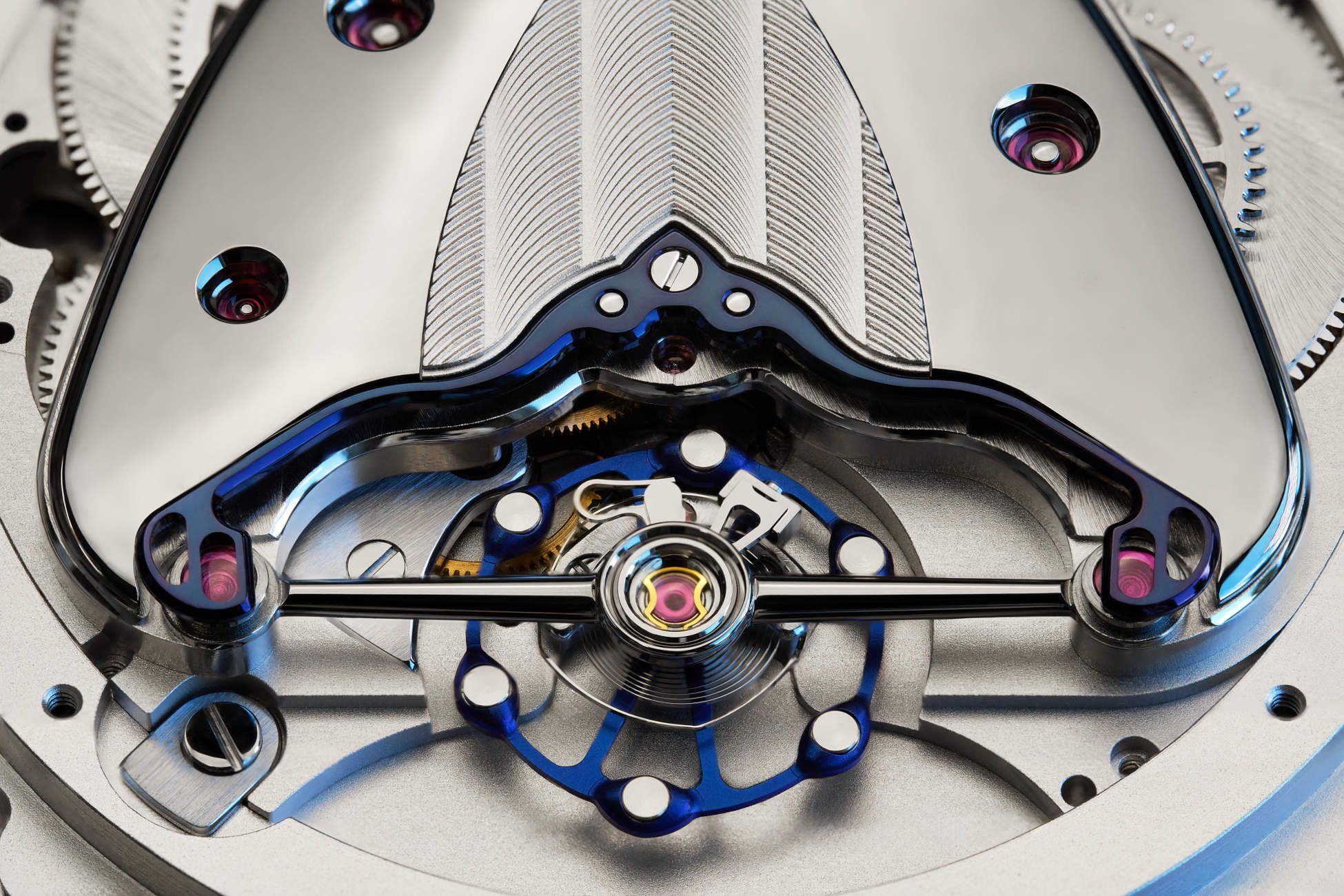
    His answer? Instead of one gear train, use two. Each gets its own constant-force mechanism (a remontoir d’égalité, if you want to sound fancy at dinner parties). The two escapement wheels alternate their impulses with exact regularity. And here’s the clever bit – at the heart of it all sits a “metronome,” a small regulating organ that keeps everything coherent even when the watch is running low on juice.

    It’s the kind of solution that seems obvious only after someone brilliant figures it out.

    A Watch That Wants to Teach You

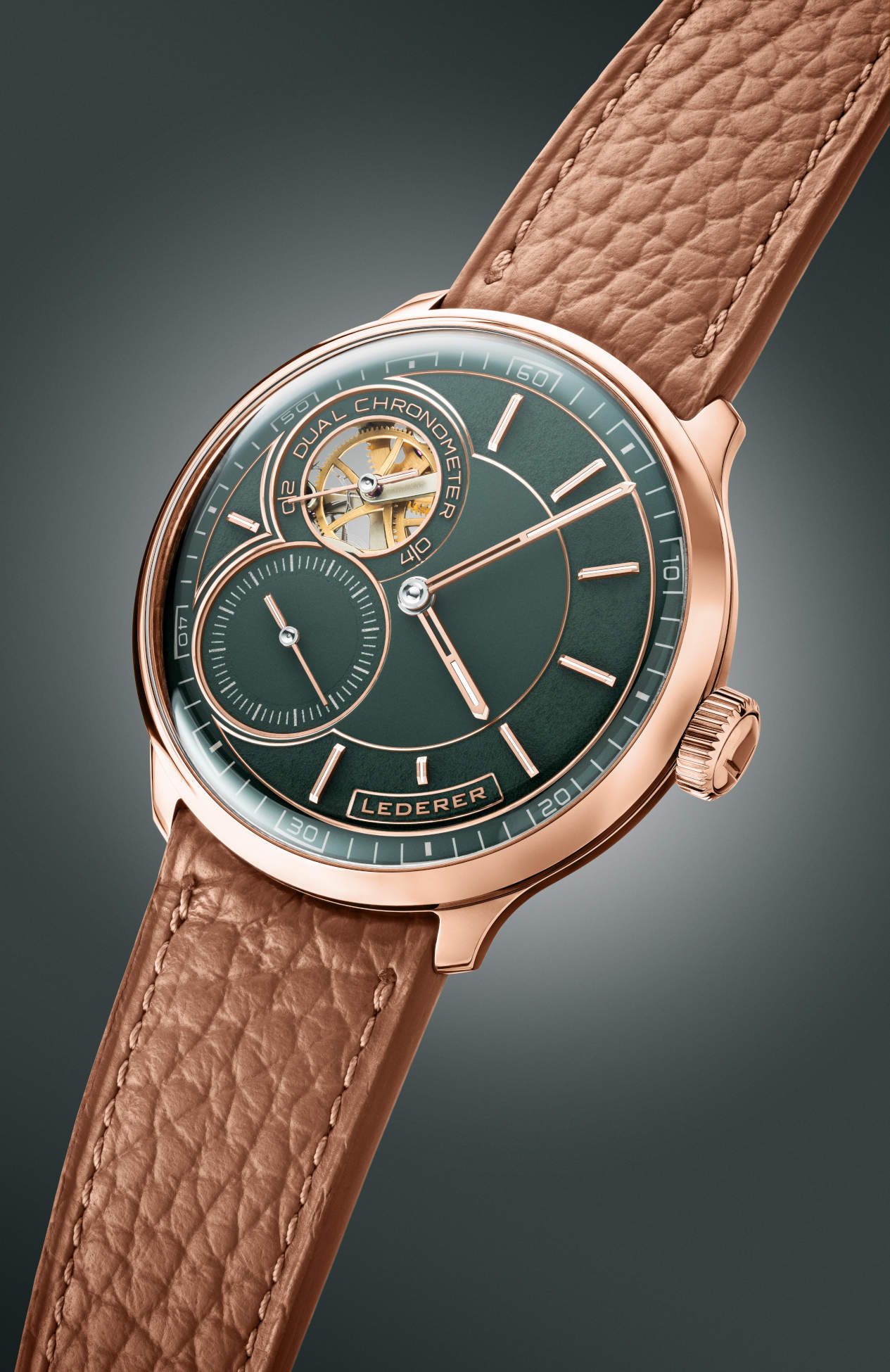
    The CIC 39mm isn’t trying to hide its complexity under a pretty dial. Quite the opposite. Lederer designed it to be readable, almost like an open textbook. You can actually see how the energy flows through the movement, how the mechanisms interact. There’s even an aperture at 10 o’clock where you can watch the remontoir doing its thing.

    This is intentional. Lederer believes watchmaking should be “a living knowledge,” not a secret handshake. The movement has 212 components and 36 jewels, but it’s laid out so clearly that you can actually understand what’s happening. That’s harder to achieve than it sounds.

    Racing Green with a Story

    The version that caught the judges’ attention comes in racing green, inspired by Lederer’s vintage Sunbeam car. It’s a matte sandblasted finish that doesn’t throw reflections in your face, set in a 39mm rose gold case. The domed sapphire crystal gives you this immersive view into the movement below.

    The whole package sits on a handcrafted calfskin strap in matching green, with a rose gold pin buckle. It’s the kind of design where every choice serves the mechanics first, and somehow that makes it more beautiful, not less.

    The Philosophy Behind the Gears

    What makes Lederer interesting isn’t just the technical achievement. It’s his whole approach. He thinks innovation should solve real problems, not just add complications for the sake of looking impressive. He believes aesthetics should come from the honesty of the structure, not from piling on decoration. And he’s convinced that knowledge should be shared, not hoarded.

    “A mechanism must solve a real problem,” he says. “If it doesn’t, it remains an idea, not watchmaking.”

    That’s refreshingly direct in an industry that sometimes mistakes complexity for sophistication.

    The Bottom Line

    The CIC 39mm runs at 3 Hz with a 38-hour power reserve. It’s water-resistant to 30 meters (so maybe don’t go diving with it, but a little rain won’t hurt). It’s hand-wound, which means you’ll interact with it daily – and given how interesting the movement is, that’s probably a feature, not a bug.

    Is it the prettiest watch you’ll ever see? Maybe not. But it might be the most intellectually honest. In an age where “innovation” often means adding another subdial or using a trendy color, Lederer actually solved a problem that stumped the giants of horology.

    Sometimes stubbornness pays off. Especially when it’s paired with genius.

  • Czapek Closes Its Anniversary Year with a Hidden Message

    Czapek Closes Its Anniversary Year with a Hidden Message

    After throwing quite the party in 2025 with three impressive releases, Czapek is wrapping up its double anniversary celebration with something special: the Quai des Bergues “Sursum Corda.” And true to form, they’ve hidden a secret in plain sight.

    This year marks 180 years since François Czapek, the original master watchmaker, set up shop in Geneva back in 1845. It’s also been a decade since the brand was revived by modern enthusiasts in 2015. To celebrate, Czapek has released four timepieces throughout the year – the Antarctique Tourbillon, the Antarctique Plique-à-Jour, the Time Jumper, and now this elegant dressy piece that brings everything full circle.

    A Secret Worth Finding

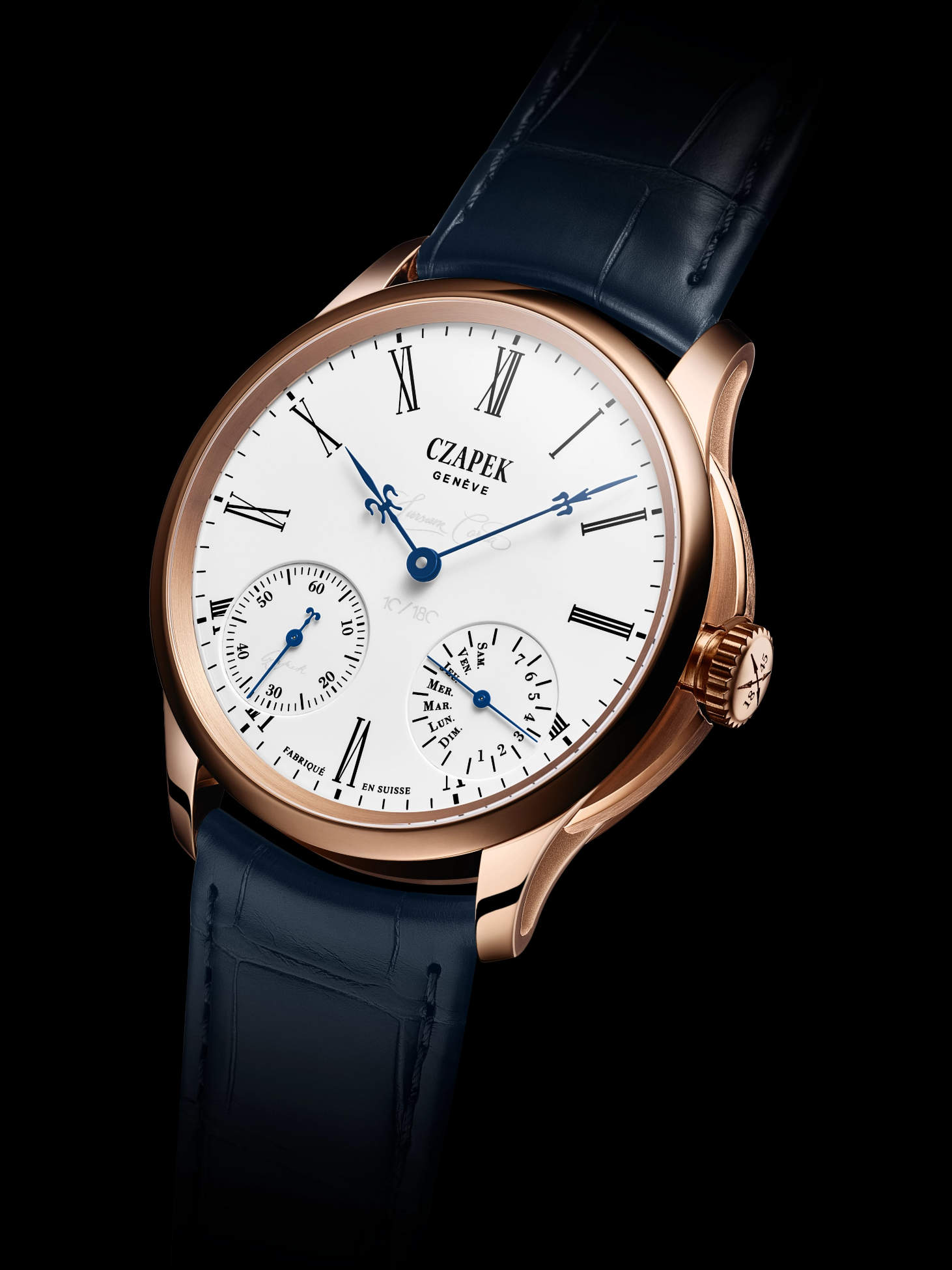
    The “Sursum Corda” (Latin for “Lift up your hearts”) takes the classic Quai des Bergues design and adds layers of hidden meaning. The most intriguing detail? The phrase “Sursum Corda” itself is secretly integrated under the white enamel dial. You can only see it when light hits the surface at just the right angle. It’s like a personal mantra hiding in your watch.

    This isn’t just fancy marketing speak, either. CEO Xavier de Roquemaurel apparently used this phrase during the toughest moments of rebuilding the brand. One team member suggested putting it on the anniversary piece, and here we are. It’s a reminder about resilience and never giving up – even when things look impossible. (If you know the reference, you know.)

    The dial also features a laser-engraved “10 / 180” logo marking both anniversaries, plus another secret: François Czapek’s actual signature reproduced from Geneva archives, tucked inside the small-seconds subdial at 4:30. For a watch that looks so clean and minimal at first glance, there’s a lot going on once you start looking closer.

    The Technical Bits

    The 40.5mm rose gold case houses Czapek’s manual-winding calibre with a double barrel setup that delivers a full seven days of power reserve. That’s 168 hours between windings, which is genuinely practical. You can wind it on Sunday morning and forget about it until next weekend. This actually echoes old 19th-century practice when pocket watches were wound after church service.

    The movement architecture draws inspiration from those Victorian-era pocket watches – symmetrical layout, open ratchets, the whole nine yards. But it’s finished to modern haute horlogerie standards with circular-graining, hand-chamfered bridges, and sand-blasted surfaces.

    The dial follows the original Quai des Bergues recipe: elongated Roman numerals on a white grand feu enamel surface, with those distinctive dual off-center sub-dials. It’s a look that connects directly to the 1850s pocket watch (reference 5350) that inspired the modern collection when it launched in 2015.

    Not Just an Anniversary Piece

    Here’s the interesting part: Czapek isn’t just making a limited anniversary run. They’re also introducing updated versions of their regular Quai des Bergues models. The new N° 33 comes in rose gold with white enamel, while the N° 25 pairs stainless steel with enamel.

    Both models get enhanced finishing and personalization options. You can choose between historical “Fleur-de-Lys” hands or contemporary arrow designs. Want your own secret sentence written in the enamel? They’ll do that too. The sub-dial at 4:30 cleverly shows both power reserve and the day of the week, making that seven-day movement more useful.

    The 40.5mm size becomes the new standard for the collection, replacing the previous 42.5mm and 38.5mm options. It’s a smart middle ground that should work for most wrists while maintaining the watch’s elegant proportions.

    Why It Matters

    The original Quai des Bergues 33bis won the Public Prize at the 2016 Grand Prix d’Horlogerie de Genève, proving that people responded to this blend of historical authenticity and modern craftsmanship. That’s still the game plan here – just refined and focused.

    For a brand that started as a 19th-century success story, disappeared, and then got resurrected by passionate enthusiasts, putting hidden messages about resilience into an anniversary watch makes perfect sense. It’s not just commemorative – it’s personal.

    The “Sursum Corda” and its companion models will be available through Czapek’s retailers, their Geneva flagship, and online. Whether you’re drawn to the hidden messages or just appreciate a beautifully made dress watch with serious power reserve, this is quite a way to close out an anniversary year.

  • De Bethune’s Quest for Perfect Timekeeping: Twenty Years of Making Watches Tick Better

    De Bethune’s Quest for Perfect Timekeeping: Twenty Years of Making Watches Tick Better

    If you’ve ever wondered why your mechanical watch loses a few seconds here and there, you’re not alone. The folks at De Bethune have been obsessing over this question for two decades, and they’ve come up with some pretty clever solutions.

    Since 2002, master watchmaker Denis Flageollet has been on a mission: make watches that keep better time in the real world, not just when they’re sitting still on a test bench. Because let’s face it, your watch spends most of its life on your wrist while you’re gesturing during conversations, typing furiously at your keyboard, or accidentally bumping into door frames.

    Starting with the Heart

    De Bethune began where it matters most – the balance wheel and hairspring. Think of these as the watch’s heartbeat. If the heart isn’t healthy, nothing else matters.

    Their first innovation was a hairspring with a flat outer curve. Regular hairsprings can get wonky when you move your wrist around or when the watch takes a knock. De Bethune’s design keeps things more centered and stable, like a gymnast with better balance. The result? The watch stays more accurate even when life gets bumpy.

    Then they tackled the balance wheel itself. They built it with a titanium core and white gold weights around the edge – like putting all the heavy stuff at the rim of a bicycle wheel. This design increases what engineers call “moment of inertia” while keeping the whole thing light. Translation: it’s harder to disturb, so it keeps ticking steadily even when you’re waving your hands around.

    Triple Protection

    Next up was shock protection. De Bethune created what they call the “triple pare-chute system” – a three-point shock absorber that cradles the balance wheel. It’s like giving your watch’s most delicate part its own suspension system. The balance wheel stays put where it should, maintaining accuracy even after impacts.

    Silicon Makes Everything Better

    In 2009, De Bethune redesigned the escapement (the part that makes that lovely tick-tock sound) using silicon for the escape wheel. Silicon is both lightweight and springy, which means less friction and better efficiency. They also optimized the tooth shape so everything slides smoothly instead of banging together. More energy saved, less wear and tear.

    Getting Personal

    Here’s where things get really interesting. In 2022, De Bethune launched the “Sensorial Chronometry Project.” If you buy their DB28GS Grand Bleu, you can wear a special test watch packed with sensors for two weeks. This watch records everything – your movements, positions, shocks, even temperature and humidity.

    Back at the workshop, a robotic arm recreates your exact lifestyle conditions to adjust your actual watch. It’s like having a suit tailored, but for timekeeping. Your watch gets a personalized report and performs optimally for how you actually use it, not for some imaginary average person.

    Making Their Own Springs

    This year, De Bethune took the ultimate step: making their own hairsprings from scratch. Most watchmakers buy hairsprings from suppliers who make them to standard specifications. But De Bethune wanted control down to the micron level.

    By producing hairsprings in-house, they can fine-tune everything – thickness, height, how tightly it’s coiled – to match each specific balance wheel and calibre. As Flageollet puts it, “A few microns here or there” can push precision even further.

    Lessons Learned

    De Bethune isn’t afraid to admit when something doesn’t work. Their 2012 Résonique project explored high-frequency silicon springs but hit limitations. The system wasn’t truly free-oscillating and remained temperature-sensitive. Rather than force it, they concluded that the traditional balance-and-hairspring system from 450 years ago still has room for improvement.

    The Bottom Line

    After twenty years, eight patents, and 31 calibres, De Bethune has built a comprehensive approach to chronometry. They’re not chasing certifications or marketing claims. They’re solving the actual problem: making watches that keep excellent time on your wrist, not just in laboratory conditions.

    It’s watchmaking driven by genuine curiosity and technical passion. And in an industry sometimes obsessed with heritage and tradition, it’s refreshing to see a brand focused on making old technology work better for modern life.

    Because at the end of the day, a beautiful watch that can’t tell time accurately is just expensive jewelry.

  • When Three Layers Beat One: Louis Erard and Worn & Wound Reimagine the Regulator

    When Three Layers Beat One: Louis Erard and Worn & Wound Reimagine the Regulator

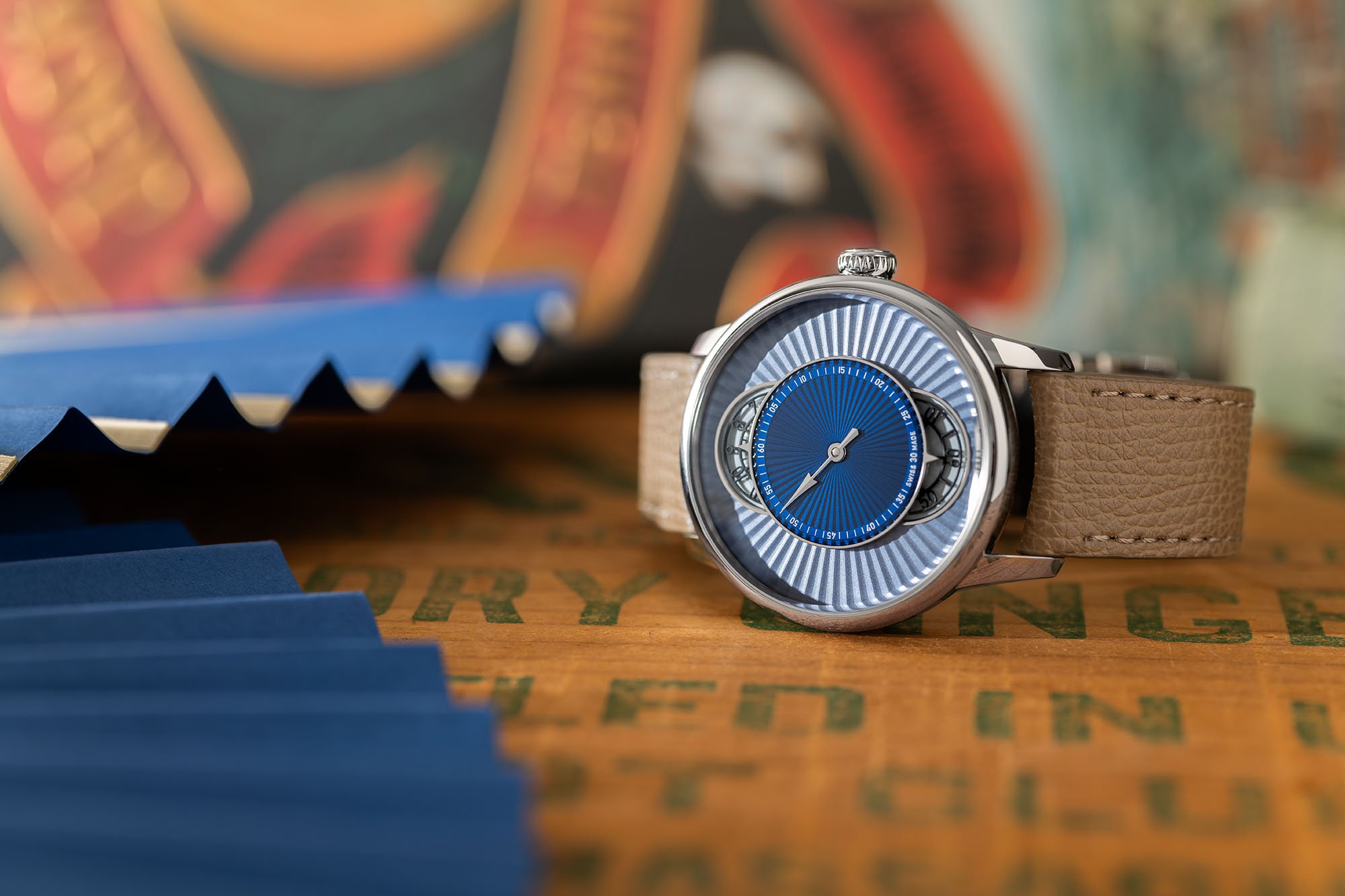
    There’s something delightfully stubborn about the regulator format. While most watches settled on the sensible idea of putting all hands in the center, regulators insist on scattering hours, minutes, and seconds across the dial like guests at an awkward dinner party. It’s quirky, it’s unconventional, and it’s exactly the kind of canvas that makes designers either run away screaming or lean in with excitement.

    Louis Erard and Worn & Wound clearly chose the latter.

    After three years of development (yes, three years – shortcuts were apparently banned from this project), the two have produced Le Régulateur Louis Erard x Worn & Wound, a watch that treats the regulator layout not as a constraint but as an invitation to play with depth, texture, and color.

    Layers Upon Layers Upon Layers

    The star of this show is undoubtedly the dial, which stacks three distinct layers like a very sophisticated cake. At the bottom sits a cool, near-white base that serves as the stage. Here, skeletonized disks displaying hours and seconds appear to float, their openwork construction creating a sense of airiness.

    The middle layer belongs to the minutes, rendered in fluted light blue that occupies the center of the dial. It’s subdued enough not to fight for attention but textured enough to catch the light beautifully. Then comes the top layer, a deep lacquered cobalt ring that circles the dial’s perimeter, marked with crisp white numerals and indexes. This is where your eyes naturally land first.

    The interplay between these layers creates something genuinely interesting to look at. As the skeletonized disks rotate underneath, their numerals and markings align with raised elements from the elevated minute frame. It’s like watching a mechanical ballet where the dancers are numbers, and honestly, that’s more entertaining than it has any right to be.

    The Fir Tree Takes Center Stage

    Anchoring this three-ring circus (said with affection) is a bold, polished minute hand inspired by Louis Erard’s signature “fir tree” design. It’s sculptural, it’s substantial, and it does the important job of keeping everything from feeling too busy. Sometimes a strong central element is exactly what a complex dial needs, like a good moderator at a heated debate.

    The way you read time here is cleverly simple despite the unconventional layout. The minute hand does its thing in the center, while you glance at the rotating disks for hours and seconds. It sounds complicated on paper but makes perfect sense on the wrist, which is the hallmark of good design that doesn’t sacrifice usability for aesthetics.

    The Rest of the Package

    Louis Erard housed this creation in their 39mm polished steel case, featuring a bowl-shaped mid-section and straight lugs. It’s a size that works for most wrists without feeling cramped or oversized. The proportions are classical without being stuffy.

    Inside ticks the Swiss-made Sellita SW266-1 automatic movement, modified for the regulator layout. With 31 jewels, 28,800 beats per hour, hacking seconds, hand-winding capability, and a custom Louis Erard rotor, it’s a solid workhorse with respectable specs. The 50 meters of water resistance means you can wash your hands without anxiety, though maybe save the swimming for another watch.

    A 20mm pebbled taupe leather strap completes the package, complementing those tonal blues on the dial without trying to steal the spotlight.

    Why It Matters

    Manuel Emch from Louis Erard called it “one of my favorite Louis Erard editions to date,” while Zach Weiss from Worn & Wound described it as “utterly beautiful.” When both parties in a collaboration are this genuinely enthusiastic, it usually means something went right.

    What makes this partnership interesting is the shared philosophy. Louis Erard has built a reputation for making elements of high horology accessible without cutting corners on quality. Worn & Wound, as a media outlet and community, champions thoughtful design and independent spirit. Put them together for three years, let them obsess over details, and you get a watch that “touches on the traditional while being entirely distinct.”

    The watch will be produced in an edition of up to 99 pieces. The first 50 are available exclusively through the Windup Watch Shop, both online and at their Brooklyn showroom. The remaining 49 will only be assembled if demand warrants it, which is a refreshingly honest approach in an industry sometimes prone to artificial scarcity.

    In a world where many collaborations feel like marketing exercises, this one feels like two parties actually sat down, argued about details, and sweated the small stuff. And those three layers? They’re not just showing off. They’re doing exactly what good watch design should do: making you look twice.

  • BUBEN&ZORWEG Opens New Manufaktur: Where Safes Meet Swiss Precision

    BUBEN&ZORWEG Opens New Manufaktur: Where Safes Meet Swiss Precision

    When you think about watch companies, you probably picture Switzerland, right? Maybe some romantic workshop in the Alps where old masters squint at tiny gears. Well, BUBEN&ZORWEG just threw a curveball. This German brand, known for making some of the most sophisticated watch winders and high-security safes in the world, has just opened a brand-new manufaktur in Pforzheim, Germany. And it’s not your average factory.

    Black Forest, Big Ambitions

    Pforzheim sits at the gateway to the Black Forest, which sounds like the beginning of a fairy tale. But there’s nothing fantastical about the 5,000 square meter site that now houses BUBEN&ZORWEG’s latest creation. The facility itself spans 2,500 square meters of purpose-built space, designed from the ground up to embody what the brand calls its three guiding principles: German engineering, fine craftsmanship, and extraordinary design.

    Now, if you’re thinking “wait, what’s a watch winder company doing with a manufaktur?” – fair question. BUBEN&ZORWEG isn’t your typical horological player. They’re the folks who make sure your automatic watches keep ticking when you’re not wearing them, housed in safes so secure they could probably withstand a small apocalypse. Think of them as the intersection between haute horlogerie and Fort Knox.

    Architecture That Actually Makes Sense

    Here’s where it gets interesting. The building itself is divided into three distinct sections, and this isn’t just some architect’s whim. The layout actually reflects how the company works. At the heart of the facility is the handcrafting space, where all the artistic magic happens. On one side, you’ve got engineering and design. On the other, logistics. It’s like a physical manifestation of the creative process: dream it up, make it beautiful, ship it out.

    This setup isn’t just smart on paper. It reinforces what BUBEN&ZORWEG calls “the flow between innovation, creation and delivery.” In other words, the people designing wild new safe concepts can walk over and chat with the craftspeople who’ll actually build them. No endless email chains, no game of telephone between departments. Just pure, efficient German problem-solving.

    More Than Just a Factory

    The facility includes a Private Showroom, which is exactly what it sounds like but probably fancier than you’re imagining. This is where clients can come see bespoke masterpieces that combine high-security storage with watch winder technology. We’re talking about pieces that cost more than most cars and look like they belong in a Bond villain’s lair (in the best possible way).

    The manufaktur represents what BUBEN&ZORWEG calls a “new benchmark” in their field. That’s marketing speak, sure, but when you’re building a 2,500 square meter facility from scratch, you’d better be setting some benchmarks. The company specializes in bespoke pieces, meaning each creation is tailored to the client’s specific needs. Want a safe that holds 50 watches, looks like a modernist sculpture, and can survive basically anything? They’ll build it.

    The German Difference

    There’s something poetic about a German company setting up shop in Pforzheim, a city with deep jewelry and watchmaking roots. While they’re not making watches themselves, BUBEN&ZORWEG’s work requires similar precision. Watch winders need to replicate the exact motion of a human wrist to keep automatic movements running smoothly. Too fast, too slow, wrong direction – any of these can damage a delicate timepiece.

    The new manufaktur isn’t just about having more space. It’s about control, quality, and pushing the boundaries of what’s possible when you combine security engineering with horological precision. In an industry where tradition often trumps innovation, BUBEN&ZORWEG is betting that German engineering, applied to the world of haute horlogerie accessories, still has something new to say.

    And honestly? Looking at their new digs, they might be right.

  • UR-FREAK: When Two Watch Rebels Join Forces

    UR-FREAK: When Two Watch Rebels Join Forces

    Sometimes the best ideas happen when you put two creative minds in the same room and see what chaos unfolds. The UR-FREAK is exactly that kind of happy accident – except it’s actually a meticulously engineered collaboration between two Swiss watchmaking mavericks: URWERK and Ulysse Nardin.

    Two Brands, One Wild Vision

    Here’s the setup: Ulysse Nardin, the 178-year-old manufacture that shocked the watch world in 2001 with the original Freak, has teamed up with URWERK, the 28-year-old independent brand known for making watches that look like they time-traveled here from a cooler timeline. This is Ulysse Nardin’s first collaboration with another watch brand, which makes it a pretty big deal.

    Both companies share a rebellious streak. They don’t care much about following trends or playing it safe. URWERK, founded by watchmaker Felix Baumgartner and designer Martin Frei, makes only 150 watches per year and refuses to compromise their wild vision. Ulysse Nardin uses their Freak platform as a “laboratory on the wrist” – a place to test crazy ideas that traditional watchmakers would never attempt.

    So What Makes the UR-FREAK Special?

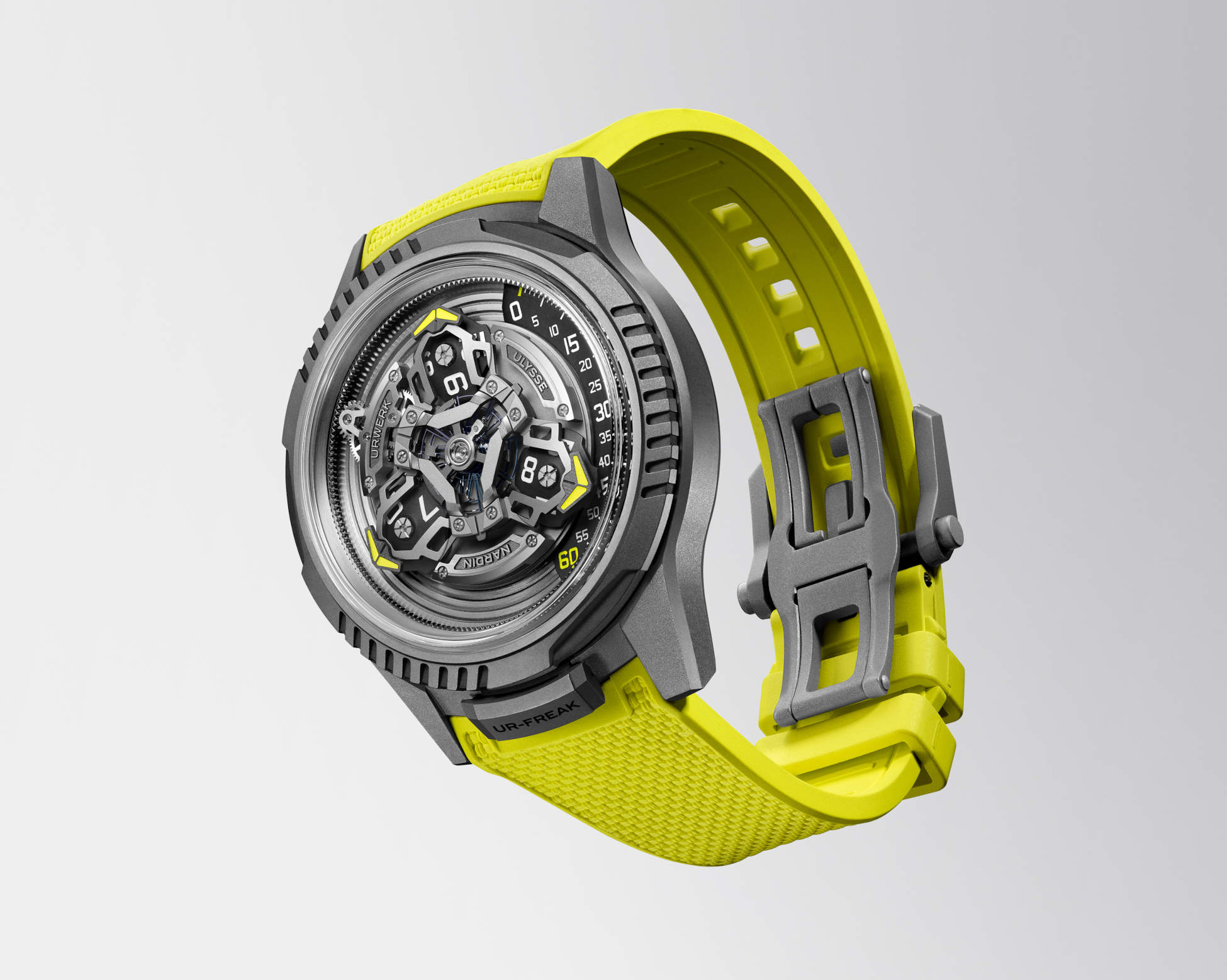
    The UR-FREAK isn’t just a cosmetic mashup where they slap two logos on an existing watch and call it a day. This is a proper technical collaboration with an entirely new movement: the caliber UN-241. It combines URWERK’s signature “wandering hours” satellite display with the rotating movement architecture that made the Freak famous.

    Let me explain how it works without making your brain hurt. Instead of traditional hands, the UR-FREAK has three connected arms that rotate around the dial. Each arm carries a domed disc showing an hour number. As the active arm travels along the 60-minute scale on the right side of the dial, it shows you the current time. When it completes its journey, the hour disc jumps to the next number, and the next arm takes over. The whole system rotates completely every three hours.

    At the center sits an oversized silicon balance wheel – the heart that keeps time. It’s 25% larger than standard versions, positioned right where you can see it beating away. This setup also acts like a carousel, constantly rotating to help reduce timing errors.

    Tech That Actually Matters

    The UR-FREAK packs some genuinely innovative technology. It uses Ulysse Nardin’s Grinder automatic winding system, which is one of the rare real improvements to automatic winding in decades. Traditional automatic systems need a decent amount of movement to wind the mainspring. The Grinder converts even the tiniest wrist motions into energy – much more efficient.

    Then there’s silicon. Ulysse Nardin pioneered silicon components in watchmaking back in 2001, and they’ve been obsessed with the material ever since. Silicon doesn’t care about temperature changes or magnetic fields, it creates almost no friction, and it doesn’t need lubrication. The escapement uses something even fancier: DIAMonSil, which is silicon coated with diamond for extra durability. No other brand has this technology.

    The movement offers 90 hours of power reserve and operates at 3 Hz. It’s housed in a 44mm sandblasted titanium case that screams URWERK – complete with their signature fluted sections and electric yellow accents (Pantone 395 C, for those keeping track).

    The Crown? What Crown?

    Like most Freaks, the UR-FREAK ditches the traditional crown entirely. You set the time by unlocking and turning the bezel, which has a special “UR-FREAK” locker tab at six o’clock. Want to manually wind it? Turn the caseback instead. It’s unconventional, sure, but it creates a clean, streamlined look on the wrist.

    Should You Care?

    With only 100 pieces being made, most of us won’t get our hands on one anyway. But the UR-FREAK matters because it shows what’s possible when creative horological minds work together without compromise. It’s not trying to be subtle or appeal to everyone. It’s a bold statement about independence, innovation, and pushing boundaries.

    In a watch world that sometimes feels too safe and predictable, the UR-FREAK is a reminder that the most interesting things happen when rebels refuse to color inside the lines.

  • L’Epée 1839 Time Fast: When Racing Clocks Get a Patina Makeover

    L’Epée 1839 Time Fast: When Racing Clocks Get a Patina Makeover

    Sometimes the best ideas come from the most unexpected places. For Chris Alexander, aka The Dial Artist, it was during a holiday phone call with the team at L’Epée 1839. The conversation drifted to childhood memories of building model cars, painting miniatures, and the beautiful way time leaves its mark on things. Before long, a new collaboration was born: the “Marks of Time” series.

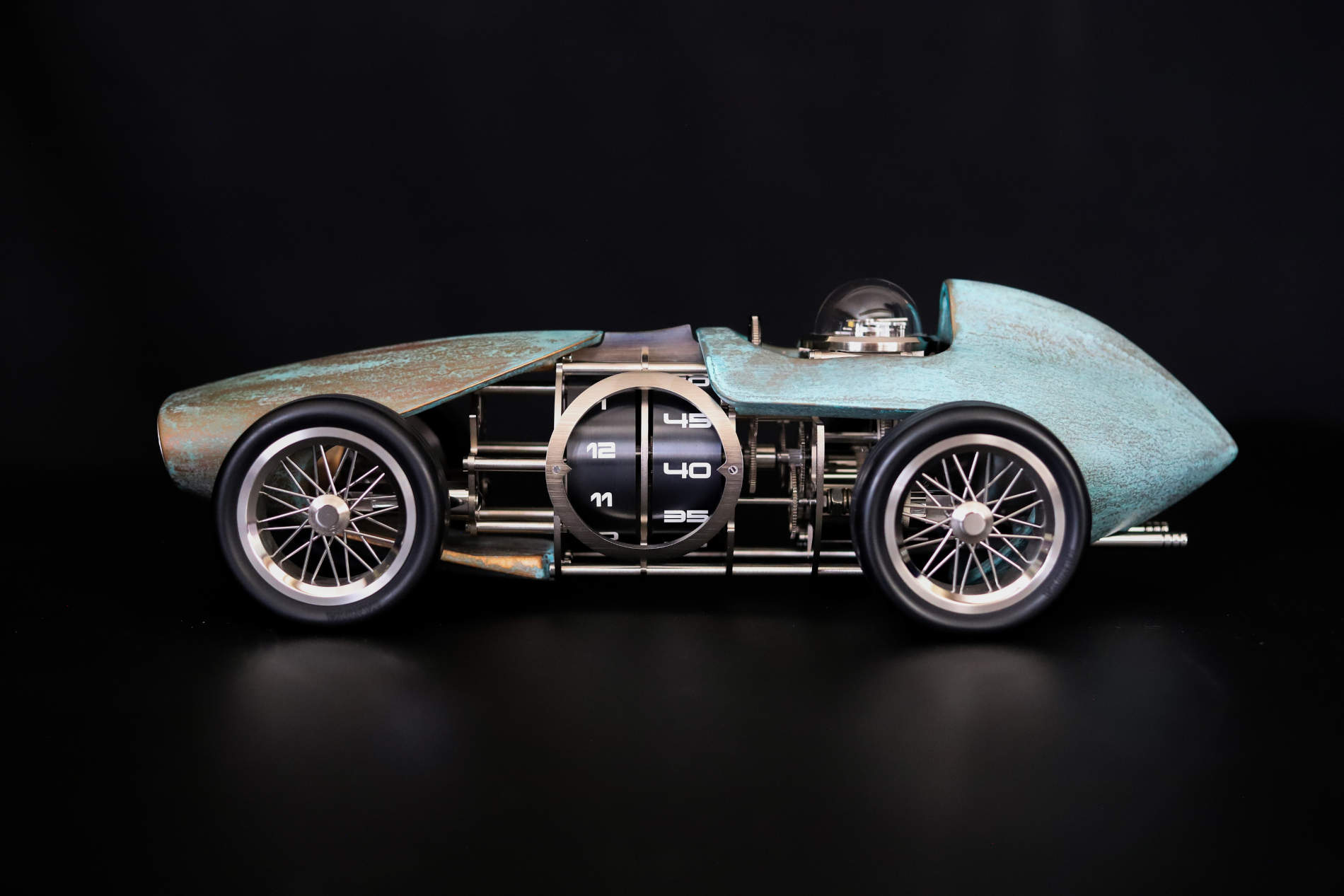
    If you’re not familiar with L’Epée’s Time Fast collection, imagine a vintage Formula 1 car from the golden age of racing – say, 1930s to 1960s – but it’s actually a clock. Not just any clock, mind you, but one that works like those pull-back toy cars you had as a kid. Push it backward, and you wind the eight-day movement. Want to set the time? Turn the three-spoke steering wheel. It’s the kind of thing that makes you grin every time you look at it.

    The Time Fast D8, the first model in the collection, became an instant hit. Its clean lines and understated elegance captured the spirit of vintage racing perfectly. The time displays on rotating disks positioned like a racing number on the bodywork. It sits on an aluminum H-chassis, features handcrafted stainless-steel wheels with actual rubber tires (filled with foam for that authentic squish), and even has a glass dome polished to look like a driver’s helmet protecting the escapement.

    The Time Fast II takes things further with dual movements – one for telling time, another for animating a miniature V8 engine. There’s a functional gear stick to switch between modes, and when you turn the dashboard key, the pistons come alive in a mesmerizing mechanical dance. It’s part timepiece, part sculpture, part toy for grown-ups who never quite grew up.

    Enter the Artist

    Now comes Chris Alexander‘s artistic twist. The Scottish-based artist, who cut his teeth in luxury miniature car modeling, spent years perfecting techniques for creating aged, weathered finishes. Think “barn find” automobiles – those legendary discoveries of forgotten race cars tucked away in old garages, wearing decades of patina like badges of honor.

    For the Marks of Time series, Alexander developed a copper oxidation process that transforms each Time Fast into a one-of-a-kind piece. The bodywork gets coated with several layers of copper-based paint, then oxidized by hand. The result? Every single piece shows unique patterns and color variations. No two are alike, just like no two barn finds have weathered time in quite the same way.

    This isn’t about making something look old for old’s sake. It’s about celebrating the poetry of time itself – how it shapes materials, creates memories, and reveals new layers of meaning. Each mark, each variation in color, tells its own story of endurance and emotion.

    The Technical Side

    Let’s talk mechanics for a moment. The Time Fast houses L’Epée 1839’s in-house movement, good for eight days of running. The movement follows the aerodynamic curves of the bodywork, integrating seamlessly with the design rather than fighting against it. Setting the time is intuitive: turn the steering wheel counterclockwise to set, clockwise to reposition.

    Winding happens through those rear wheels. Roll the car backward, and you’re loading the mainspring barrels. On the Time Fast II, a gearbox lever lets you select which barrel gets wound – a delightful bit of mechanical theater.

    The dimensions are substantial: the D8 measures 385 x 160 x 120 mm, while the Time Fast II stretches to 450 x 189 x 120 mm. These aren’t desk trinkets; they’re statement pieces.

    Materials include palladium-plated brass, stainless steel, and anodized aluminum, finished with a mix of polishing, satin-finishing, and sand-blasting. Alexander’s lacquered bodywork sits atop this precision engineering like a custom paint job on a restored racer.

    Why It Works

    The beauty of the Marks of Time series lies in its contradictions. It’s precise yet weathered, modern yet nostalgic, mechanical yet artistic. It celebrates both the technical perfection of Swiss clockmaking and the organic randomness of natural oxidation processes.

    Alexander describes his work as a collaboration between client, artist, and watch (or in this case, clock). Each Marks of Time piece becomes a unique creation – a frozen moment where racing history, horological craft, and contemporary art meet on your shelf.

    It’s the kind of object that rewards closer inspection, revealing new details each time you look. And isn’t that exactly what time does?

  • Studio Underd0g x Massena LAB: When Champagne Meets Caviar on Your Wrist

    Studio Underd0g x Massena LAB: When Champagne Meets Caviar on Your Wrist

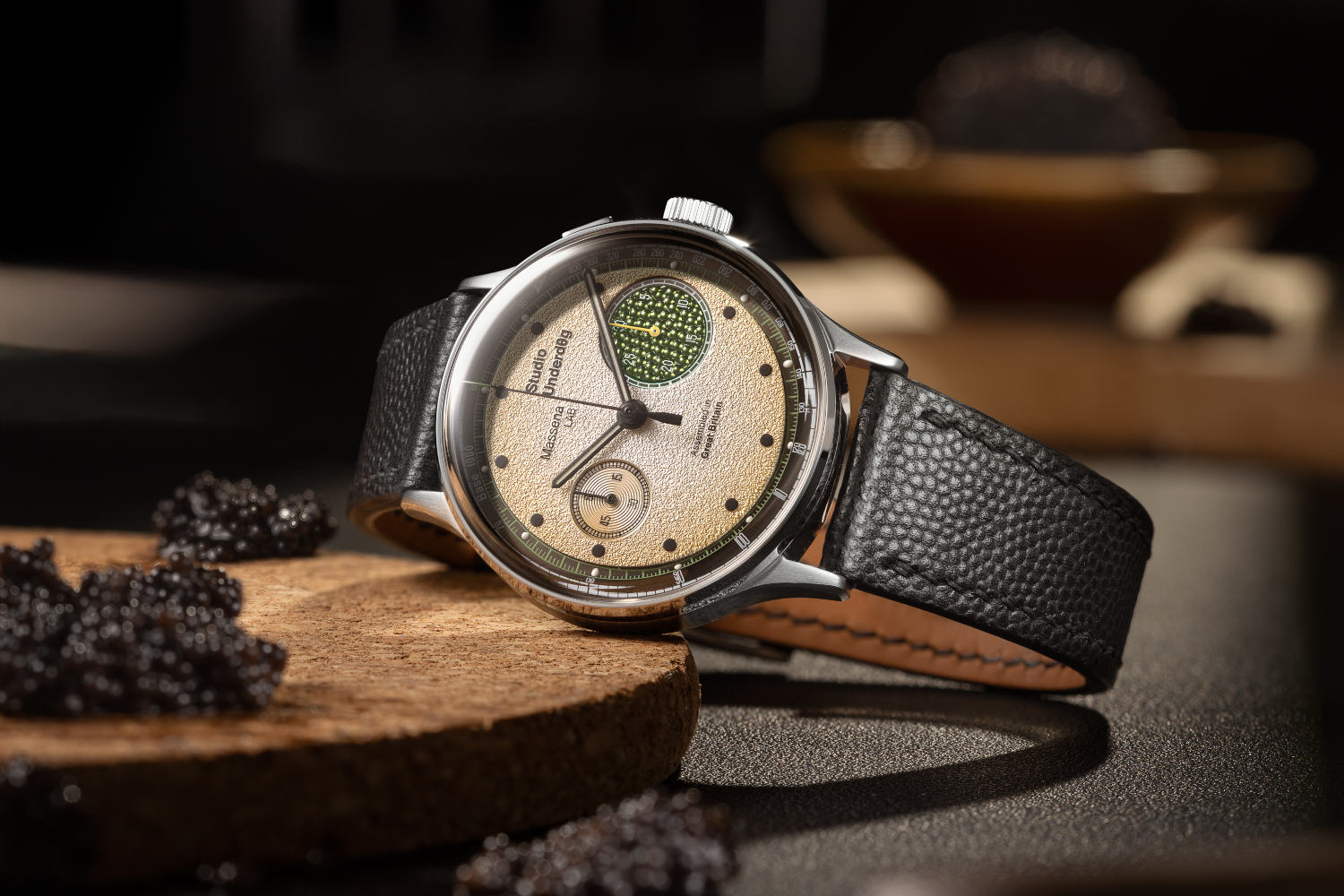
    There’s a new chronograph coming from Studio Underd0g‘s workshop in Maidenhead, and it’s dressed for the fanciest party you’ve never been invited to. The British brand has teamed up with William Massena’s Massena LAB to create a watch that celebrates life’s finer things: champagne, caviar, and the kind of playful design that makes serious collectors smile.

    A Watch That Breaks the Mold

    The 03SERIES Champagne & Caviar isn’t your grandfather’s chronograph, unless your grandfather had exceptionally good taste and a sense of humor. Limited to just 200 pieces, this monopusher chronograph manages to be both elegant and cheeky at the same time.

    The star of the show is the oversized subdial at three o’clock, which has been cleverly machined to look like a generous serving of caviar. It’s the kind of detail that makes you do a double-take. The varied sizes of the subdials could have looked messy, but Studio Underd0g balances everything with strategic co-branding placement, letting the chronograph seconds hand sweep freely across the dial.

    Speaking of that chronograph hand, look closely at its base. There’s a tiny champagne bottle silhouette there, gliding smoothly over the shimmering champagne-toned dial. These little touches show why this collaboration works so well. Both brands understand that great design lives in the details.

    The Heart of the Matter

    Inside the 38.5mm stainless steel case beats the Swiss Sellita SW510 M, a hand-wound monopusher movement that Studio Underd0g first used in their Project Passion collaboration with H. Moser & Cie last year. This isn’t some off-the-shelf caliber, though. The movement features a custom bridge with Côte de Genève finishing in ruthénium anthracite, made exclusively for Studio Underd0g.

    With 63 hours of power reserve and a 28,800 beat rate, it’s a proper mechanical chronograph. The monopusher design keeps things clean, with just one button to start, stop, and reset the chronograph function. There’s also a 30-minute counter and tachymeter scale for those who actually time things (or just like the look of them).

    Why This Partnership Makes Sense

    Richard Benc of Studio Underd0g and William Massena aren’t just business partners on this project. They’ve developed a genuine working relationship since meeting in early 2023. Massena, often called “the collector’s collector,” brings decades of experience and an eye that’s helped shape the modern watch collecting world.

    “Richard and his team aren’t afraid to have a bit of fun with serious watchmaking,” Massena explains. He’s right. Studio Underd0g has built its reputation on rejecting the stuffiness of traditional watchmaking while keeping all the good bits: quality, detail, and craftsmanship.

    The watch comes paired with a handmade pebble-grain calfskin strap from The Strap Tailor, tapering from 20mm at the lugs to 16mm at the buckle. It’s supple, it’s classy, and it complements the watch’s luxurious theme perfectly.

    The Practical Stuff

    At 38.5mm wide and 13.6mm thick, this chronograph wears comfortably on most wrists. The 44.5mm lug-to-lug distance means it won’t overwhelm smaller wrists either. There’s sapphire crystal front and back (the front is double-domed, naturally), and the watch is water-resistant to 5 ATM, which is fine for daily wear but maybe take it off before diving for actual caviar.

    How to Get One

    All 200 pieces launch on November 11th at 3pm GMT exclusively on underd0g.com. They’re priced at £1,750 (about $2,200 USD), which is remarkably fair for a limited edition chronograph with this level of finishing and a custom movement.

    Studio Underd0g promises to deliver all pieces within the month, processing orders on a first-come, first-served basis. Given the brand’s growing reputation and the limited quantity, expect these to move quickly.

    The Champagne & Caviar proves that serious watchmaking doesn’t require a serious attitude. Sometimes the best watches are the ones that make you smile every time you check the time. And if checking the time reminds you of life’s little luxuries? Well, that’s just a bonus.

  • C by Romain Gauthier Carbonium® Edition: Lightweight Innovation in Luxury Watchmaking

    C by Romain Gauthier Carbonium® Edition: Lightweight Innovation in Luxury Watchmaking

    When a watchmaker decides to make a timepiece out of the same stuff that goes into airplane wings, you know they’re not messing around. Romain Gauthier has just released the C by Romain Gauthier Carbonium® Edition, and it’s so light you might want to check your wrist twice to make sure it’s actually there.

    Let’s talk numbers first: this watch weighs 43 grams. That’s including the strap and buckle. For context, a golf ball weighs about 45 grams. So yes, you’re basically wearing air that happens to tell time very accurately.

    The Material That Makes It Special

    The star of this show is Carbonium®, a high-tech carbon fiber composite that French company Lavoisier Composites makes from recycled aerospace materials. Those carbon fibers were originally meant to become part of an airplane, but instead they’re getting a second life on your wrist. The process involves compression-molding these fibers with epoxy resin, creating a material that’s three times more rigid than titanium but twice as light.

    The visual result? A distinctive, dynamic pattern that catches light in interesting ways. Each piece looks slightly different because of how those 50mm-long carbon fibers arrange themselves during molding. It’s like having a unique fingerprint built into the case material.

    A Dial That Doesn’t Hide Anything

    Romain Gauthier decided that if you’re going to build something this technical, you might as well show it off. The dial is made from sapphire crystal with a pixelated pattern that mimics the Carbonium® texture. But here’s where it gets interesting: it’s partially openworked, meaning you can see straight through to the titanium movement beneath.

    The main attraction through this window is the seconds wheel, which showcases the brand’s signature style with decorative circling and polished angles. You can also peek at the escapement assembly, including the balance wheel and pallet fork. It’s like having a technical documentary playing on your wrist, except it’s actually useful.

    The time display itself is deliberately asymmetric, with off-center hour and minute hands at 12 o’clock and small seconds at 7 o’clock. The hour markers are tapered lines of varying lengths, creating what Gauthier calls “vanishing points” that reinforce a sense of continuity. Translation: it looks modern and slightly futuristic.

    The Movement Inside

    Inside beats an in-house manual-winding movement made from Grade 5 titanium. It’s got 60 hours of power reserve and runs at 28,800 vibrations per hour. But the real party trick is the stop-seconds mechanism that uses a snail cam, a design element Gauthier borrowed from his acclaimed Logical One watch.

    Most watches use a simple lever to stop the balance wheel when you pull out the crown to set the time. Gauthier’s snail cam does something cleverer: when you pull the crown, it stops the balance, and when you push it back in, the cam’s spiral shape gives the balance a little push to get it going again. It’s the kind of small technical flourish that separates haute horlogerie from regular watchmaking.

    The movement decoration is pure Romain Gauthier. The bridges feature Carbonium® inserts that echo the case material, creating visual harmony throughout the watch. Everything is finished by hand, with double bevels, straight-graining, and circular-graining where appropriate.

    Making It Your Own

    This isn’t a limited edition, but it is a “Manufacture Only” piece, meaning you can only buy it directly from Romain Gauthier. The upside? You get to customize it. The Super-LumiNova indices and numerals come in white, green, blue, yellow, or orange, and the rubber strap can be color-matched. The Carbonium® pattern on the strap even echoes the case material, because why stop the design language at the lugs?

    The case measures 42mm across and just 9.6mm thick, with the crown positioned at 2 o’clock to avoid stabbing the back of your hand. Faceted edges on the bezel and caseback add visual interest and help manage how light plays across the Carbonium® surface.

    At CHF 58,000 before taxes, this isn’t an impulse purchase. But for that price, you’re getting a watch that weighs less than a handful of grapes, looks like nothing else out there, and contains movement finishing that most people will never see but that you’ll know is there. Sometimes that’s exactly the point.

  • Czapek Celebrates 10 Years with a See-Through Marvel

    Czapek Celebrates 10 Years with a See-Through Marvel

    When most watchmakers turn ten, they might release a special edition in blue or slap an anniversary logo on a caseback and call it a day. Not Czapek & Cie. This Geneva-based maison decided to mark a decade since its 2015 revival by doing something truly bonkers: creating a watch dial that works like a stained-glass window. Welcome to the Antarctique Plique-à-Jour, where “letting in daylight” isn’t just poetic – it’s literally what the dial does.

    A Technique Older Than Your Great-Great-Great-Grandfather

    Plique-à-jour is an enamelling technique that dates back to the Byzantine Empire in the 6th century. The name means “letting in the daylight” in French, which perfectly describes what happens here. Imagine creating a tiny stained-glass window, but instead of leading, you’re using gold cells filled with transparent colored enamel. No backing, no support – just enamel suspended in metal frames, fired at a scorching 900°C and somehow not falling apart.

    This isn’t your average dial decoration. It’s the kind of work that only a handful of workshops worldwide can still pull off. Why? Because everything about it is ridiculously difficult. Each color needs precise formulation to achieve the right hue and transparency after firing. Every single cell must be filled individually, in the correct sequence, to create smooth color gradients. One wrong move during firing and the whole thing cracks. Then comes the polishing – done gently, progressively, like you’re defusing a bomb made of glass and precious metal.

    The Transparency Game-Changer

    Here’s where Czapek’s version gets extra special. Traditional plique-à-jour enamel usually has some opacity because air bubbles form during the process. But the technique used here achieves complete transparency. This means you can actually see through the dial to the movement beneath. It’s like having X-ray vision, except more artistic and less likely to give you superpowers.

    Xavier de Roquemaurel, Czapek’s CEO, explains that this transparency creates “a direct visual connection between art and mechanics.” Translation: you get to watch your watch working while also admiring what looks like a miniature cathedral window on your wrist.

    It Takes a Village

    Creating these dials required a small army of specialists. MD’Art built the metal structure. Bagues-Masriera handled the enamel application and the nerve-wracking high-temperature firing. PBMC took care of the delicate polishing and thickness adjustments, working bit by bit to avoid cracking the enamel. Finally, MD’Art returned for the finishing touches – pad printing, attaching dial feet, and final surface work.

    Every dial emerged from this process slightly different, making each of the ten pieces genuinely unique. Not “unique” in the marketing sense, but actually unique because that’s what happens when you’re working with materials this temperamental.

    The Movement Deserves the Spotlight

    Thankfully, Czapek didn’t pair this transparent masterpiece with a boring movement. Inside beats the Calibre SXH7, a skeletonized automatic movement that looks almost as intricate as the dial itself. Built in their La Chaux-de-Fonds manufacture, it features a micro-rotor made from 100% recycled platinum, mounted on ball bearings for smooth winding.

    The movement shows off 18 internal angles, hand-chamfered edges, sandblasted bridges, and diamond-cut sinkholes – basically, all the finishing techniques that make watch nerds weak in the knees. Running at 4 Hz with a 60-hour power reserve, it’s visible through both the transparent dial and the sapphire caseback. This watch is an exhibitionist in the best possible way.

    Ten Pieces for Ten Years

    Only ten examples of the Antarctique Plique-à-Jour will be made, each carrying the Czapek anniversary logo on the caseback. It’s the second of four special pieces created for this milestone, following the Antarctique Tourbillon launched in April.

    The watch debuts at WatchTime New York 2025, where it will either convince people that traditional craftsmanship still has plenty to say in modern watchmaking, or simply make them wonder why their wrists don’t have tiny stained-glass windows on them yet.

    For a brand that’s only been back for a decade, Czapek is making some bold statements. But when you’re creating dials that required Byzantine-era techniques, collaborative craftsmanship from multiple specialist workshops, and the patience of a saint, bold seems about right.