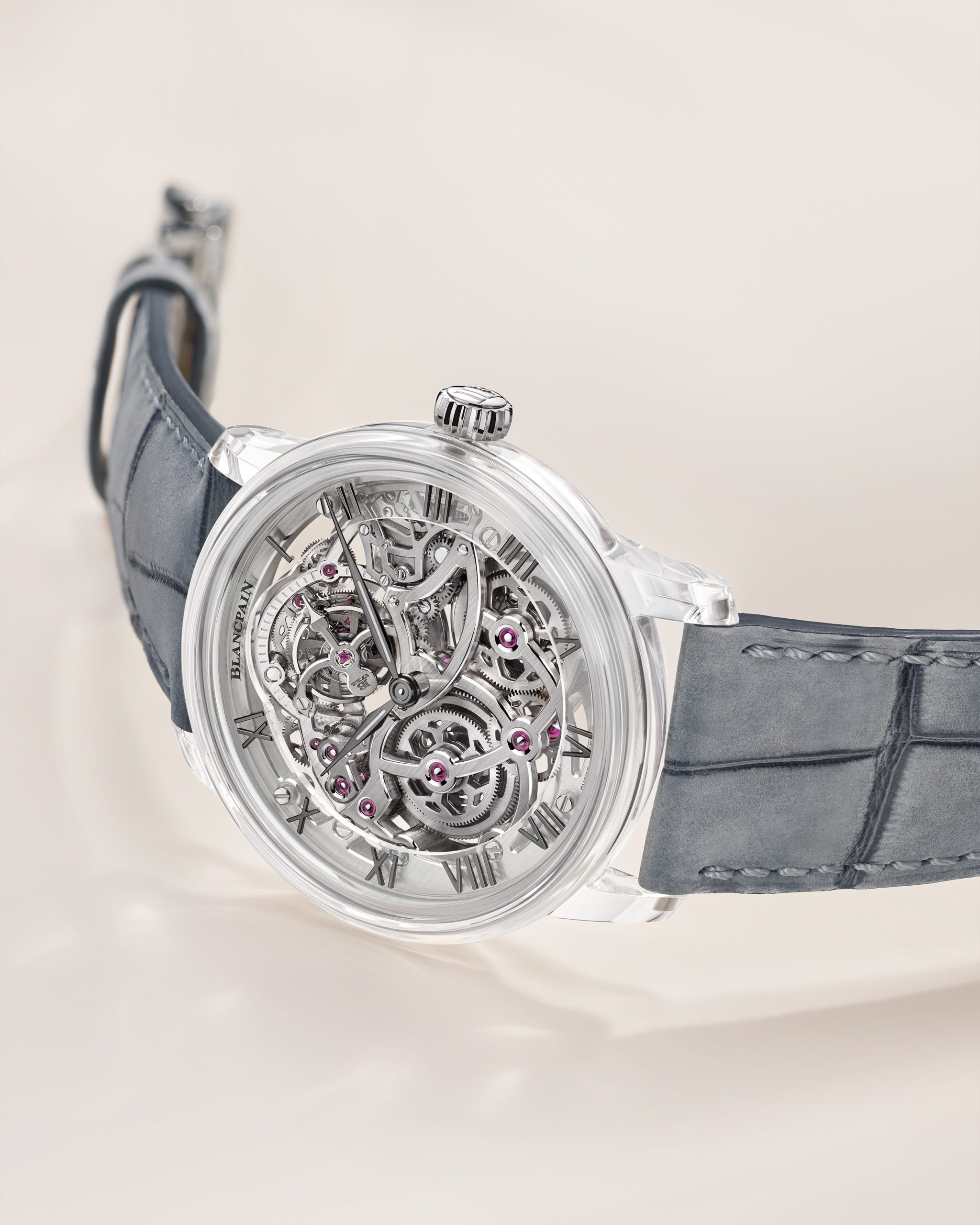
Some people say a slight tilt of the head helps you see things in a new light. Blancpain has taken that idea literally. Its new Carrousel Incliné puts the regulating organ at a 30-degree angle, and it does so for a very practical reason.
A quick history lesson
The carrousel was invented in 1892 by Bahne Bonniksen. It is a cousin of the tourbillon: a cage that carries the balance wheel and slowly rotates, so gravity cannot always pull on it in the same direction. The idea was almost forgotten in the 20th century. Blancpain revived it in 2008 with the first carrousel wristwatch, and it remains the only brand with a whole family of one-minute flying carrousel calibres. So it knows this field well.
Why tilt it?
A normal carrousel spins flat, parallel to the mainplate. That works well when the watch is on your wrist. But when it lies on a bedside table, dial up, the cage just turns in a flat circle, and the regulator sees the same gravity all night. Not very helpful.
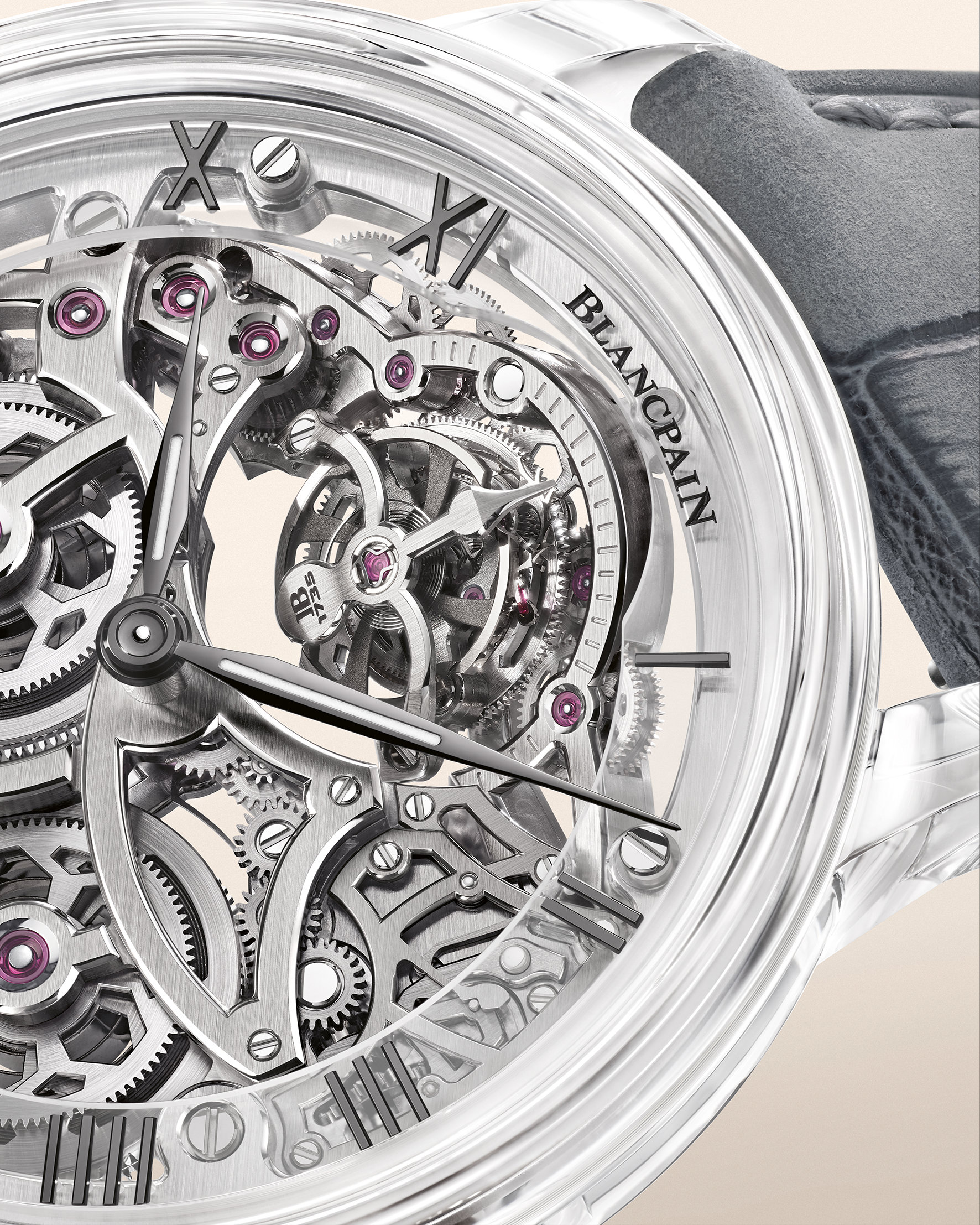
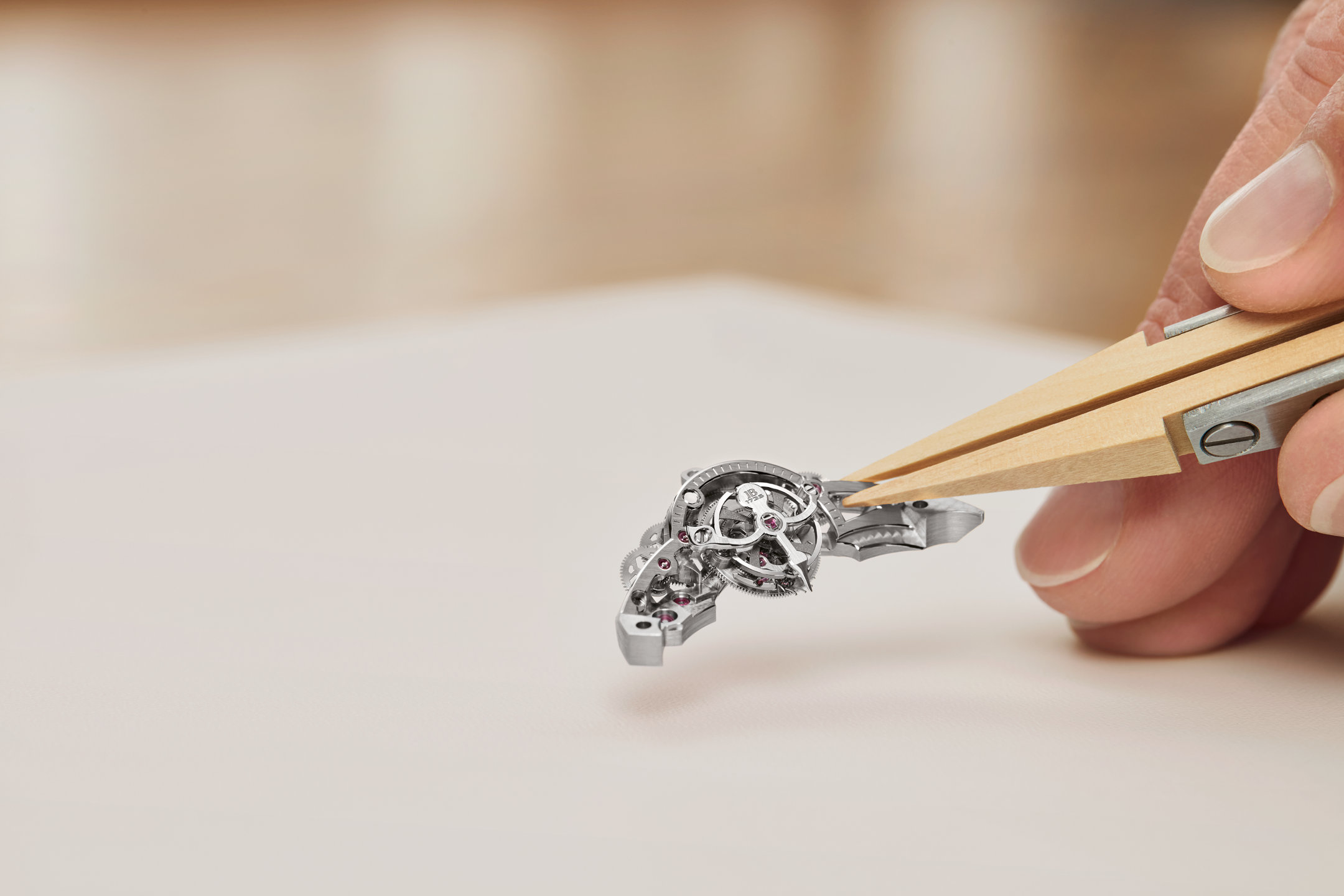
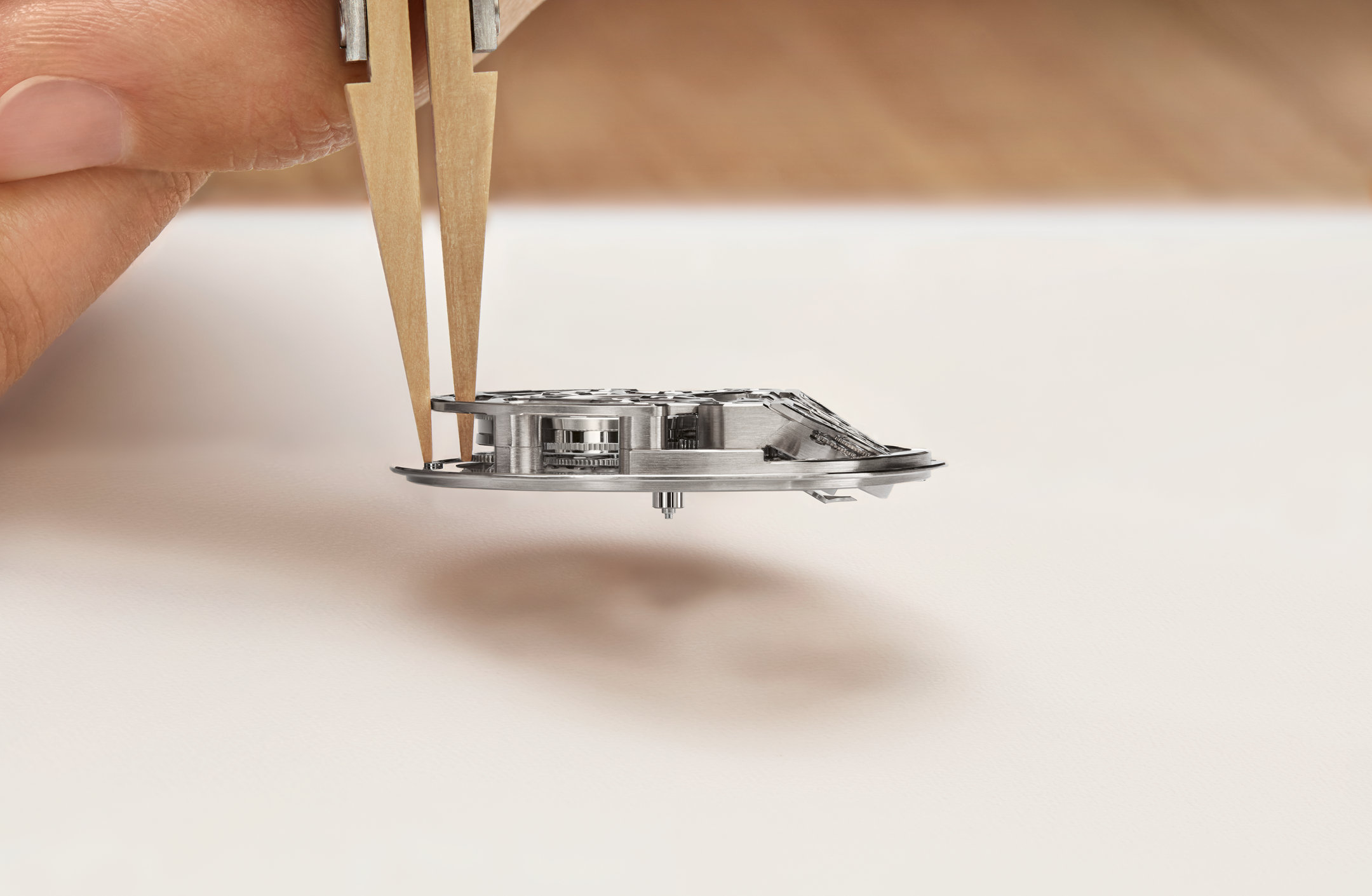
On the Carrousel Incliné, the cage turns on a slanted path. Even when the watch rests flat, the regulator keeps meeting gravity from changing angles, which means positional errors get averaged out. Think of it as a person who never sleeps in the same position twice and wakes up fine anyway.
Blancpain did not simply pick a nice-looking angle. Over four years, its team tested angles from 0 to 35 degrees in 5-degree steps, measuring rate and amplitude in six positions. Variations shrank noticeably between 15 and 20 degrees. At 30 degrees the watch reached a tolerance of 0 to +2 seconds per day, with a good balance of proportions and thinness. That is the angle they chose.
The clever engineering
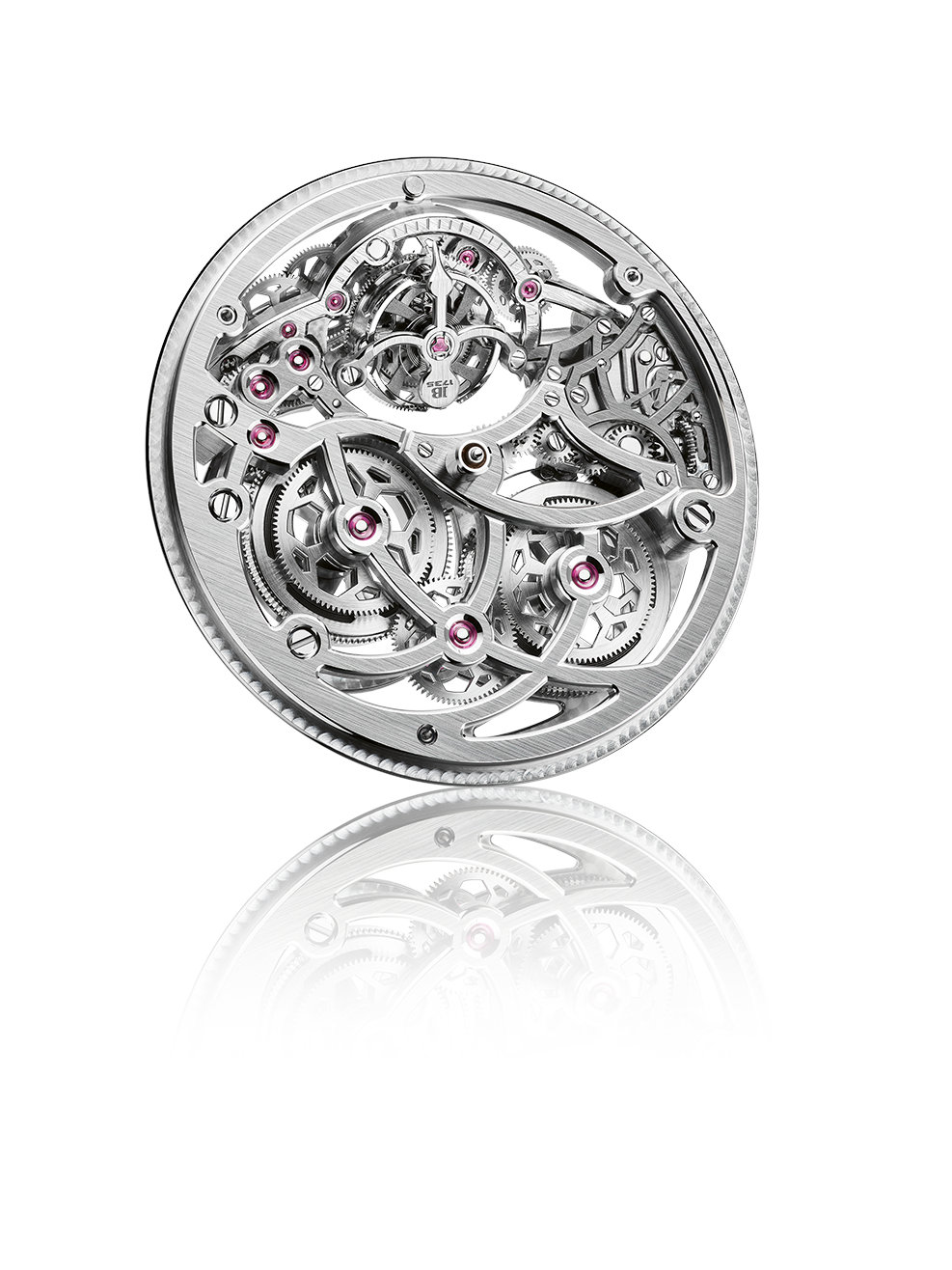
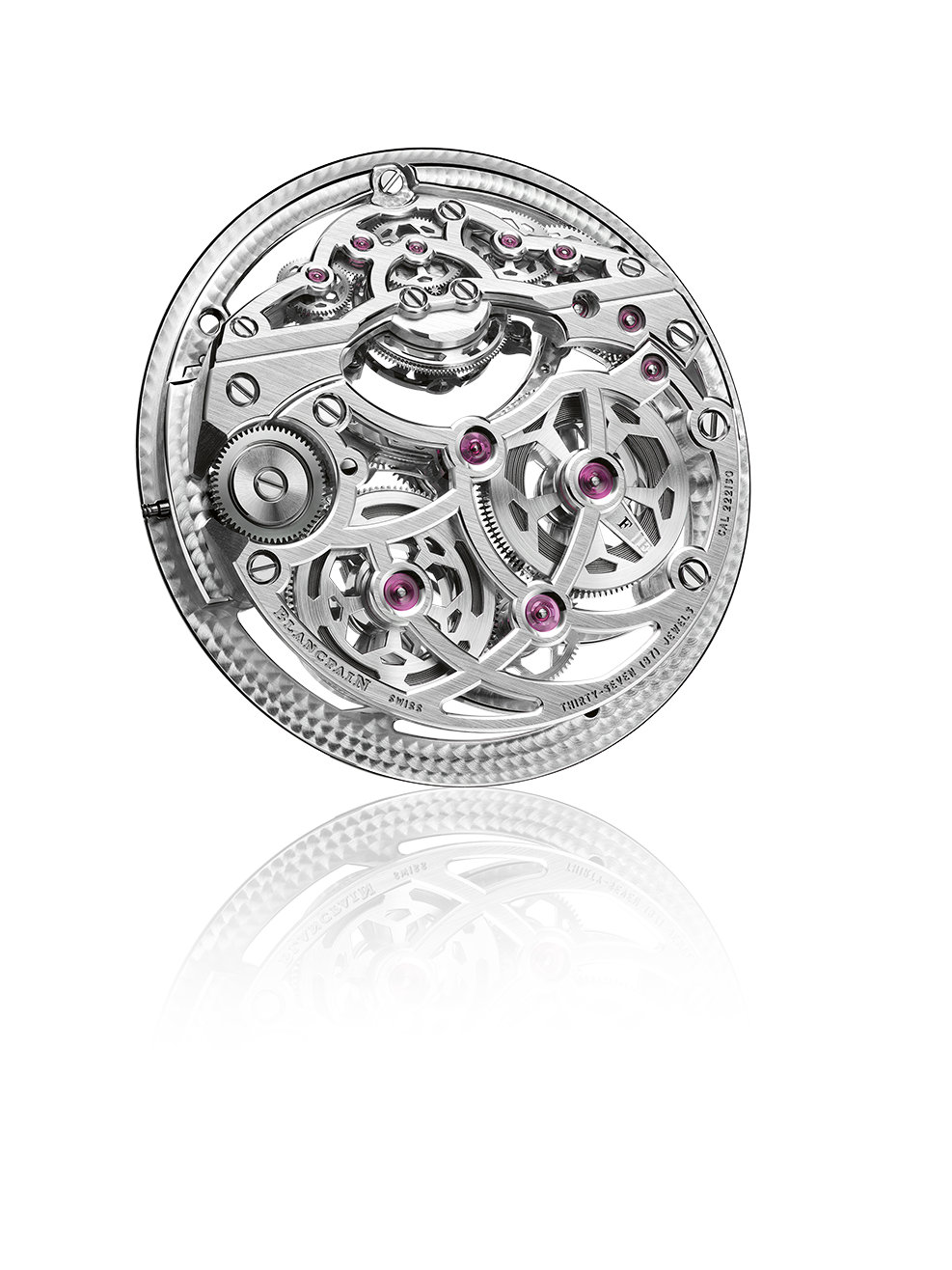
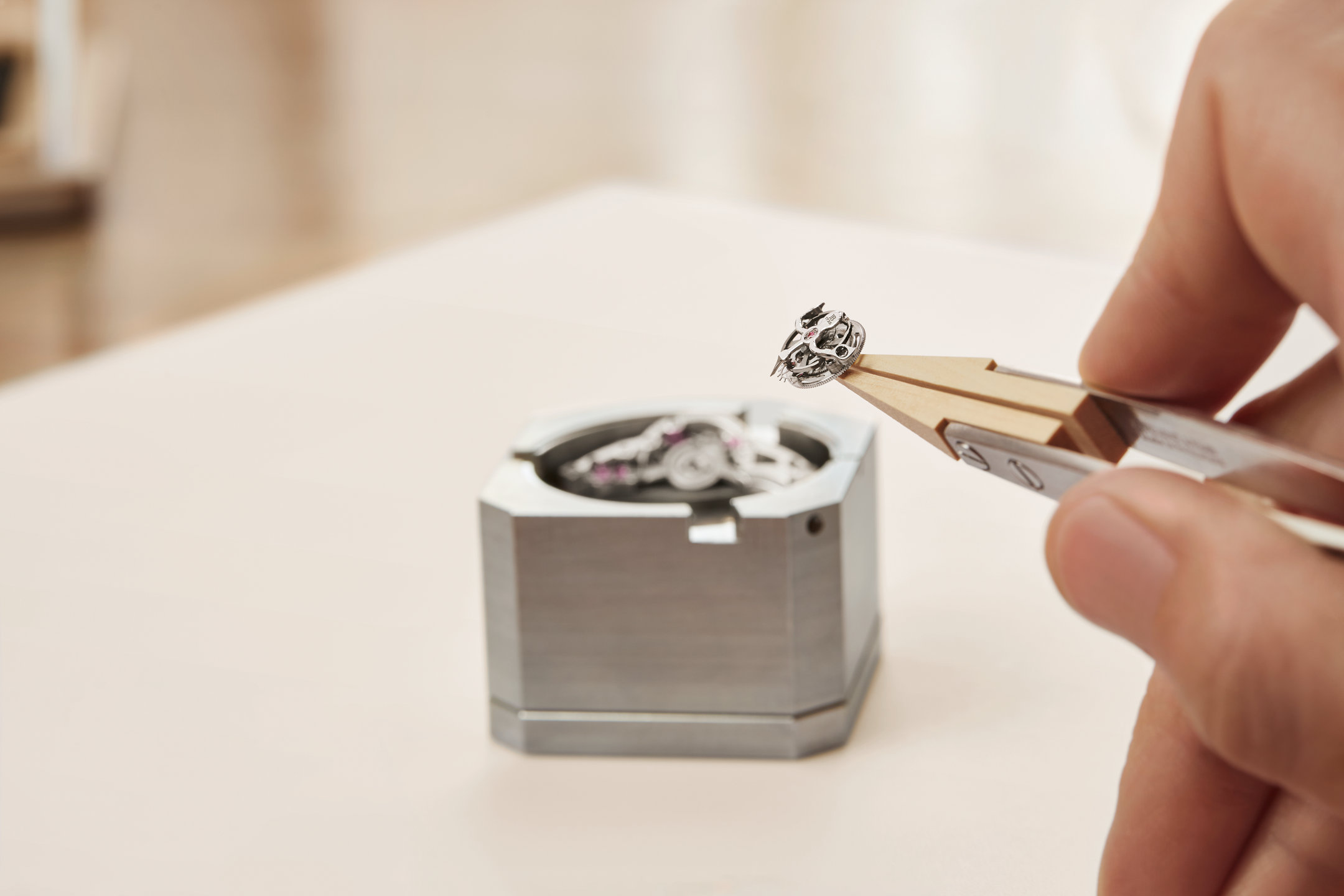
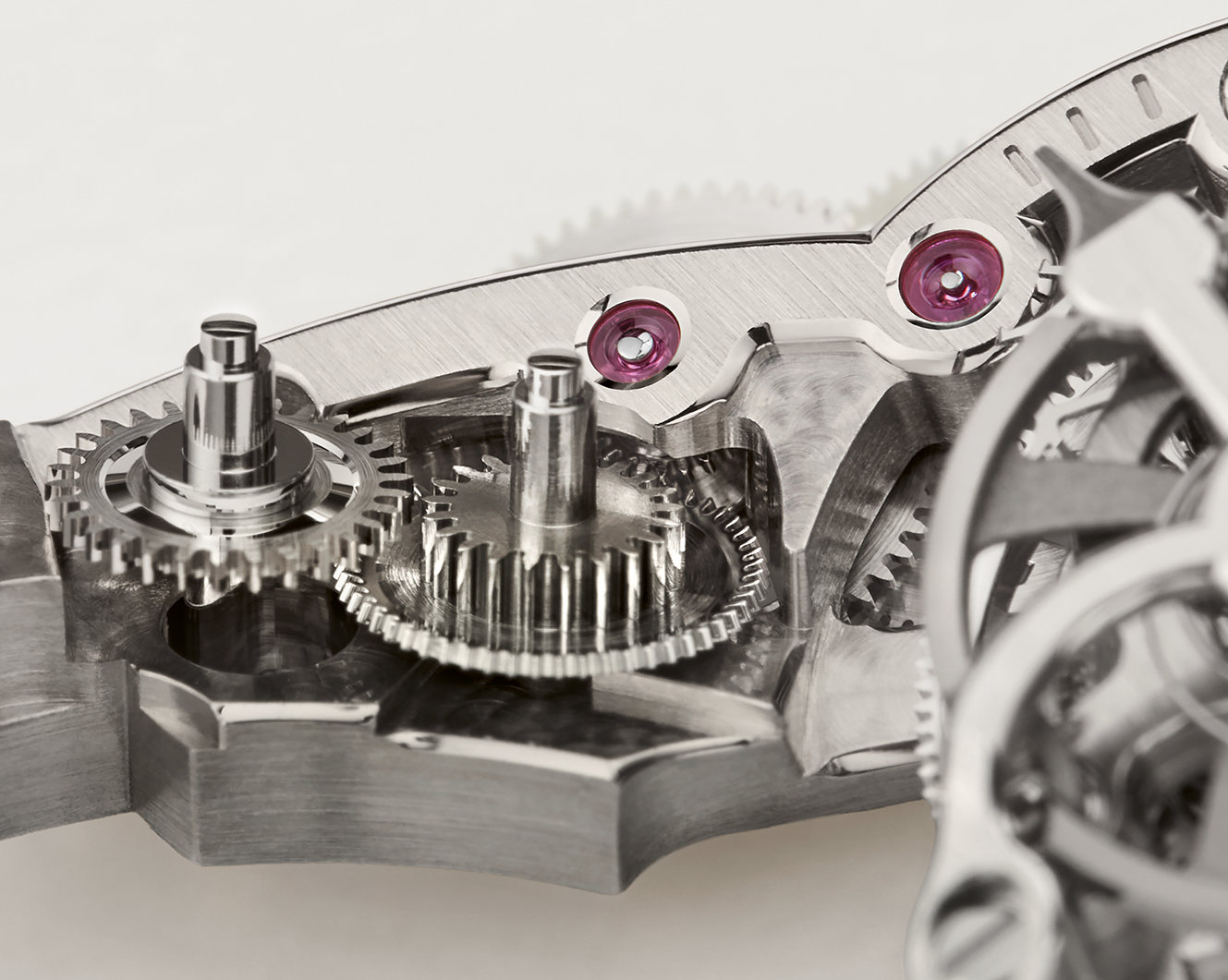
Sending power up a slope is not easy. The calibre 222ISQ splits the 30-degree change into two gear engagements, at 22 and 8 degrees, so neither one takes the whole turn. The cage is also new: it is 8.5% lighter, its rotational inertia is down 30%, and it holds a bigger 8 mm balance wheel with a silicon hairspring. A patented double ball-bearing support lowers the cage height and keeps both drive trains visible.
Two barrels connected in series give a 100-hour power reserve. Each watch comes with an individual certificate showing its performance in all six positions across the entire reserve.
Made to be looked at
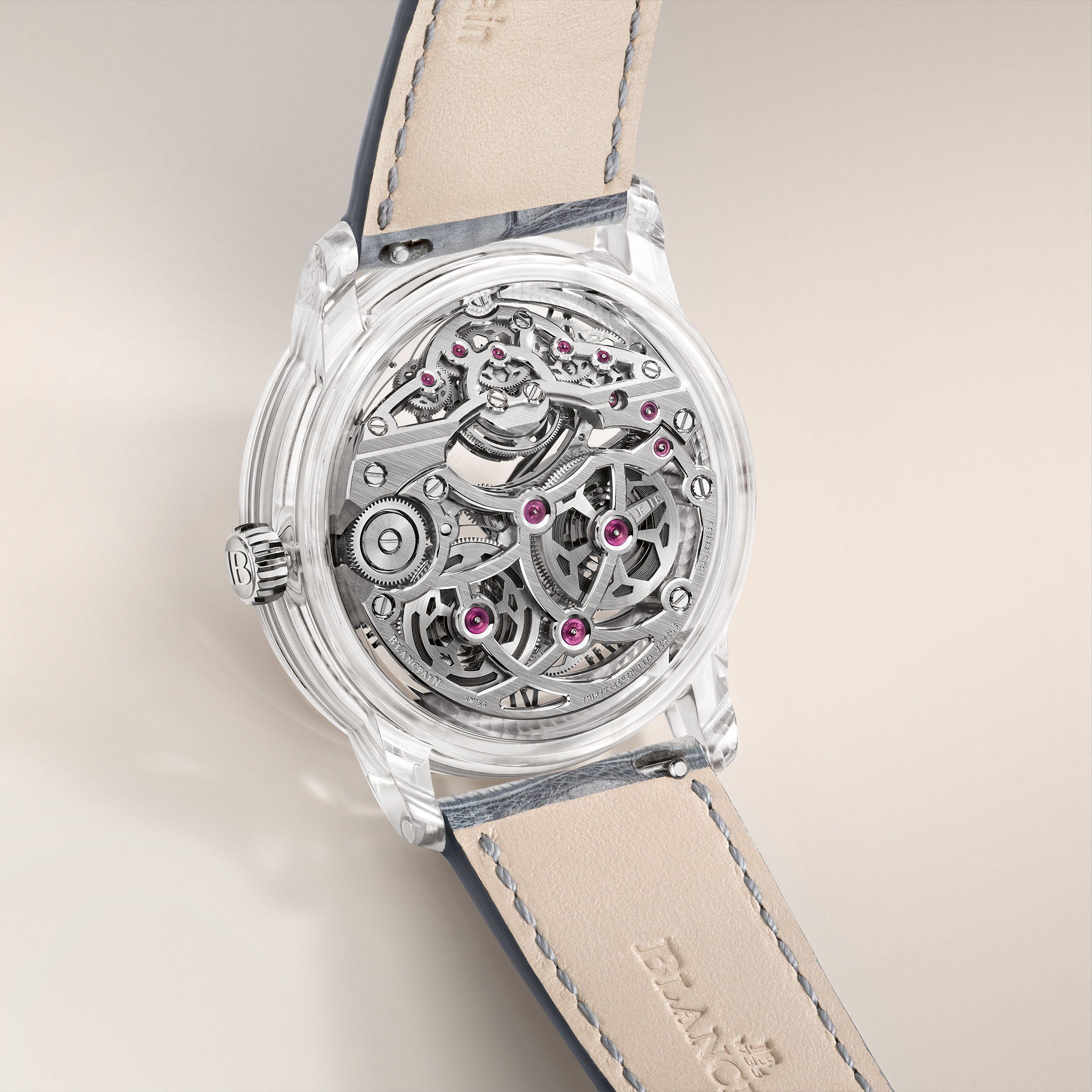
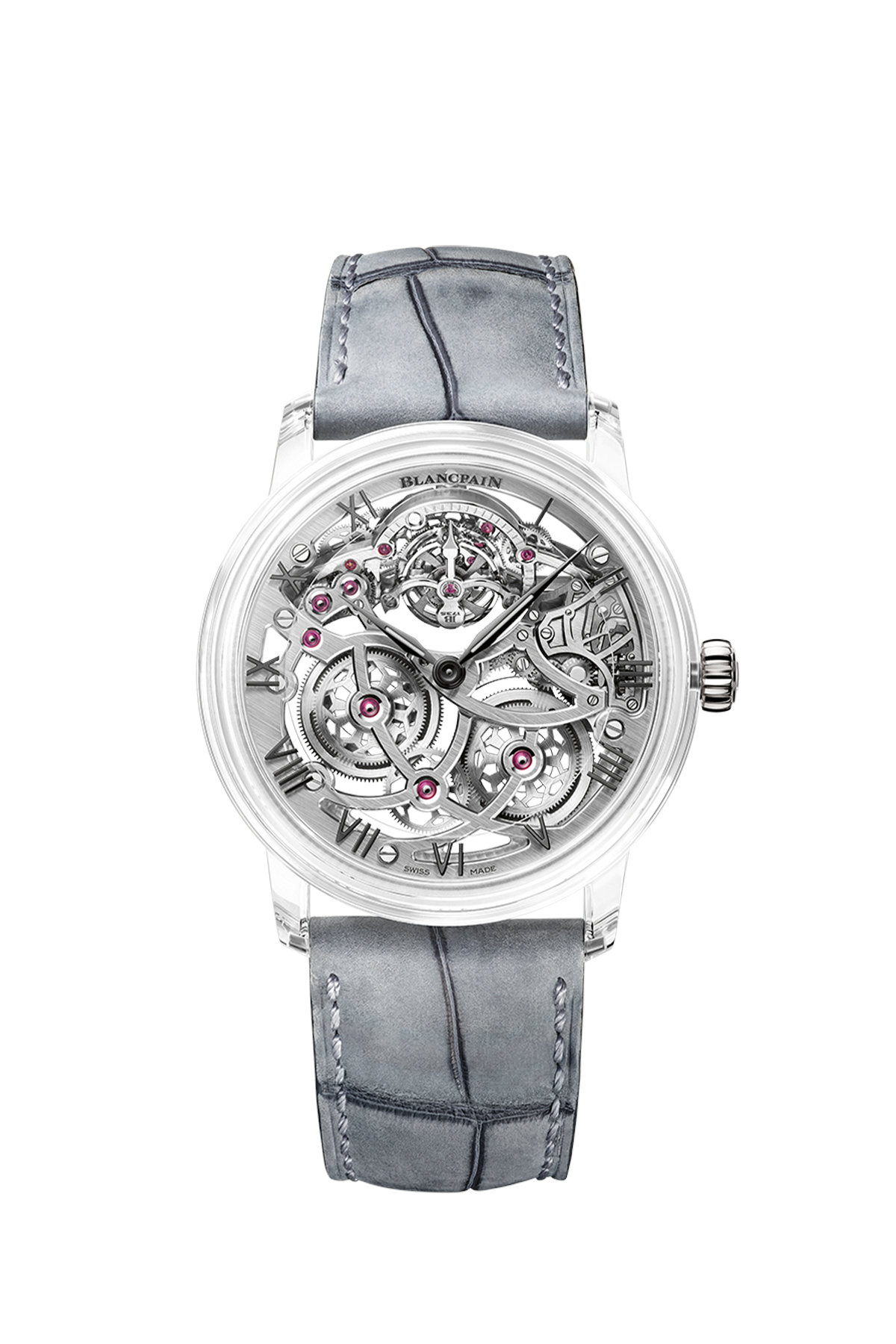
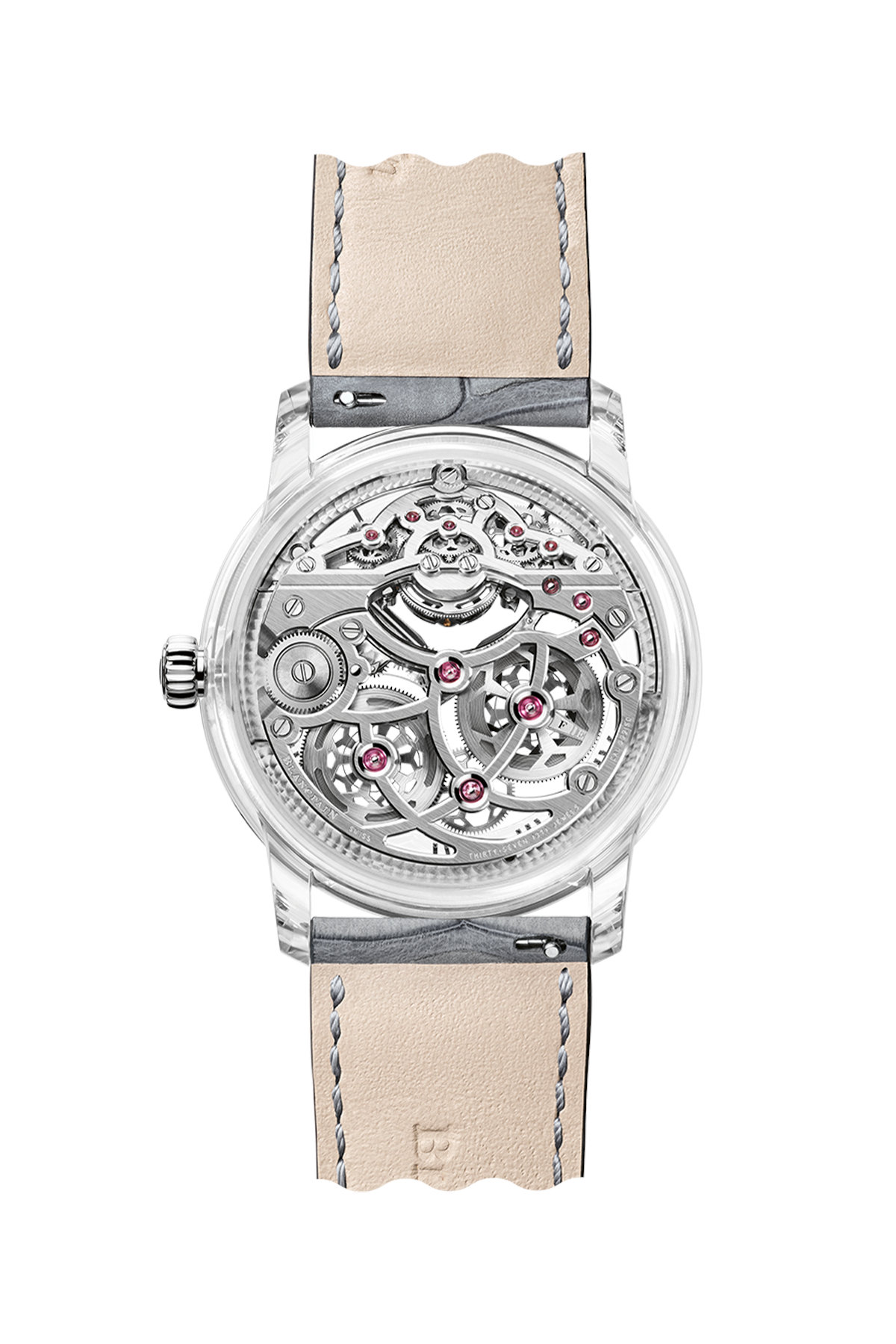
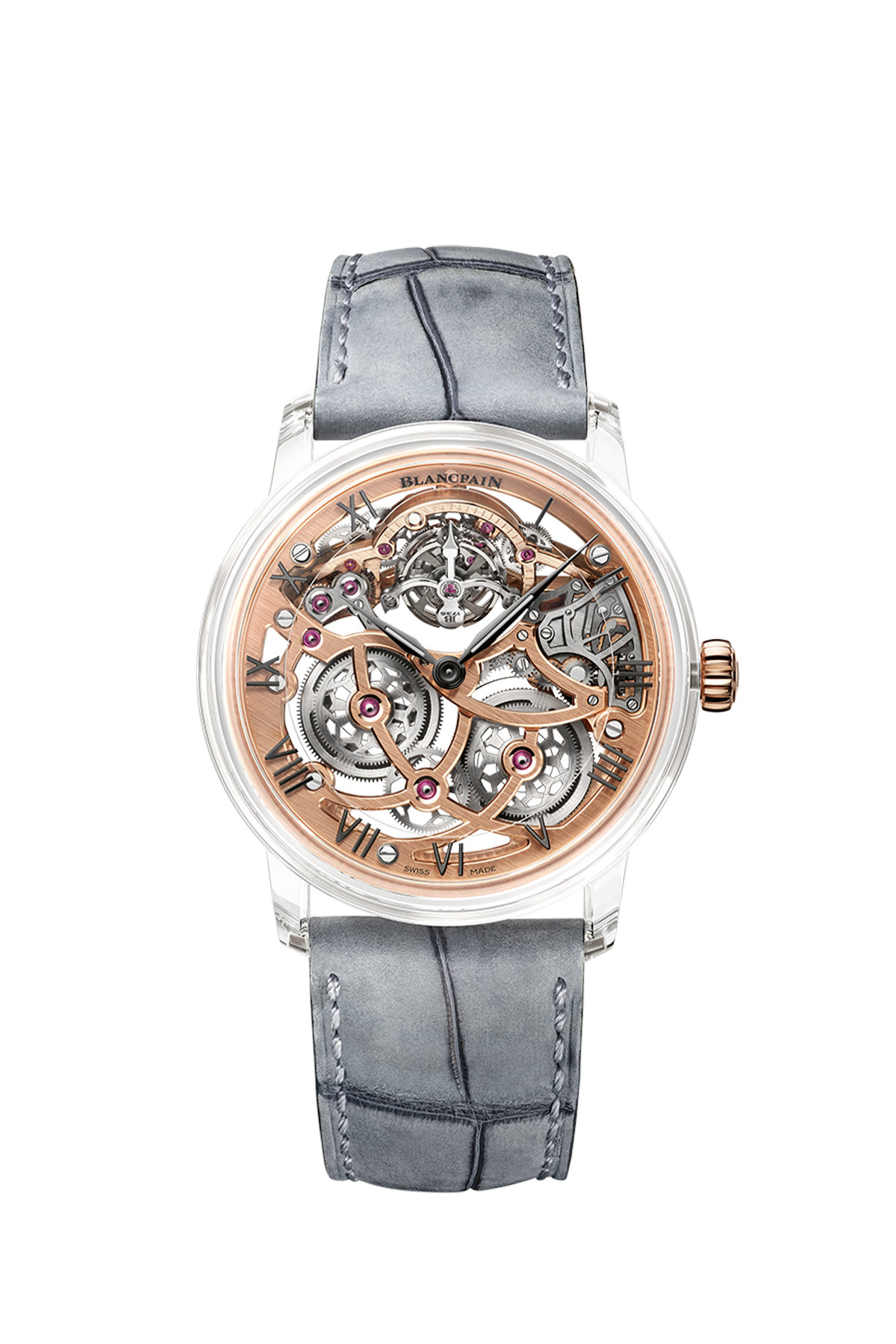
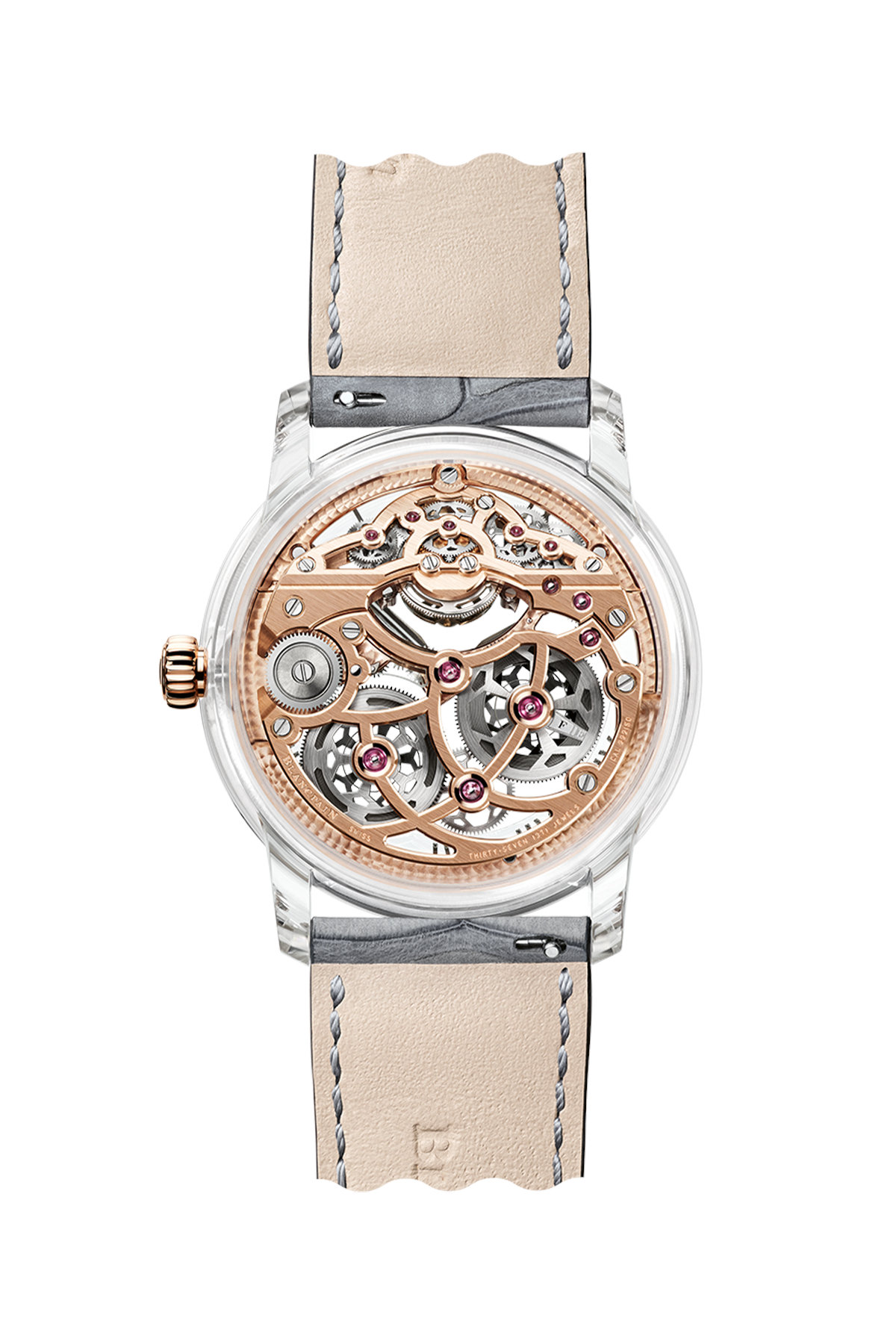
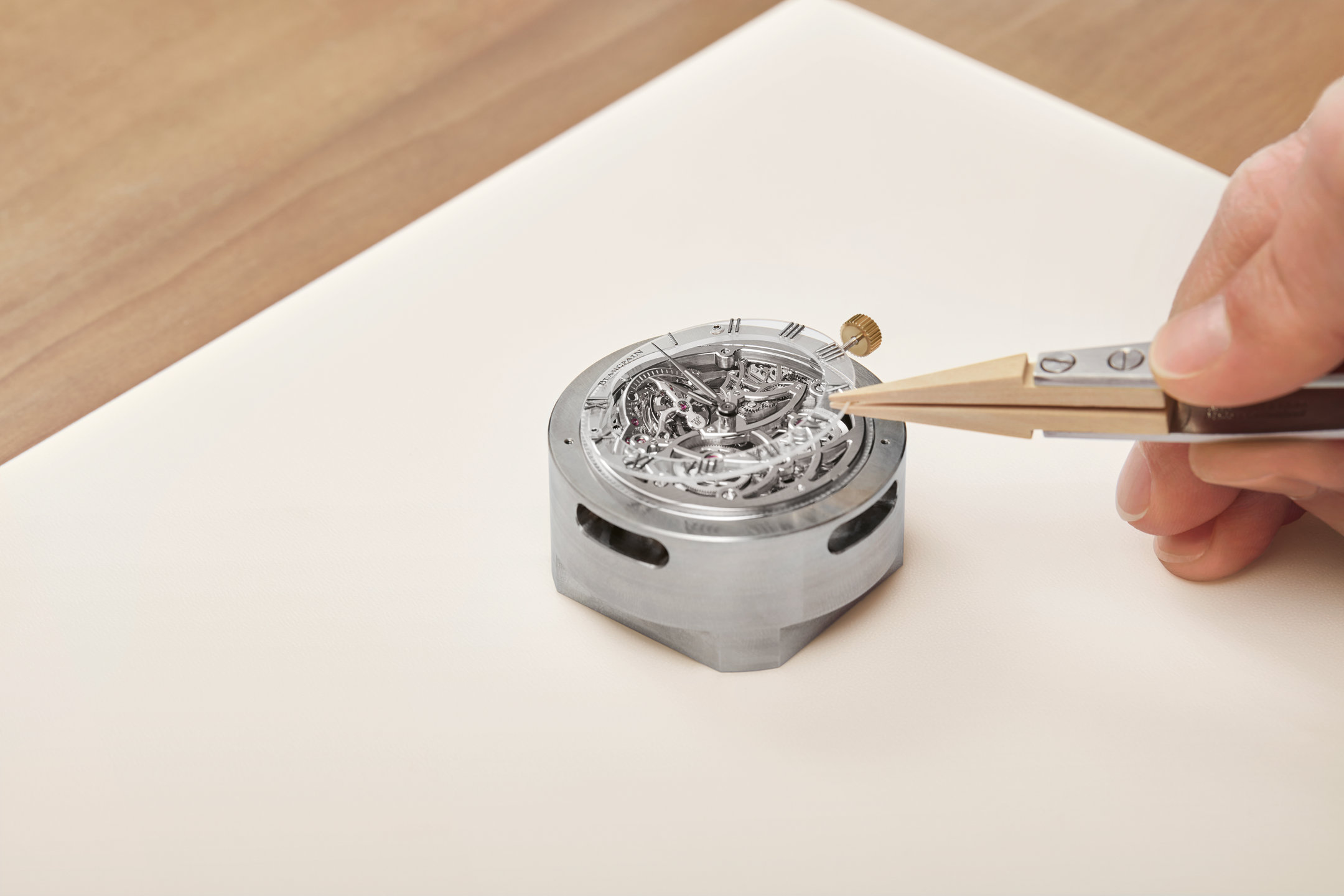
This is a manual-winding, hours-minutes-seconds watch with 224 components and 37 jewels, and it is a showpiece. The case is fully sapphire, a first for Blancpain, and the dial is sapphire too. The case middle and back, and the bezel and crystal, take about 100 hours of machining and polishing each. The gold movement is skeletonised so heavily that you can see the mainsprings’ state of wind, the winding click and the setting lever at work.
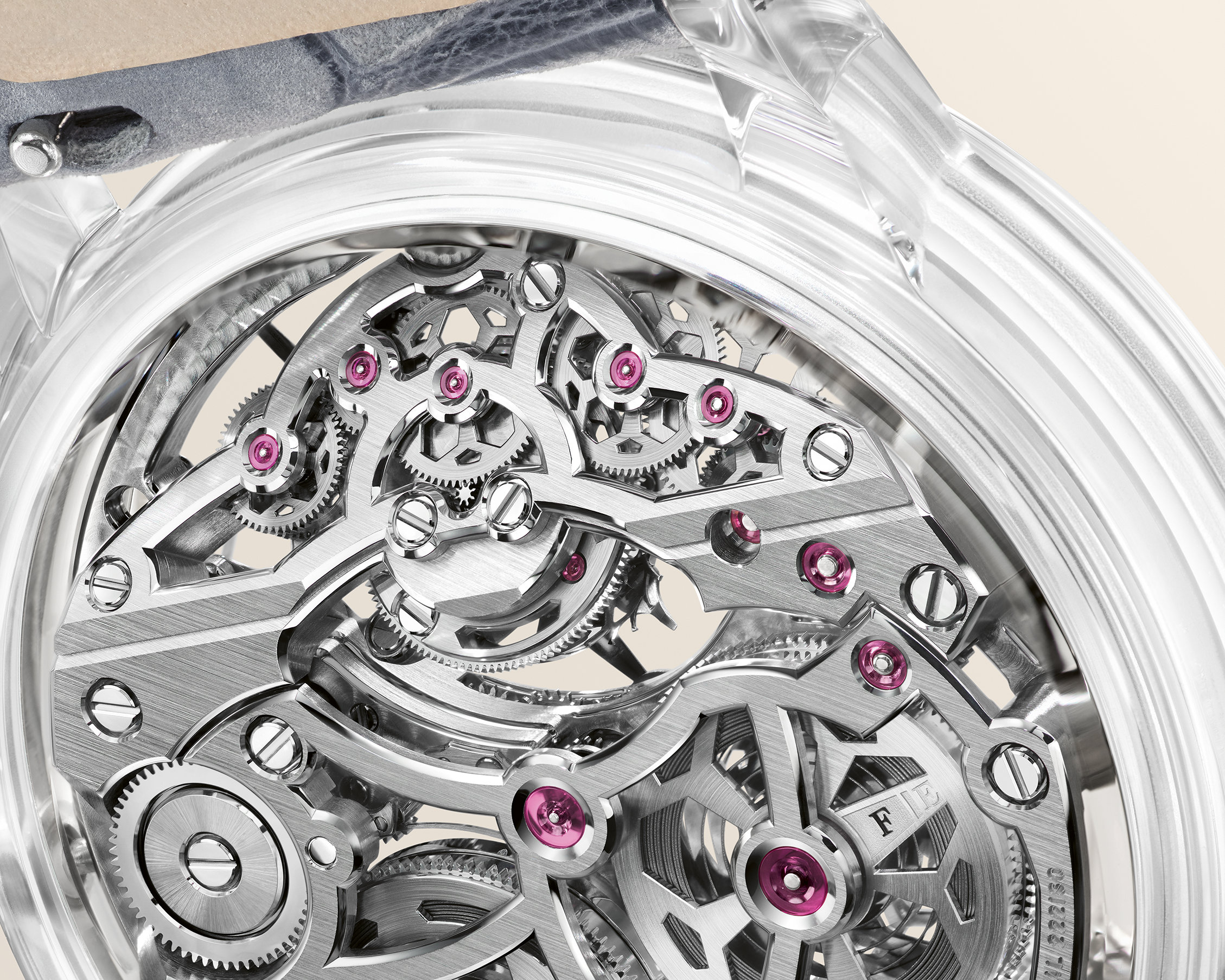
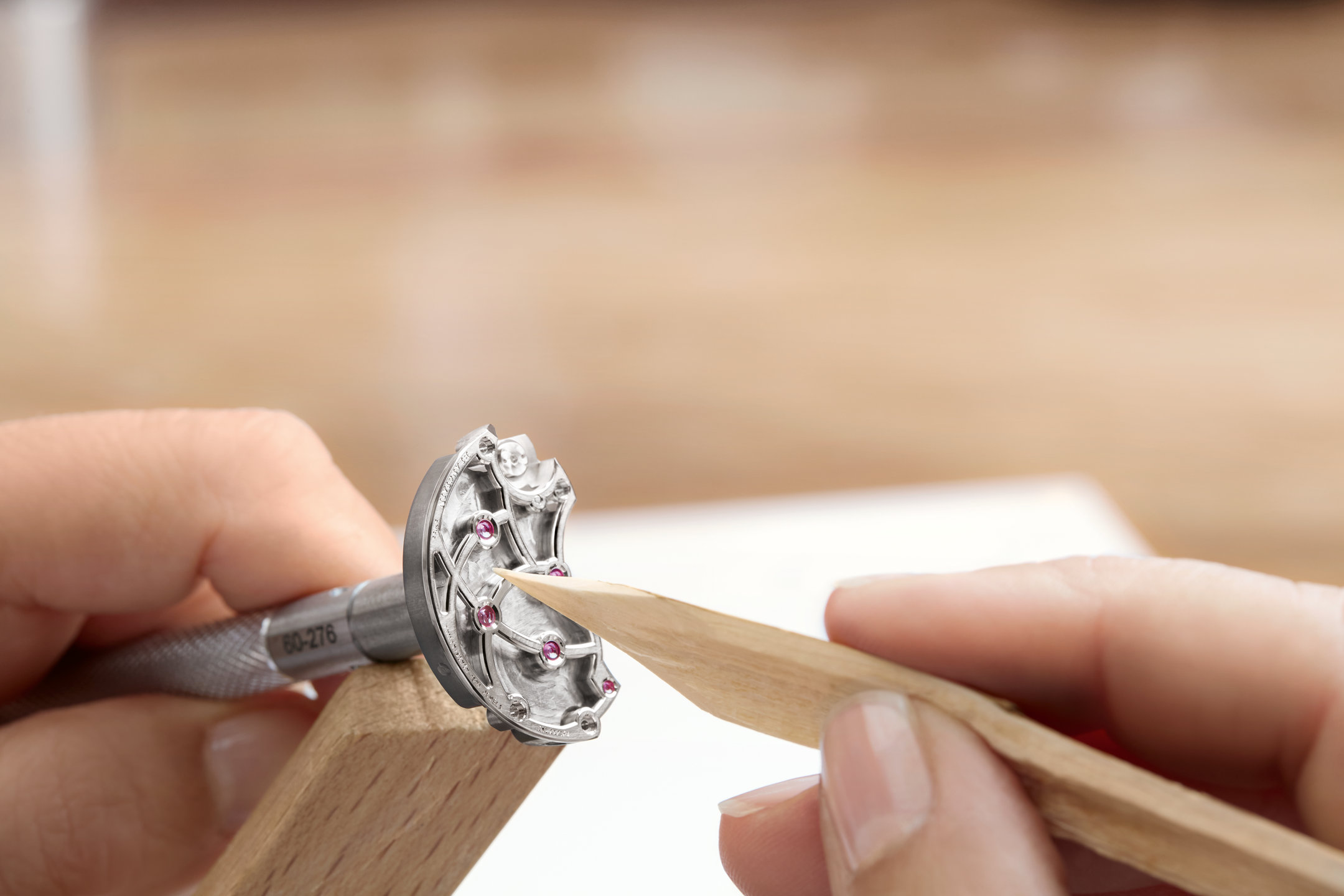
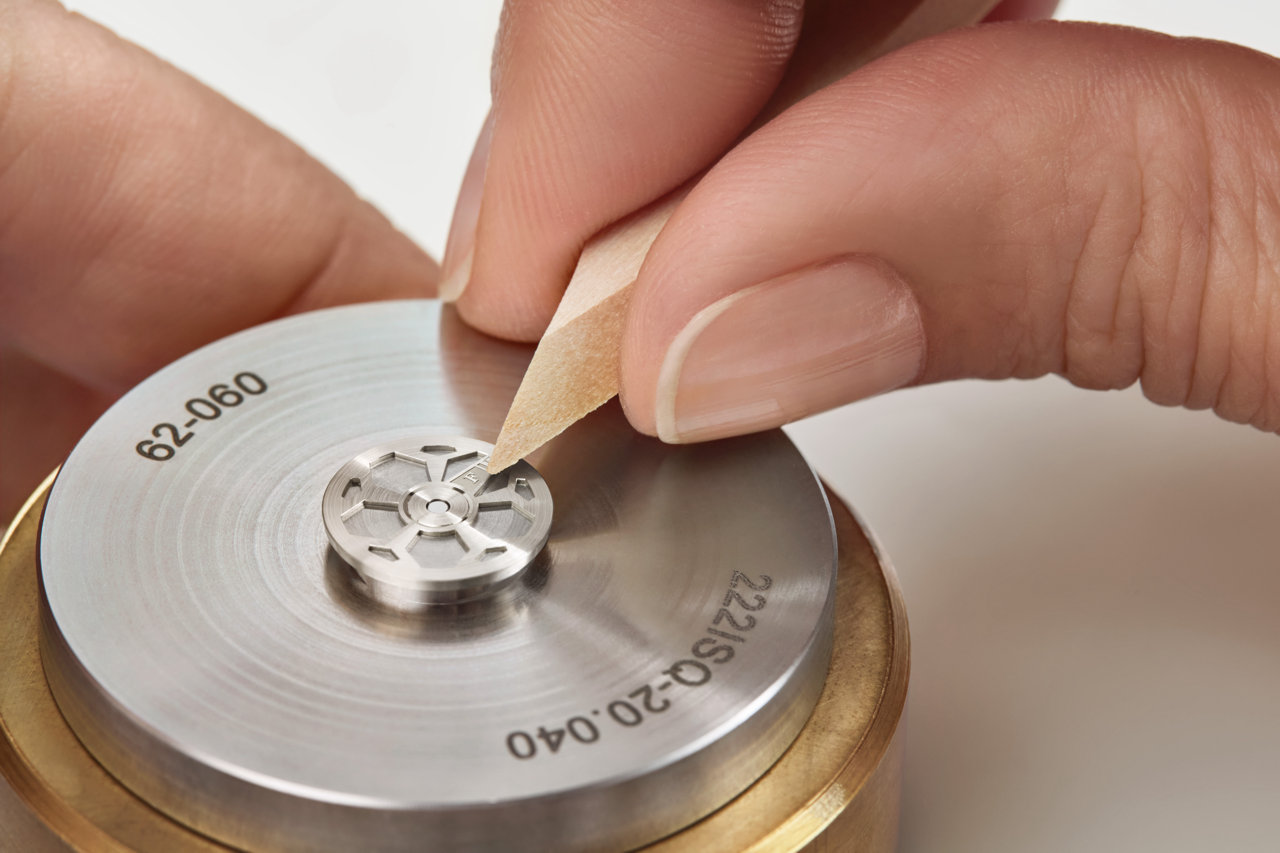
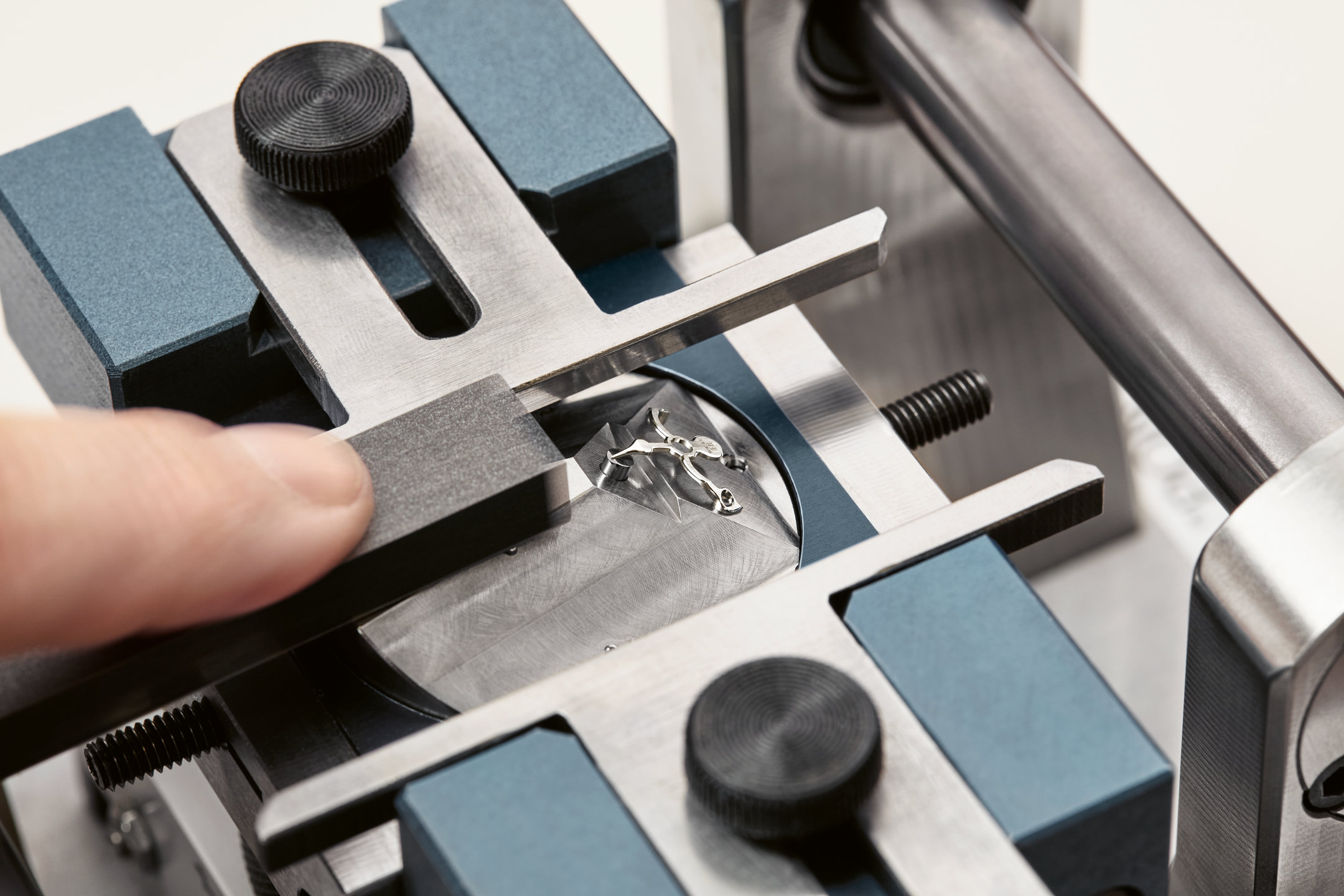
Because you can see it from almost any angle, there is no hidden side to hide sloppy work. Blancpain’s artisans say the movement has “two upper sides.” It gets 210 hours of hand finishing and includes 253 sharp inward angles, each shaped by hand. Polishing finishes with stems of wild gentian from the Vallée de Joux. Your tiny gentian-polishing dream job awaits, apparently.
On the wrist
Despite all this, the watch measures 40.30 mm in diameter and 11.30 mm in thickness, with 46.45 mm lug-to-lug. Water resistance is 3 bar, so keep it away from the pool. It comes on a blue-grey alligator strap, in a marquetry wooden box, in rhodium-plated gold or red gold.
The price is CHF 380,000, and it is not a limited edition.
My take
What I like is the logic. Many watches show off a complication for its own sake. Here, the tilt has a measurable job to do, and the sapphire case lets you see the proof. Blancpain also says the 222ISQ is the base for future carrousels. Whatever comes next, this first tilt is a good start.
Leave a Reply