Every watch has a heartbeat, and the escapement is the part that makes it tick. Most brands buy a standard one and move on. Mathieu CLEGUER spent five years building his own. The result is the Inspiration One, the first watch from his new brand, CLEGUER Horology.
Update: the watch has been honored with the 2026 Complication Watch Prize at the Grand Prix d’Horlogerie de Genève (GPHG). It is a fitting recognition for an escapement that solves a problem the natural escapement has carried for two centuries.
A 200-year-old idea, fixed
The story starts with the natural escapement, an idea from the Breguet era. It uses two escape wheels and is famous for being “friction free.” It also has an annoying flaw: it cannot start by itself. Shake the watch the wrong way and it just sits there, politely refusing to work.
CLEGUER’s answer is the Innate escapement. He kept the double wheel of the natural escapement. Then he borrowed the indirect, tangential action of the Fasoldt escapement. Both locking and impulse now happen on one central lever. The new escapement is self-starting, and it brings a bonus: a hacking second, so you can stop the seconds hand to set the time precisely.
Layers, like a good lasagna
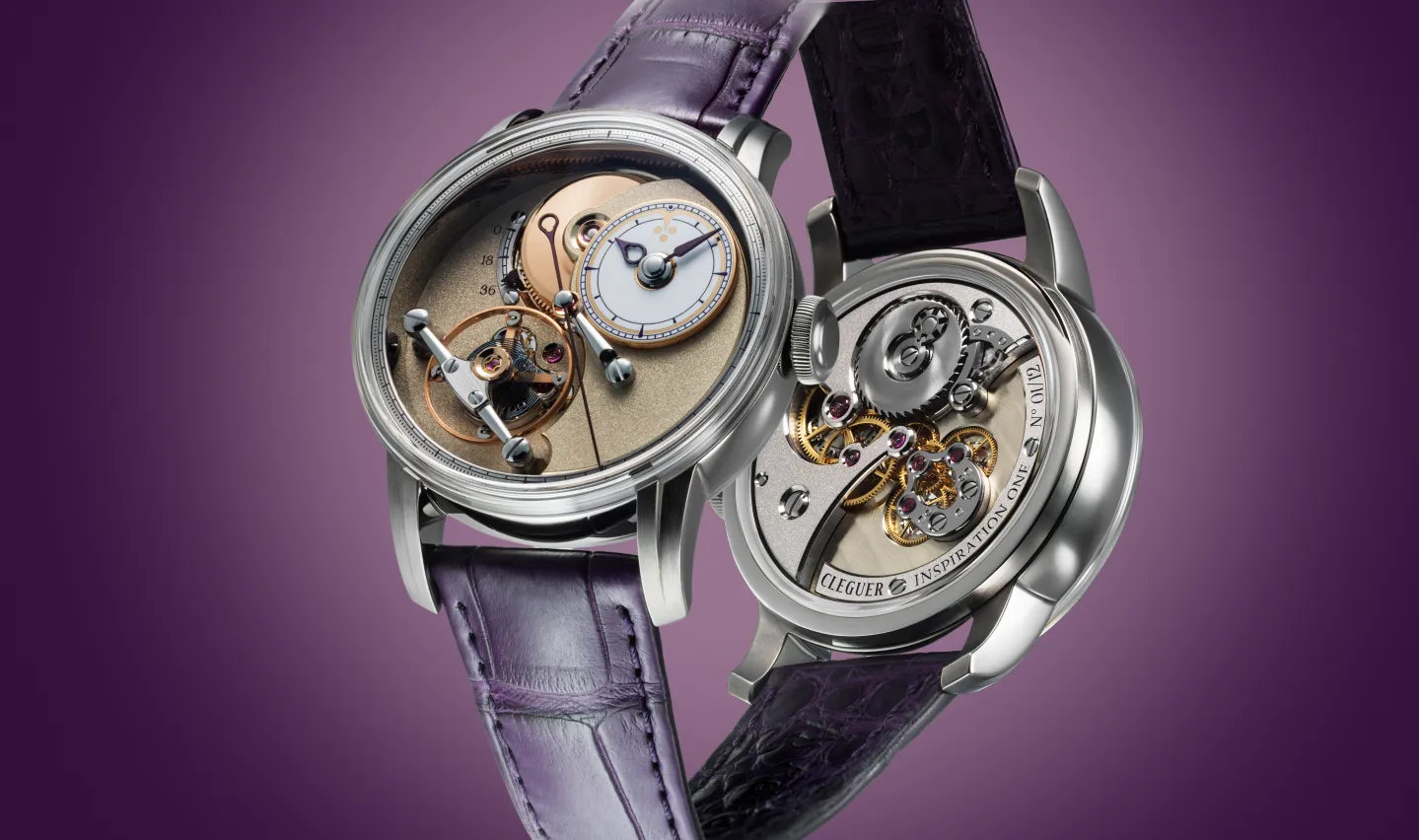
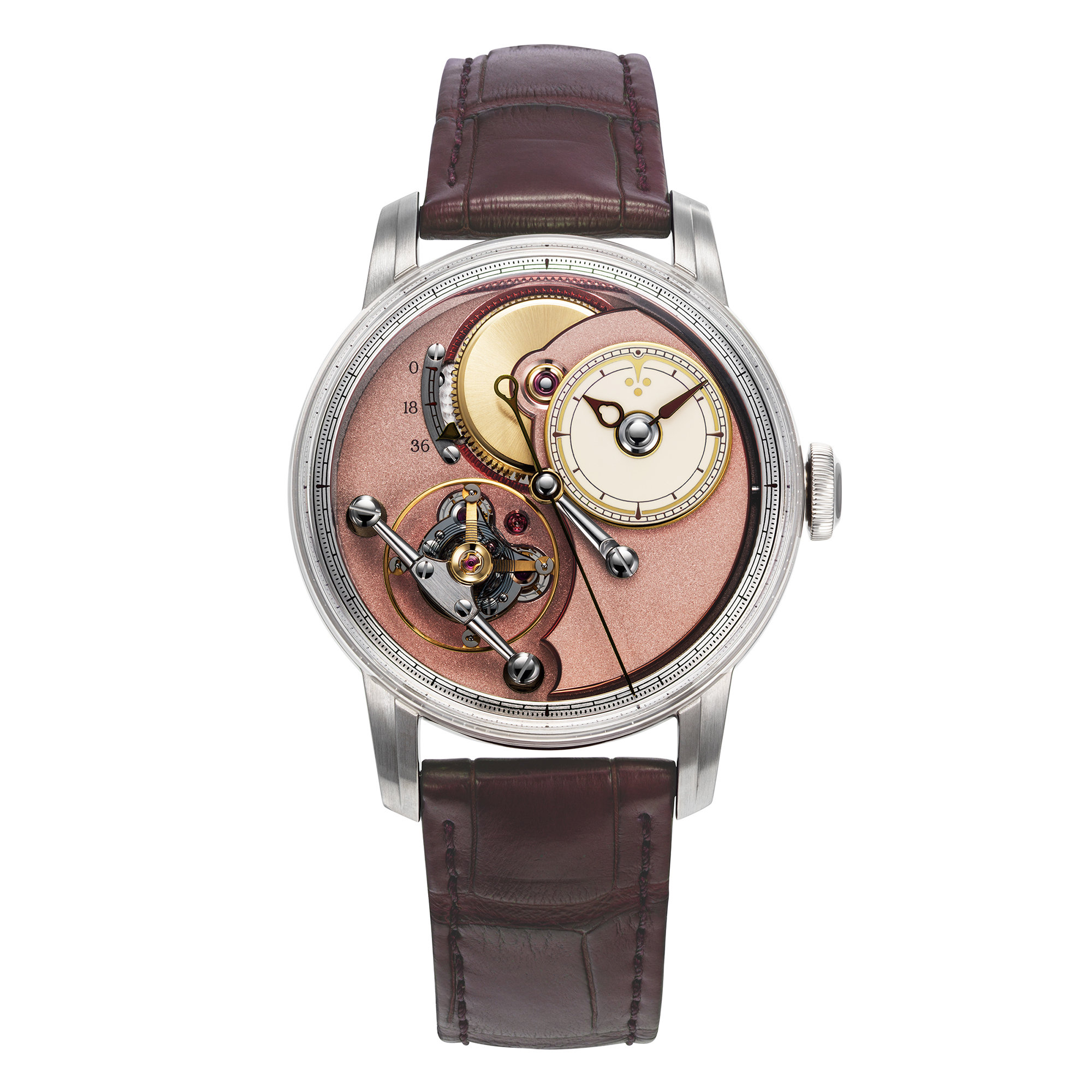
The movement is built in tiers. It steps down from the central seconds hand to the barrel bridge, then to the mainplate. On the front you can see the escapement, an oversized 12.9 mm balance wheel (beating at 18,000 vibrations per hour) and the snailed barrel with its 36-hour power reserve indicator.
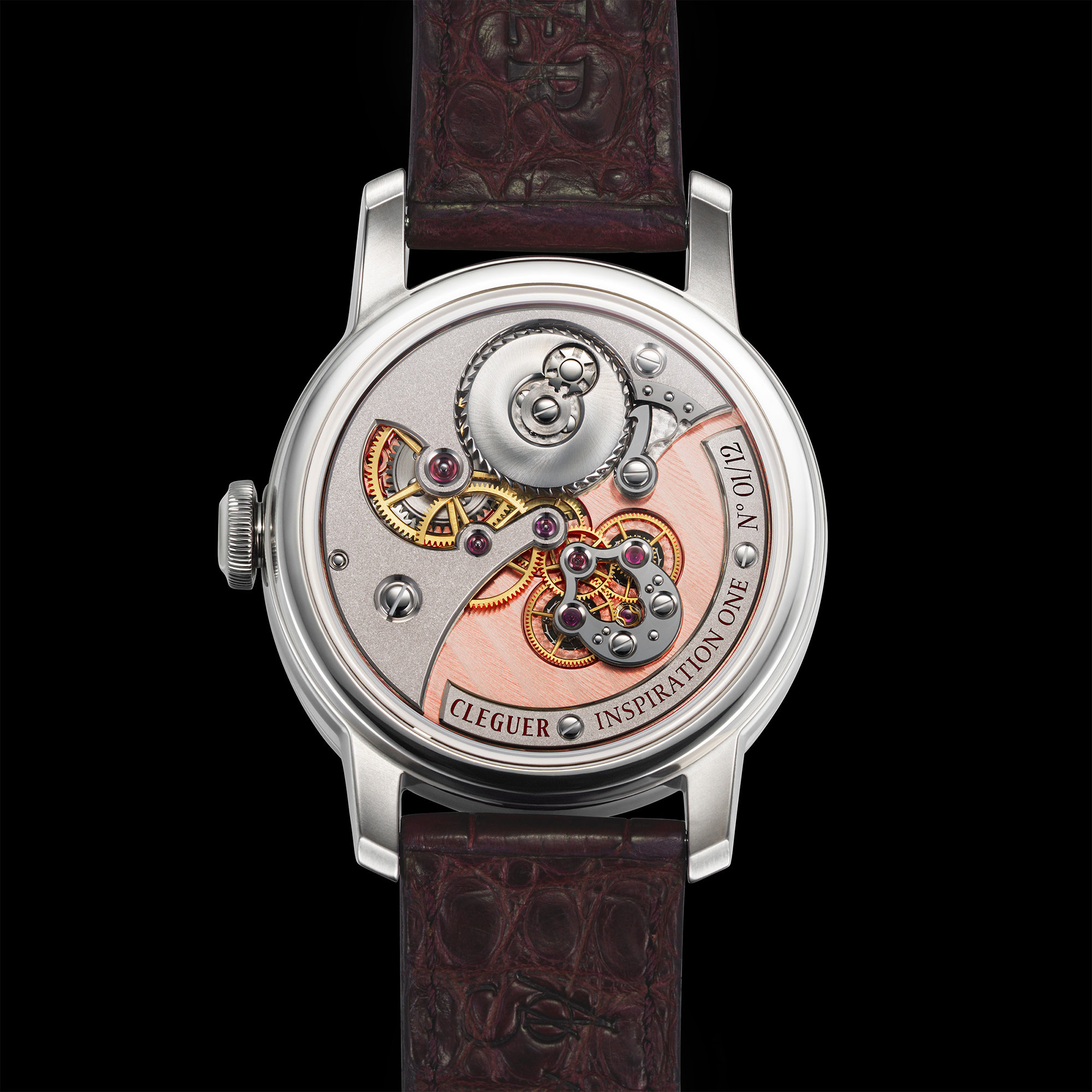
Flip the watch over and you find the gear train and a Maltese cross stop work. This clever part limits the winding, so the mainspring only uses its steadiest part. The watch keeps the same rhythm from the first hour to the last.
Simple dial, deep thoughts
The dial is a grand feu champlevé enamel disc, placed off-center at 2 o’clock. There is a practical reason. On the right side, it is easier to read when your cuff is covering the rest. Enamel gives strong contrast, and it does not fade. The long central seconds hand sweeps over the open space below, which gives the watch its mysterious look.
The brand name hides on the inner flank of the case, so the front stays clean. The watch also keeps a good balance between what it shows and what it hides.
The man behind it
CLEGUER’s path is not a typical one. He wanted to be an engine specialist, until he walked past a watch booth at the 2006 Paris Motor Show. That was it. He studied at HE-ARC in Neuchâtel, then settled in Geneva. He grew up in Brittany, and his logo and dial design nod to its Celtic coast. As for his earlier career, he cannot tell us where he worked. Engineers in watchmaking are good at secrets.
The numbers
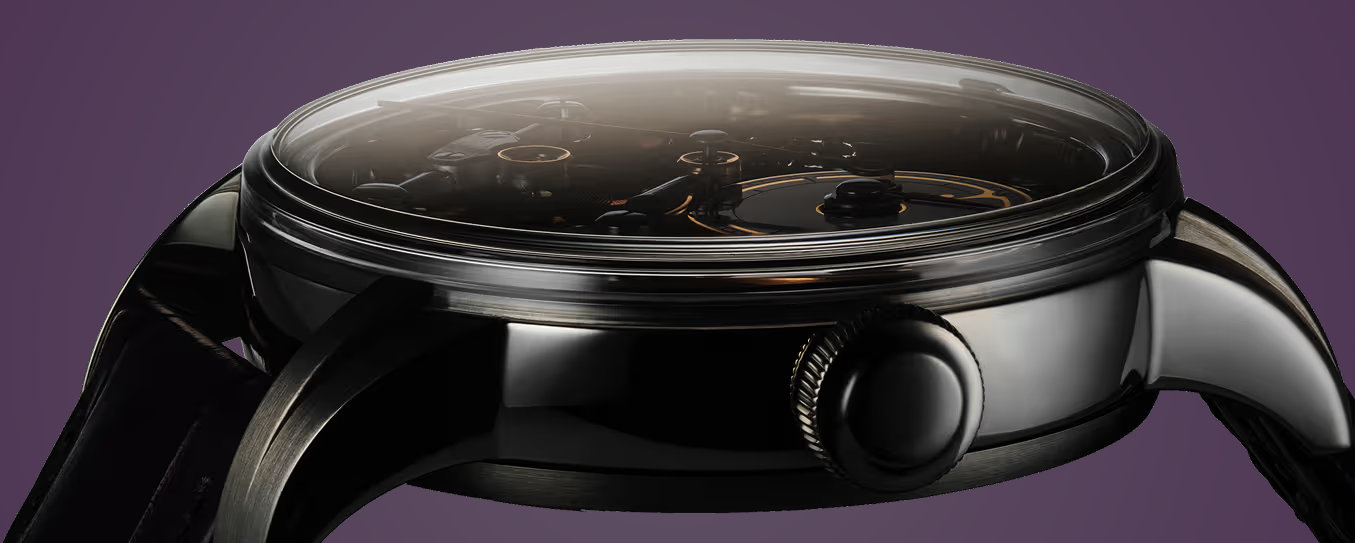
The case is 38.5 mm wide and 12 mm thick, with 30 m of water resistance. The movement is manual-winding with 31 jewels. The plates and bridges are nickel silver, with champagne and rhodium plating. The leather strap closes with a pin buckle.
Only 80 watches will be made, across five case metals in batches of 12. Twenty movements will become unique pieces. The first batch is white gold, priced at 103,020 CHF including VAT, and launches in September 2026. The specifications also list a titanium version for subscribers.
Final thoughts
A new escapement is rare. A new escapement that starts on its own is even rarer. CLEGUER is not trying to reinvent the watch. He is fixing one old problem, and he is proud enough to show it through the dial. That is a good start for a first page.
Leave a Reply