There’s something delightfully stubborn about the regulator format. While most watches settled on the sensible idea of putting all hands in the center, regulators insist on scattering hours, minutes, and seconds across the dial like guests at an awkward dinner party. It’s quirky, it’s unconventional, and it’s exactly the kind of canvas that makes designers either run away screaming or lean in with excitement.
Louis Erard and Worn & Wound clearly chose the latter.
After three years of development (yes, three years – shortcuts were apparently banned from this project), the two have produced Le Régulateur Louis Erard x Worn & Wound, a watch that treats the regulator layout not as a constraint but as an invitation to play with depth, texture, and color.
Layers Upon Layers Upon Layers
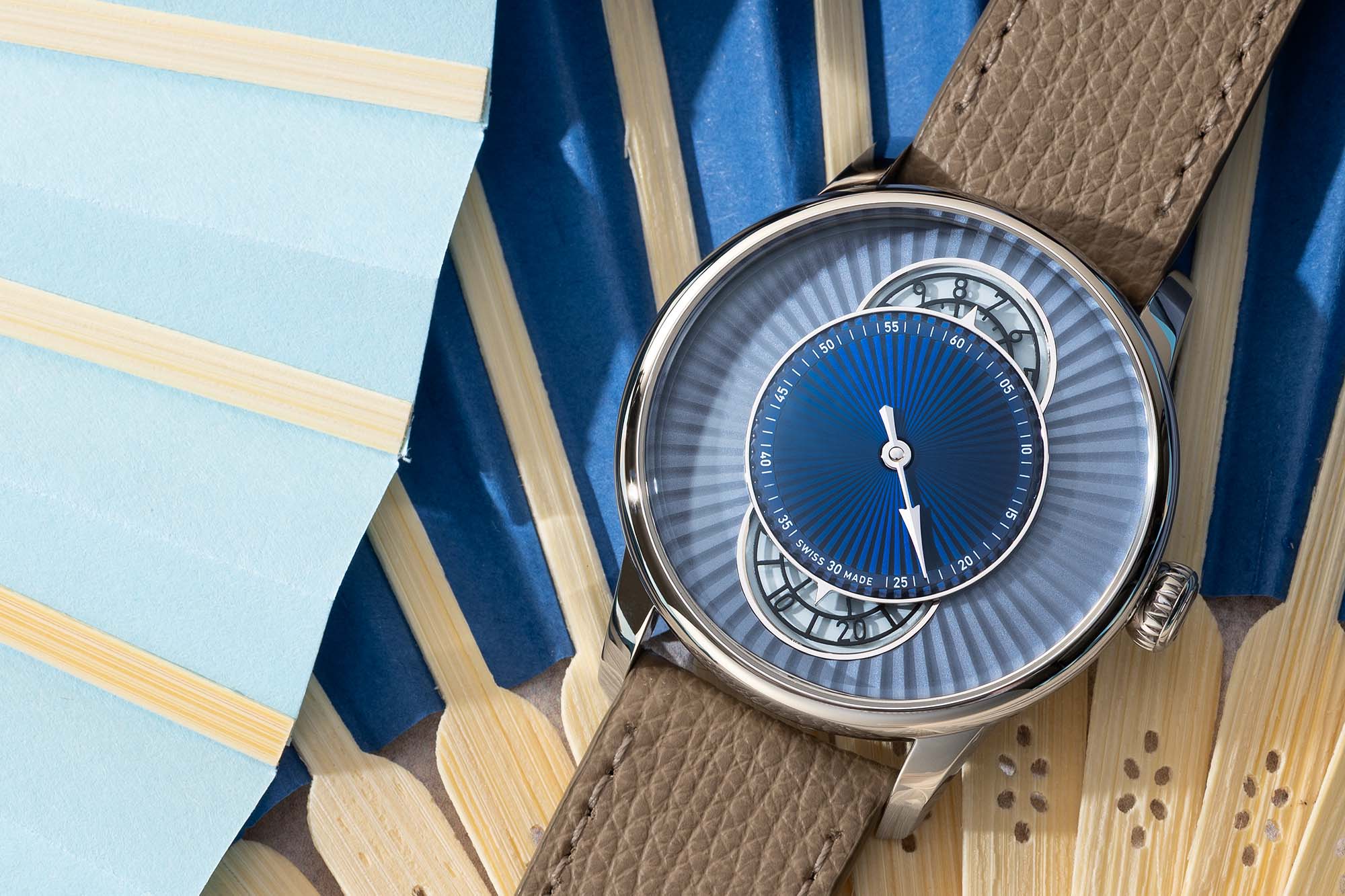
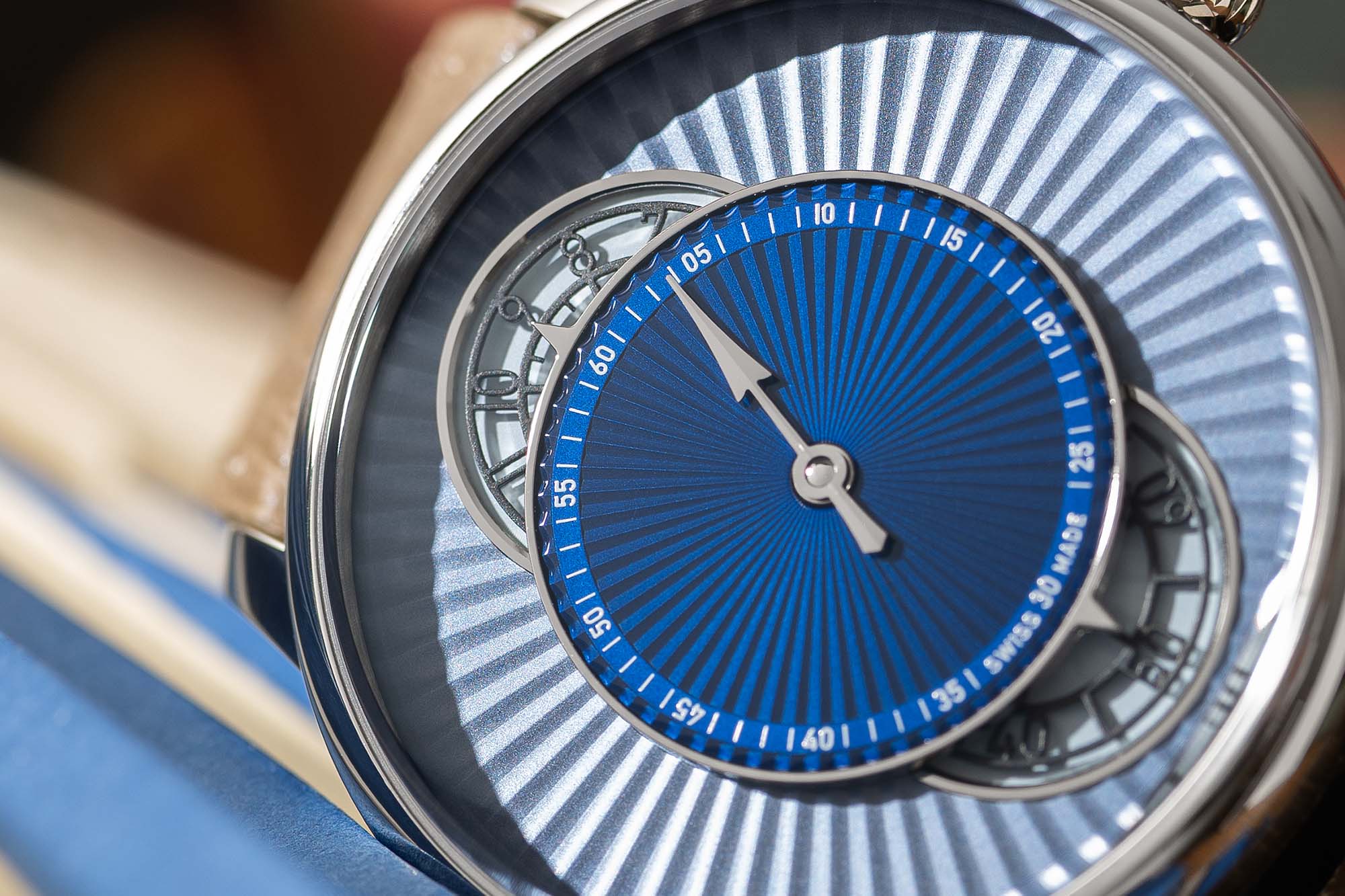
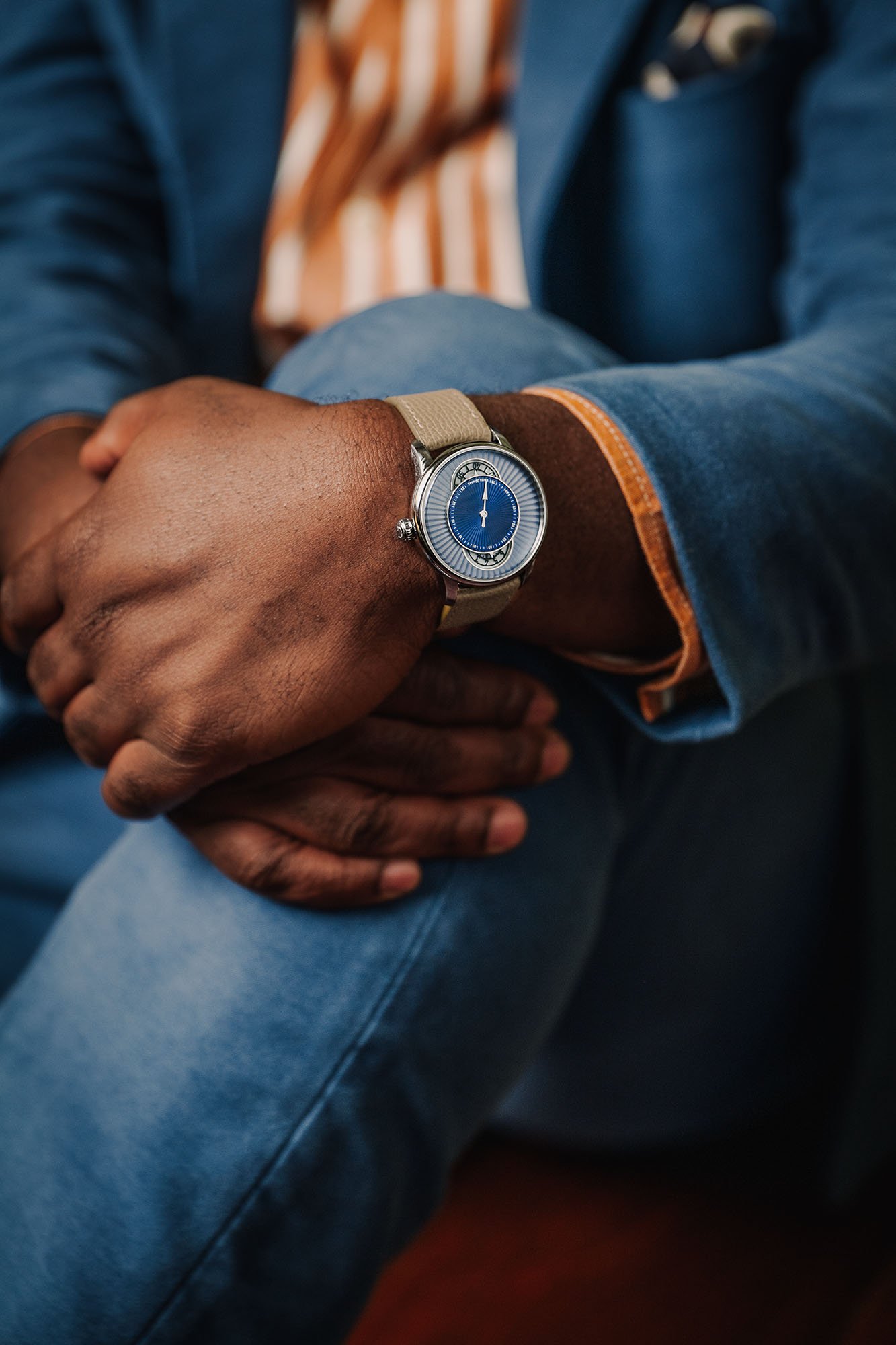
The star of this show is undoubtedly the dial, which stacks three distinct layers like a very sophisticated cake. At the bottom sits a cool, near-white base that serves as the stage. Here, skeletonized disks displaying hours and seconds appear to float, their openwork construction creating a sense of airiness.
The middle layer belongs to the minutes, rendered in fluted light blue that occupies the center of the dial. It’s subdued enough not to fight for attention but textured enough to catch the light beautifully. Then comes the top layer, a deep lacquered cobalt ring that circles the dial’s perimeter, marked with crisp white numerals and indexes. This is where your eyes naturally land first.
The interplay between these layers creates something genuinely interesting to look at. As the skeletonized disks rotate underneath, their numerals and markings align with raised elements from the elevated minute frame. It’s like watching a mechanical ballet where the dancers are numbers, and honestly, that’s more entertaining than it has any right to be.
The Fir Tree Takes Center Stage
Anchoring this three-ring circus (said with affection) is a bold, polished minute hand inspired by Louis Erard’s signature “fir tree” design. It’s sculptural, it’s substantial, and it does the important job of keeping everything from feeling too busy. Sometimes a strong central element is exactly what a complex dial needs, like a good moderator at a heated debate.
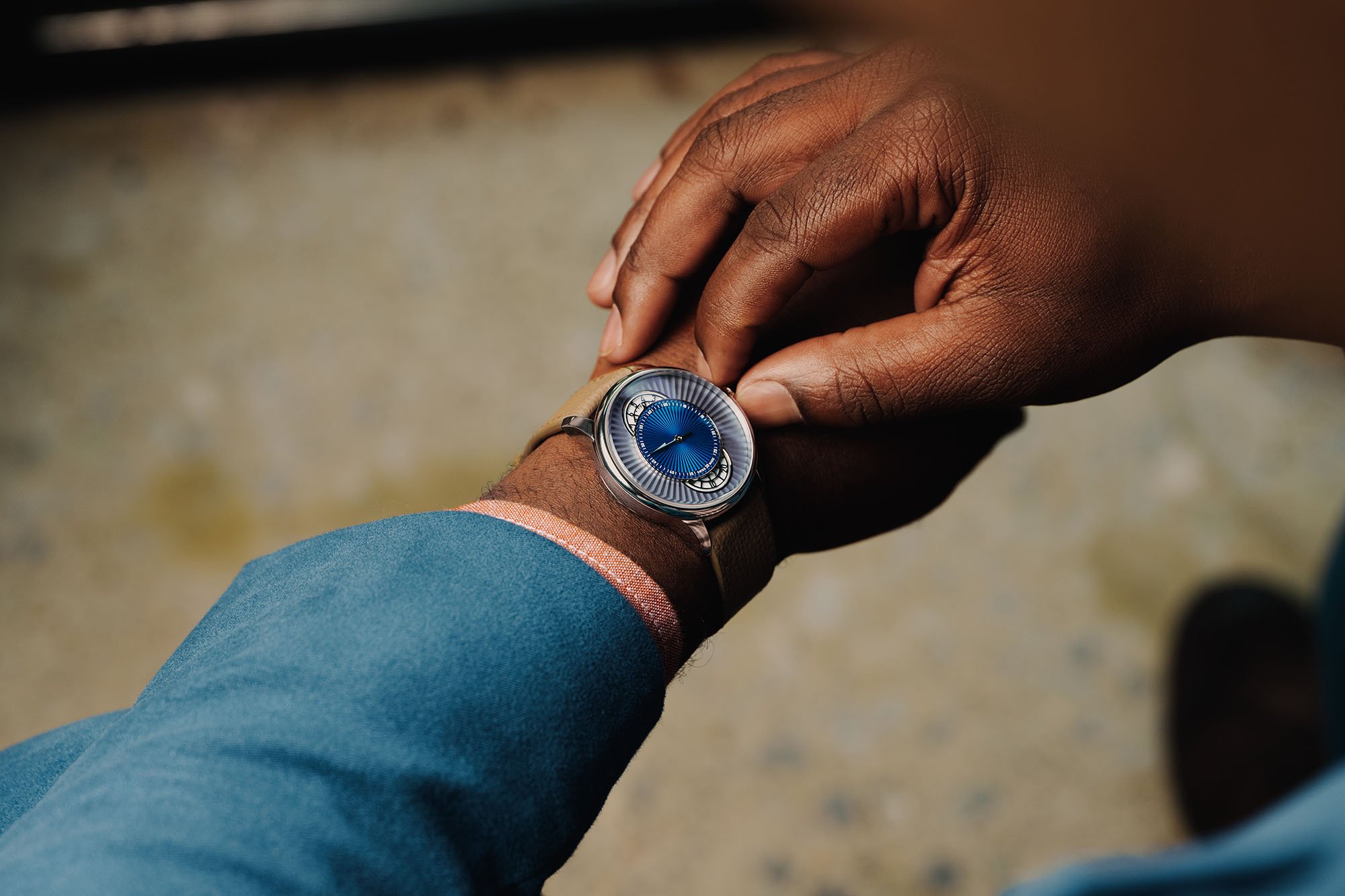
The way you read time here is cleverly simple despite the unconventional layout. The minute hand does its thing in the center, while you glance at the rotating disks for hours and seconds. It sounds complicated on paper but makes perfect sense on the wrist, which is the hallmark of good design that doesn’t sacrifice usability for aesthetics.
The Rest of the Package
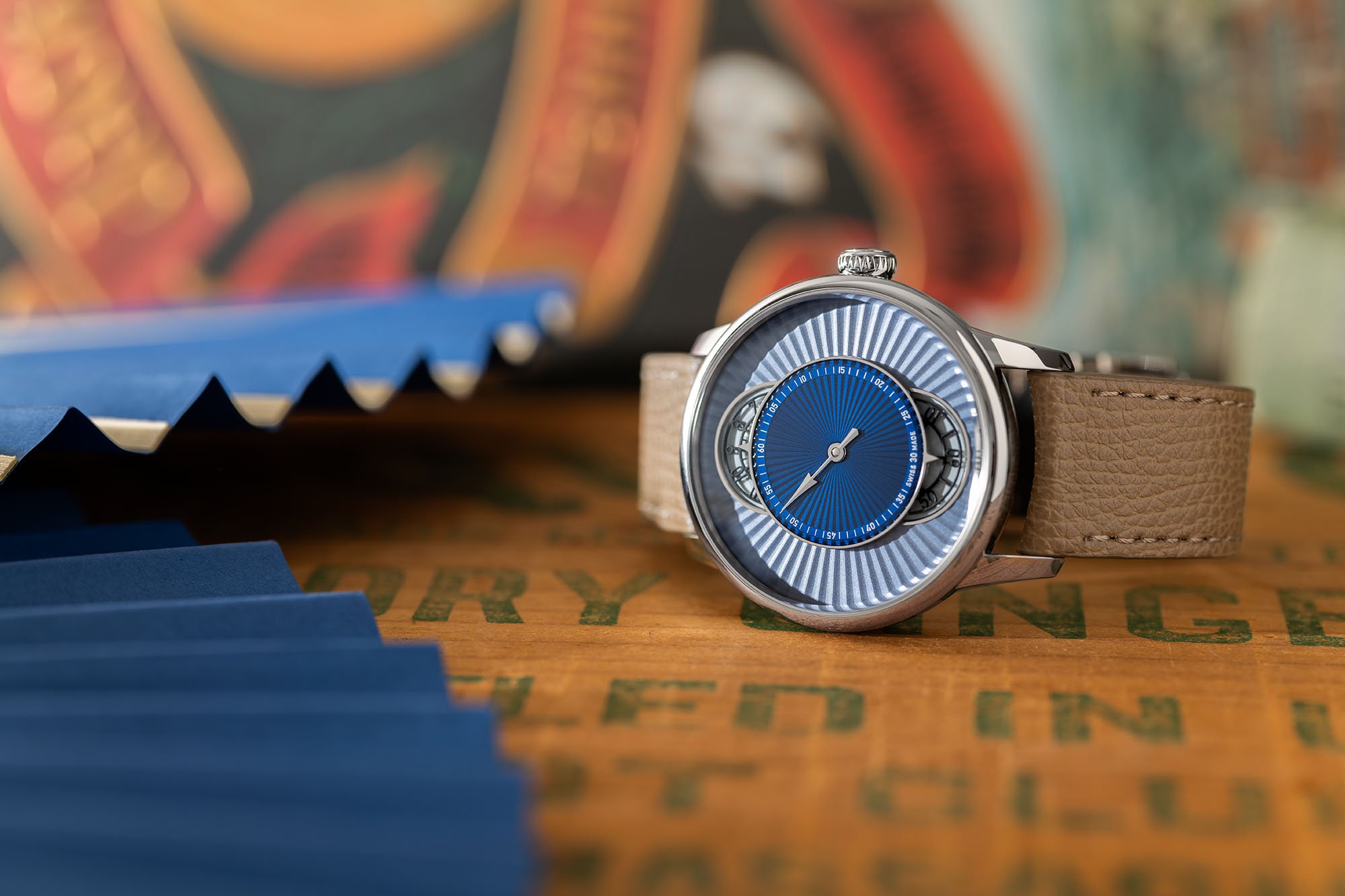
Louis Erard housed this creation in their 39mm polished steel case, featuring a bowl-shaped mid-section and straight lugs. It’s a size that works for most wrists without feeling cramped or oversized. The proportions are classical without being stuffy.
Inside ticks the Swiss-made Sellita SW266-1 automatic movement, modified for the regulator layout. With 31 jewels, 28,800 beats per hour, hacking seconds, hand-winding capability, and a custom Louis Erard rotor, it’s a solid workhorse with respectable specs. The 50 meters of water resistance means you can wash your hands without anxiety, though maybe save the swimming for another watch.
A 20mm pebbled taupe leather strap completes the package, complementing those tonal blues on the dial without trying to steal the spotlight.
Why It Matters
Manuel Emch from Louis Erard called it “one of my favorite Louis Erard editions to date,” while Zach Weiss from Worn & Wound described it as “utterly beautiful.” When both parties in a collaboration are this genuinely enthusiastic, it usually means something went right.
What makes this partnership interesting is the shared philosophy. Louis Erard has built a reputation for making elements of high horology accessible without cutting corners on quality. Worn & Wound, as a media outlet and community, champions thoughtful design and independent spirit. Put them together for three years, let them obsess over details, and you get a watch that “touches on the traditional while being entirely distinct.”
The watch will be produced in an edition of up to 99 pieces. The first 50 are available exclusively through the Windup Watch Shop, both online and at their Brooklyn showroom. The remaining 49 will only be assembled if demand warrants it, which is a refreshingly honest approach in an industry sometimes prone to artificial scarcity.
In a world where many collaborations feel like marketing exercises, this one feels like two parties actually sat down, argued about details, and sweated the small stuff. And those three layers? They’re not just showing off. They’re doing exactly what good watch design should do: making you look twice.



Leave a Reply