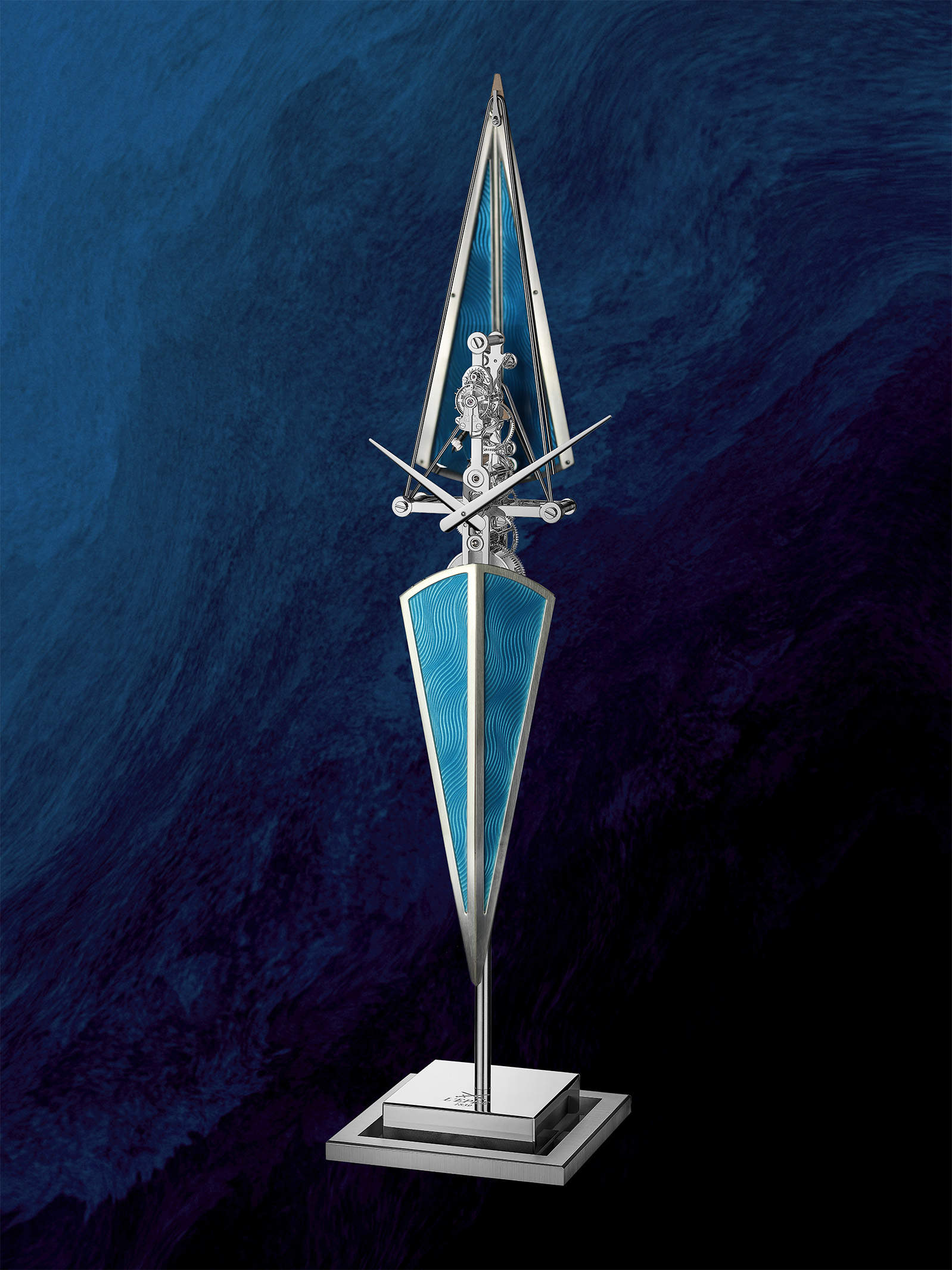
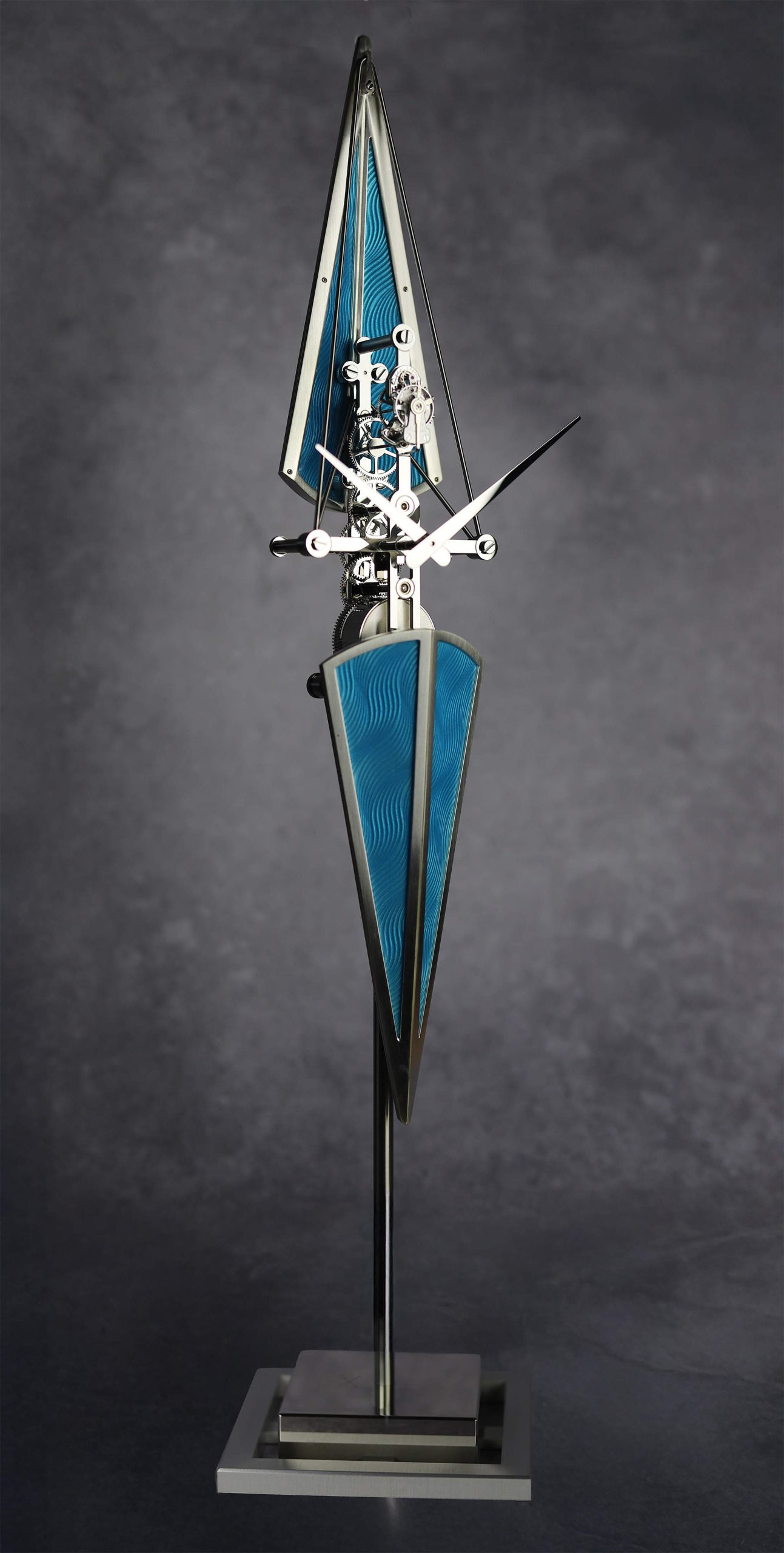
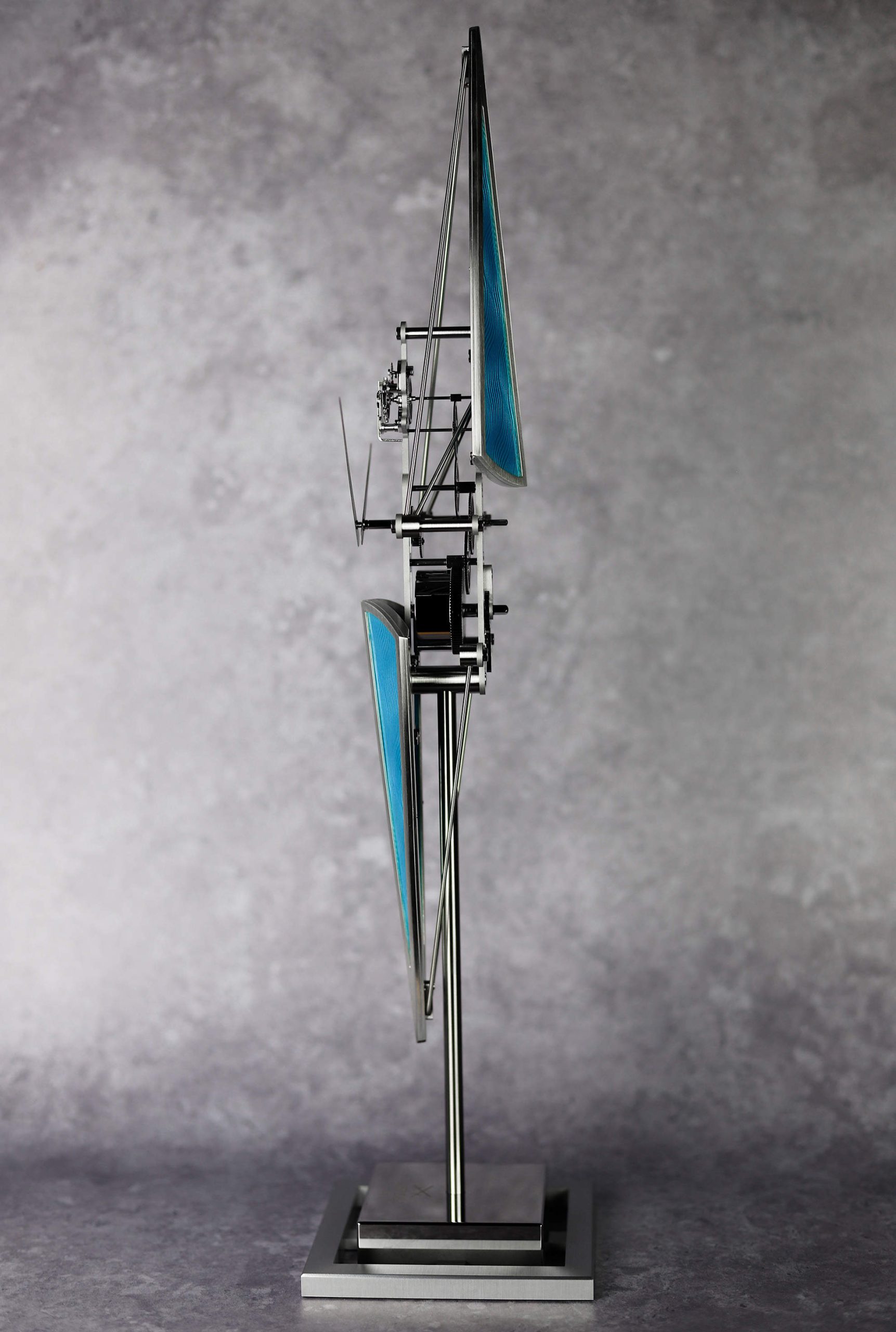
L’Epée 1839 turns La Regatta into a quiet study of motion, reimagined as one-of-one Métiers d’Art pieces that wear Grand Feu enamel like water on a racing hull. The form is a vertical clock with an elongated silhouette drawn from a skiff cutting cleanly ahead. It is elegant without drama, like a coxless boat that knows exactly where it is going.
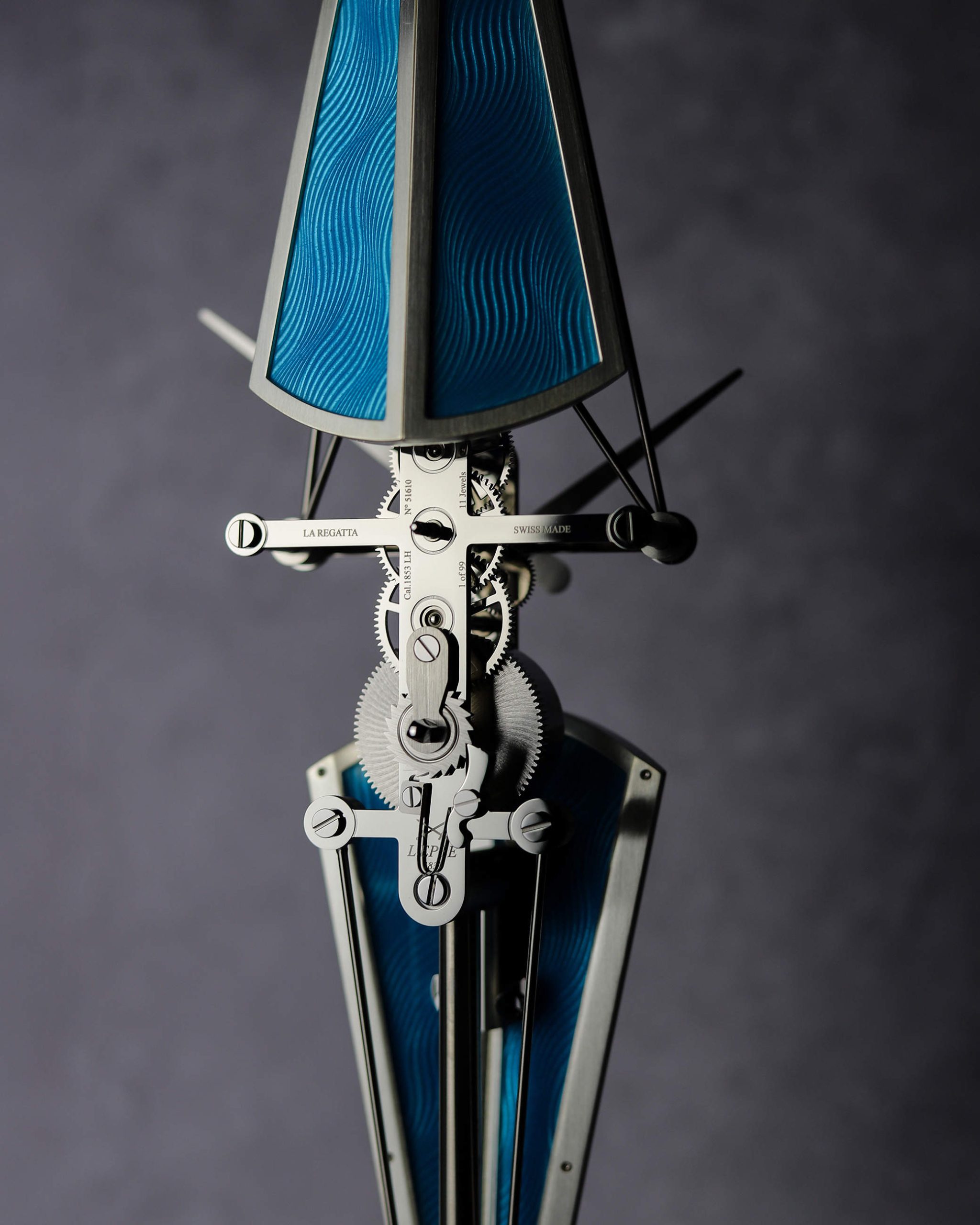
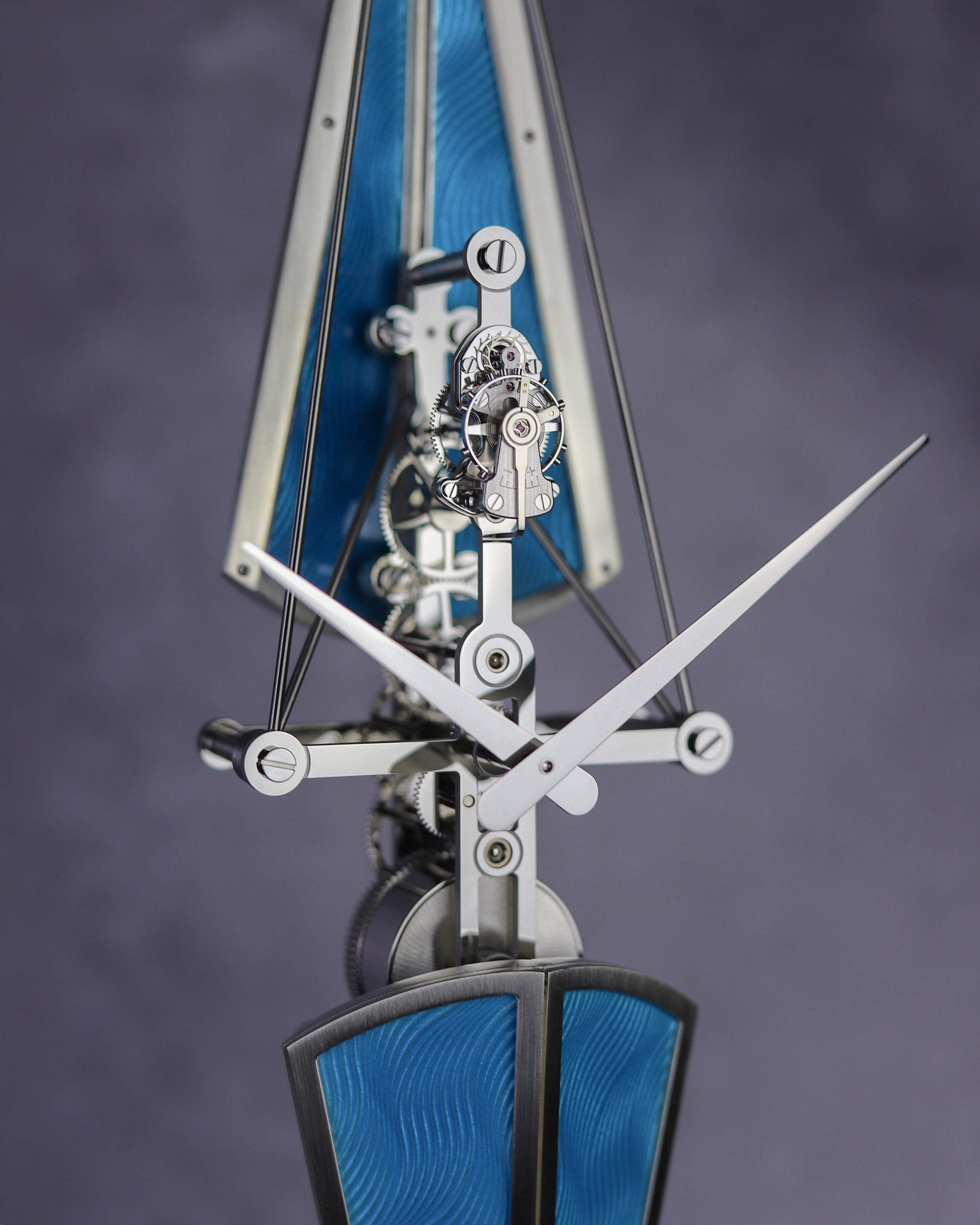
The movement reveals its entire gear train on a single vertical axis. Barrel at one end, escapement at the other, the layout reads like a posture check for rowers. Inside is the in-house caliber with 8 days of power reserve, 2.5 Hz escapement, 26 jewels, and Incabloc protection. Palladium-plated brass and polished stainless steel set a restrained palette, finished across polished, satin brushed, and sandblasted surfaces. Hours and minutes only. Enough said.
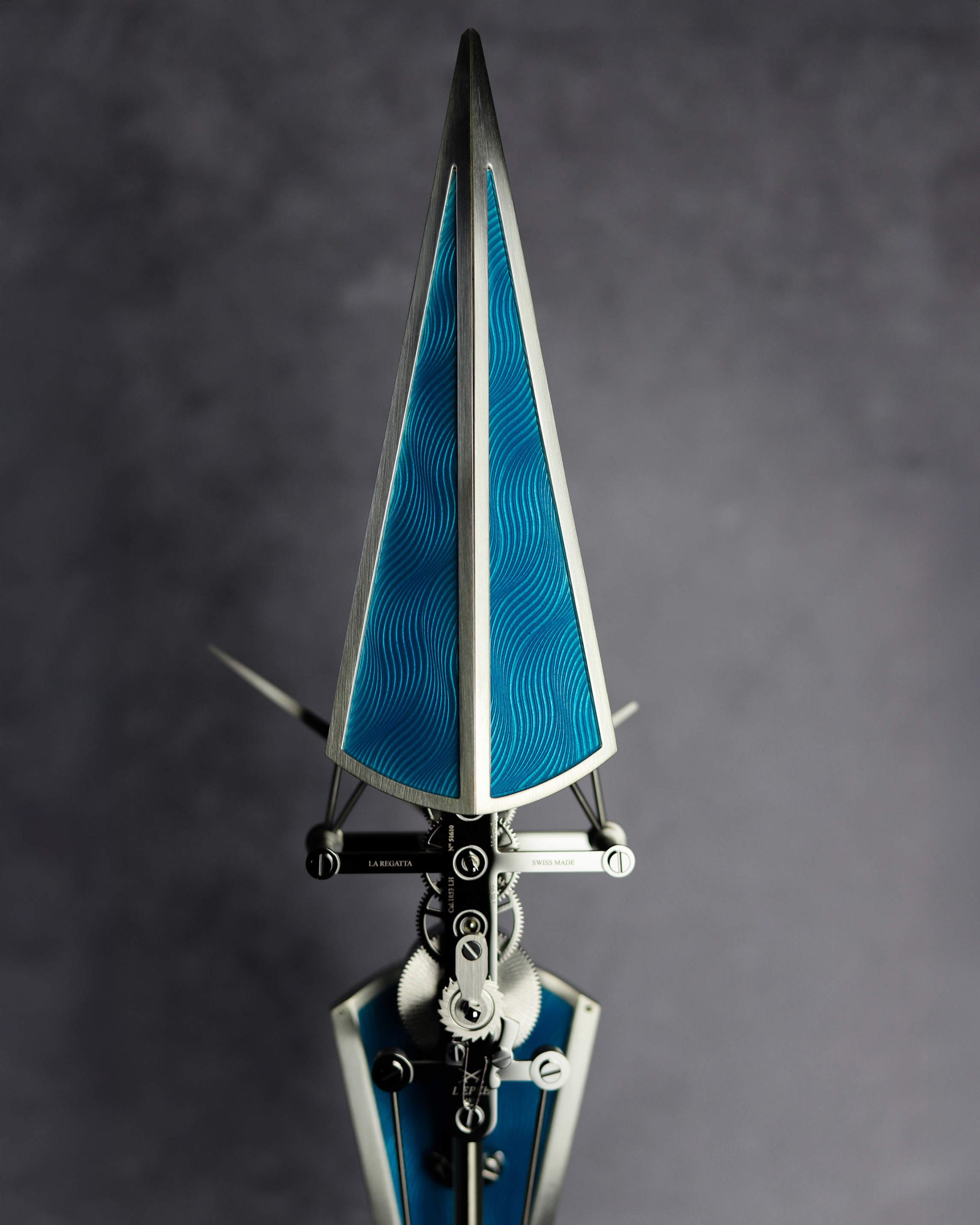
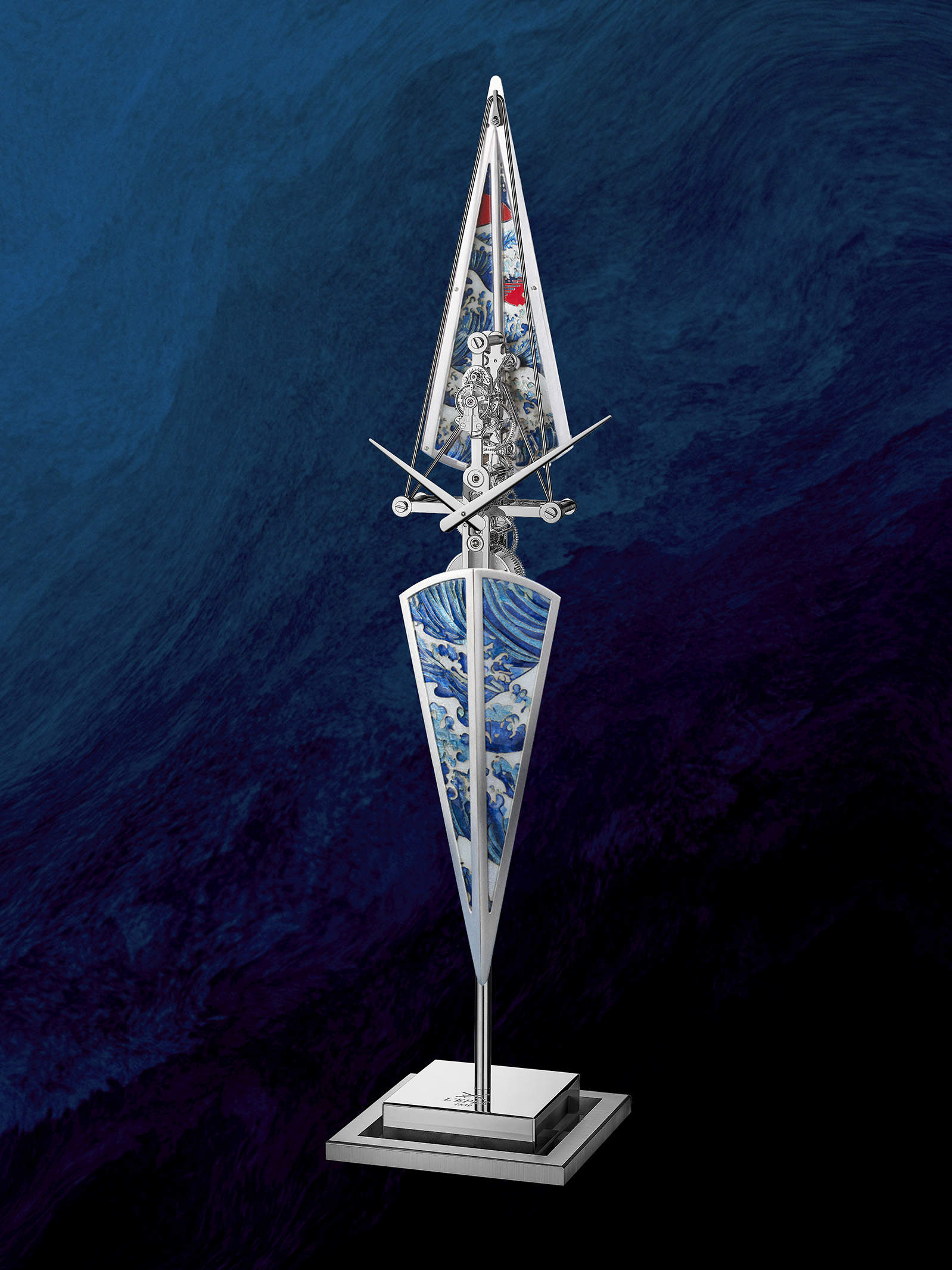
Enamel covers the hull, executed by David Kakabadze Enamel in Tbilisi. The process is deliberately slow: layers of colored vitreous enamel are built up and fired repeatedly at roughly 700 to 750 °C. Each firing deepens tone and luminosity while allowing no easy corrections. The lineage traces to Byzantine and Georgian arts of the 8th century, which suits a clock that prizes rhythm over haste.
Three interpretations sketch different waters. La Regatta Umi – Sea in Japanese – uses cloisonné with paillons. Ultra-fine gold wires draw the waves, while thin silver leaves under transparent enamel catch light like spray. The reference to Hokusai is clear, but the voice remains the clock’s own. La Regatta Blue Horizon returns to minimalism through flinqué, where guilloché lies beneath translucent blue and shifts gently with the light. La Regatta Prism turns to plique-à-jour, a lattice of enamel without backing that glows like stained glass, the geometry echoing both mechanical rigor and the sport’s discipline.
For the curious: cloisonné builds tiny cells with gold wires, each filled shade by shade, often through 12 to 15 firings. The paillons technique places extremely thin silver leaves under transparent enamel to heighten depth and cool brilliance. Flinqué layers translucent enamel over engraved patterns for optical movement. Plique-à-jour suspends enamel within a metal framework and fires it without a solid support, a test where cracking and collapse are constant risks. When it works, the light does the talking.
Specifications, kept honest: unique piece 1 of 1, customizable on demand. Dimensions 518 mm high, base 120 mm square. Materials palladium-plated brass, stainless steel, aluminium. The skiff elements use enamel on copper with gold wires and silver leaves. A calm object for a fast world, rowing time forward one measured stroke at a time.
Leave a Reply