Some watchmakers chase beauty. Others chase sales numbers. Bernhard Lederer? He’s been chasing a problem that’s frustrated horologists for literally centuries. And judging by the CIC 39mm’s selection as an LVMH Watch Prize finalist, he might have actually caught it.
The Problem Nobody Could Solve
Let’s talk about the detent escapement. If you’re not a watch nerd, here’s what you need to know: it’s incredibly efficient at keeping time, but it has one massive flaw. At low amplitudes (when the watch is winding down or sitting at odd angles), it becomes unstable. Think of it like a bicycle – great when you’re moving, wobbly when you’re barely pedaling.
The legends of watchmaking tried to fix this. Abraham-Louis Breguet took a swing at it. George Daniels gave it a shot. Both basically shrugged and moved on. The problem was just too fundamental.
Lederer, who freely admits he wasn’t born into watchmaking, decided to be the guy who doesn’t know when to quit. Good thing, too.
The Solution That Took Years (and Probably Some Aspirin)
After years of failed experiments and recalculations, Lederer realized something crucial: you can’t refine your way out of this problem. You have to completely rethink it.
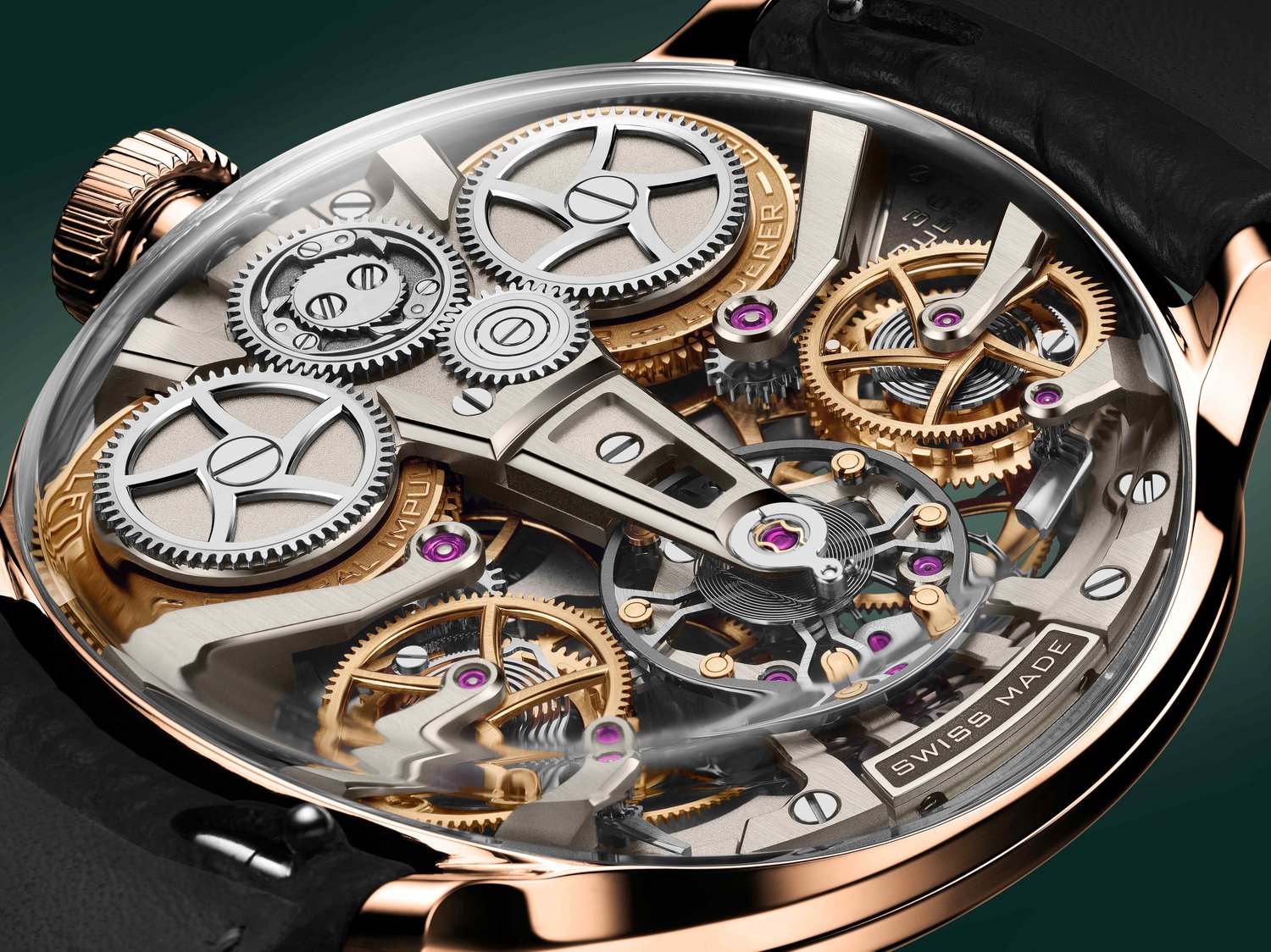
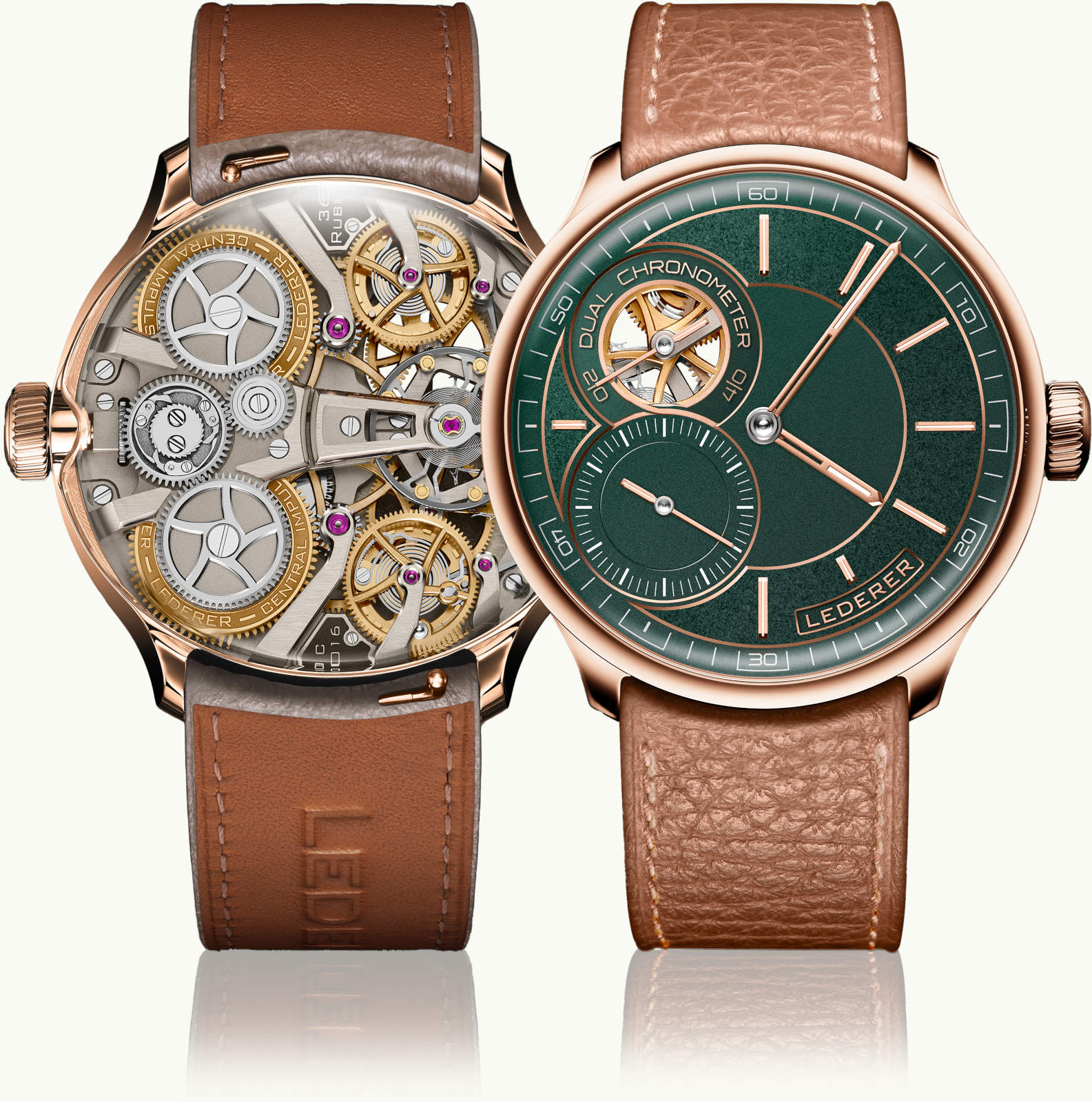
His answer? Instead of one gear train, use two. Each gets its own constant-force mechanism (a remontoir d’égalité, if you want to sound fancy at dinner parties). The two escapement wheels alternate their impulses with exact regularity. And here’s the clever bit – at the heart of it all sits a “metronome,” a small regulating organ that keeps everything coherent even when the watch is running low on juice.
It’s the kind of solution that seems obvious only after someone brilliant figures it out.
A Watch That Wants to Teach You
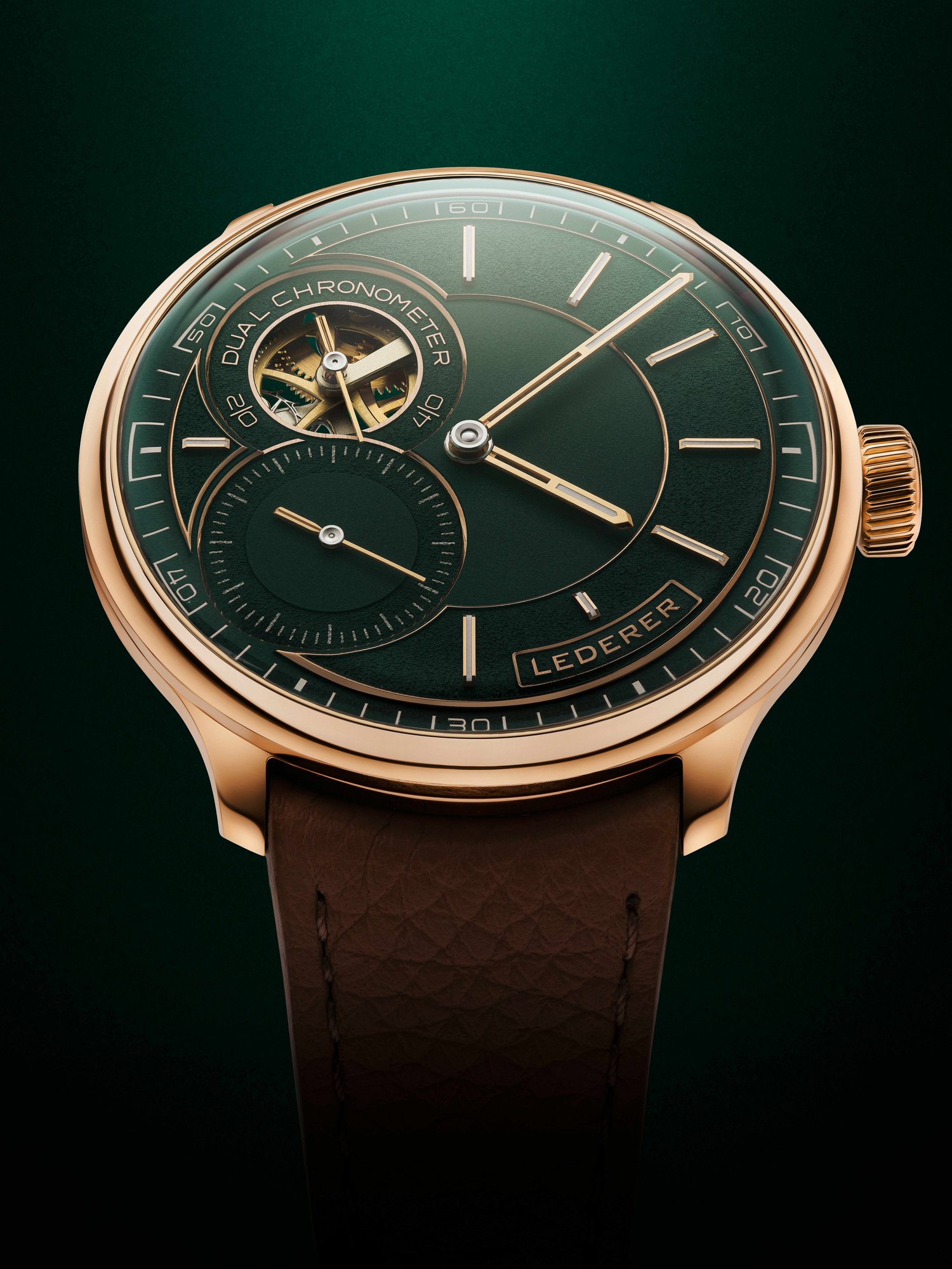
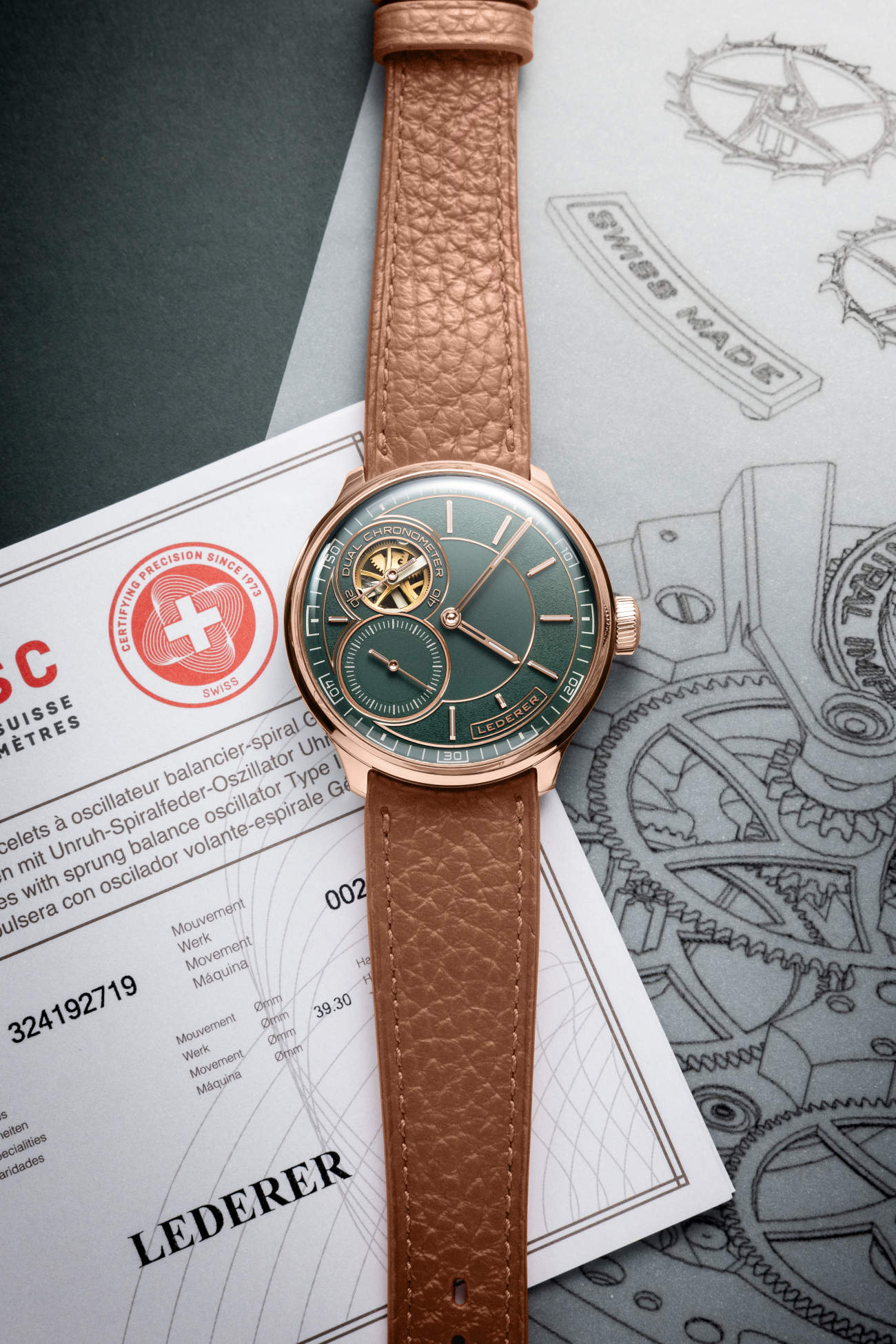
The CIC 39mm isn’t trying to hide its complexity under a pretty dial. Quite the opposite. Lederer designed it to be readable, almost like an open textbook. You can actually see how the energy flows through the movement, how the mechanisms interact. There’s even an aperture at 10 o’clock where you can watch the remontoir doing its thing.
This is intentional. Lederer believes watchmaking should be “a living knowledge,” not a secret handshake. The movement has 212 components and 36 jewels, but it’s laid out so clearly that you can actually understand what’s happening. That’s harder to achieve than it sounds.
Racing Green with a Story
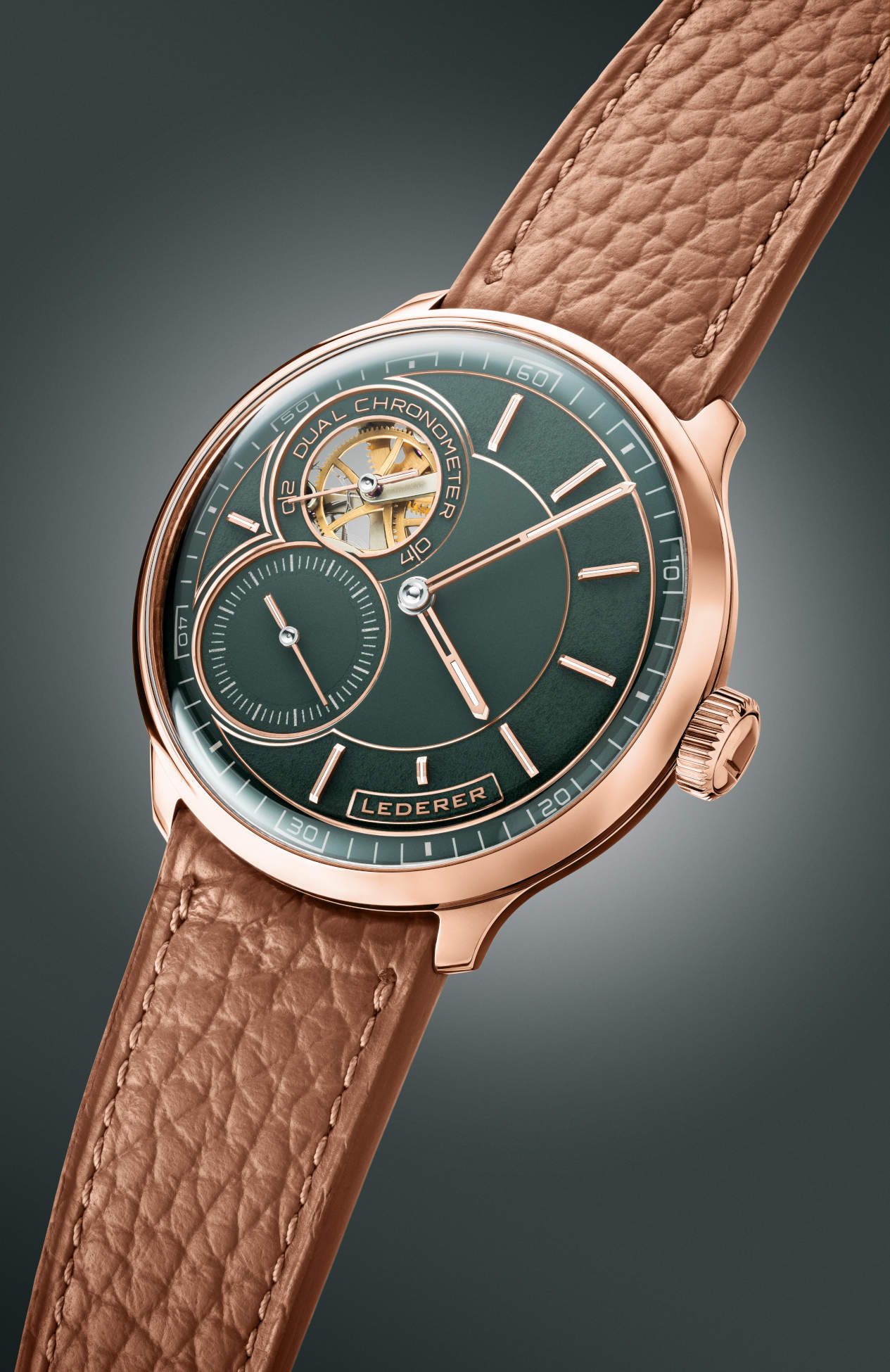
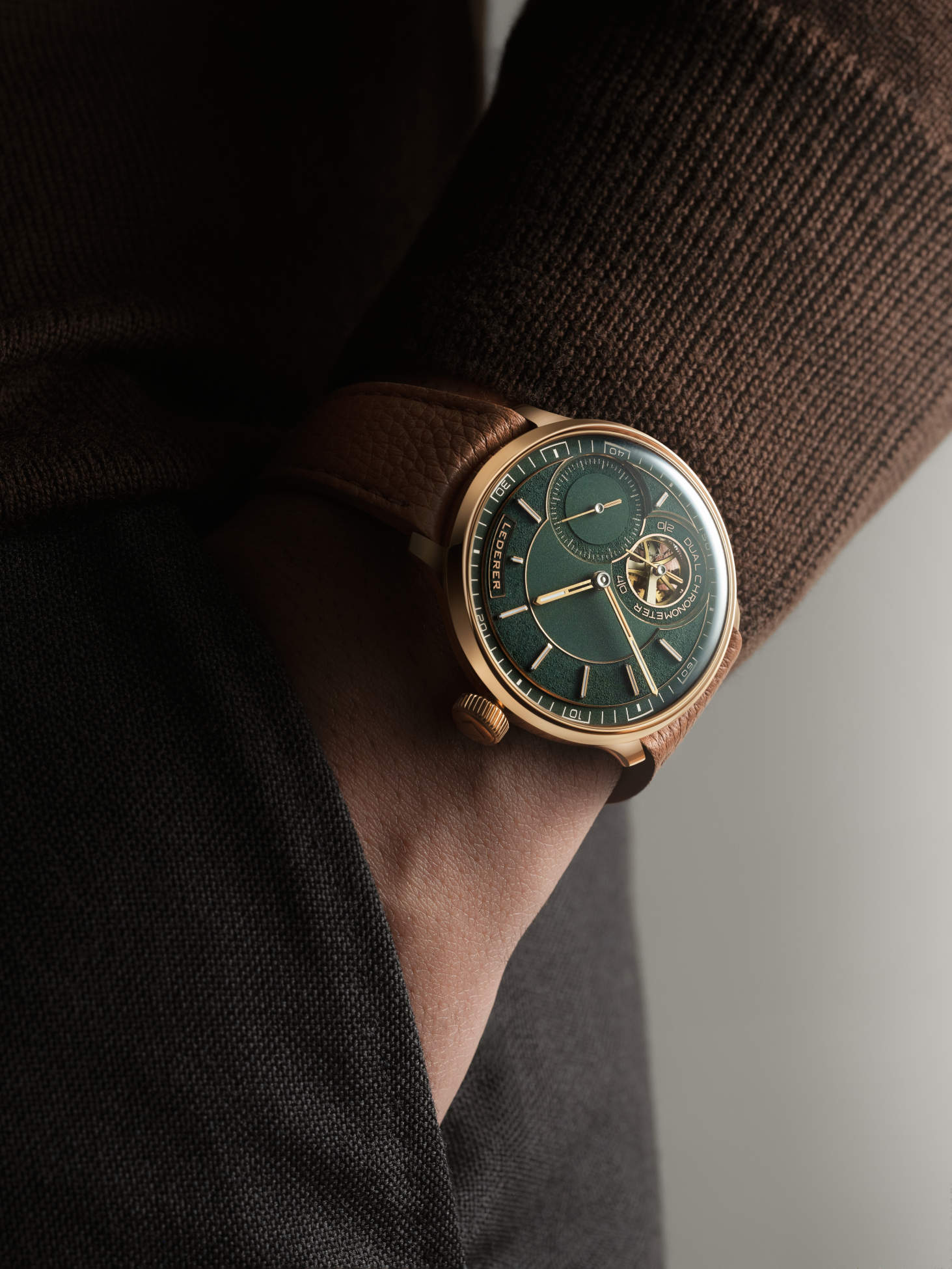
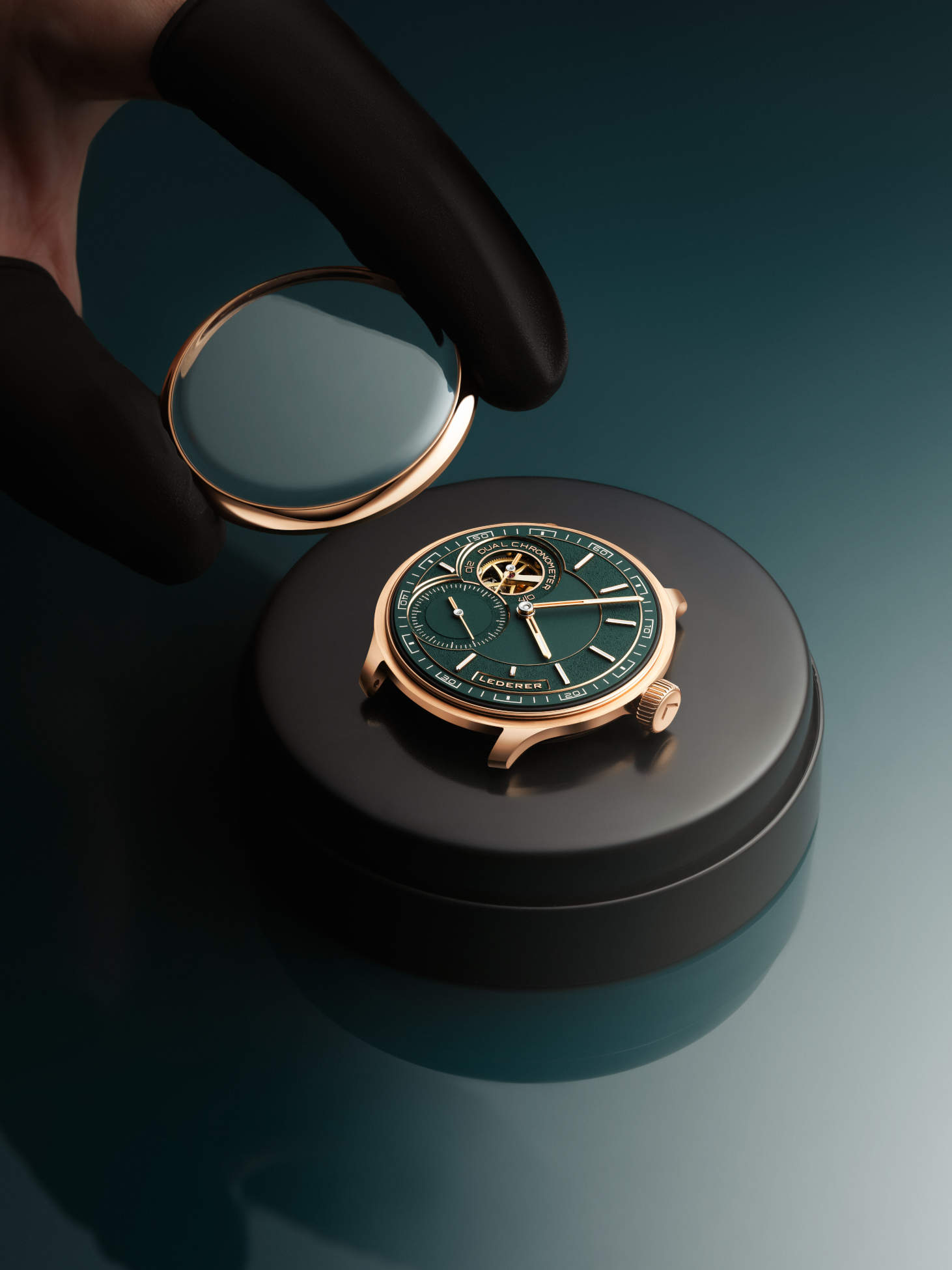
The version that caught the judges’ attention comes in racing green, inspired by Lederer’s vintage Sunbeam car. It’s a matte sandblasted finish that doesn’t throw reflections in your face, set in a 39mm rose gold case. The domed sapphire crystal gives you this immersive view into the movement below.
The whole package sits on a handcrafted calfskin strap in matching green, with a rose gold pin buckle. It’s the kind of design where every choice serves the mechanics first, and somehow that makes it more beautiful, not less.
The Philosophy Behind the Gears
What makes Lederer interesting isn’t just the technical achievement. It’s his whole approach. He thinks innovation should solve real problems, not just add complications for the sake of looking impressive. He believes aesthetics should come from the honesty of the structure, not from piling on decoration. And he’s convinced that knowledge should be shared, not hoarded.
“A mechanism must solve a real problem,” he says. “If it doesn’t, it remains an idea, not watchmaking.”
That’s refreshingly direct in an industry that sometimes mistakes complexity for sophistication.
The Bottom Line
The CIC 39mm runs at 3 Hz with a 38-hour power reserve. It’s water-resistant to 30 meters (so maybe don’t go diving with it, but a little rain won’t hurt). It’s hand-wound, which means you’ll interact with it daily – and given how interesting the movement is, that’s probably a feature, not a bug.
Is it the prettiest watch you’ll ever see? Maybe not. But it might be the most intellectually honest. In an age where “innovation” often means adding another subdial or using a trendy color, Lederer actually solved a problem that stumped the giants of horology.
Sometimes stubbornness pays off. Especially when it’s paired with genius.
Leave a Reply