Sometimes the best ideas come from the most unexpected places. For Chris Alexander, aka The Dial Artist, it was during a holiday phone call with the team at L’Epée 1839. The conversation drifted to childhood memories of building model cars, painting miniatures, and the beautiful way time leaves its mark on things. Before long, a new collaboration was born: the “Marks of Time” series.
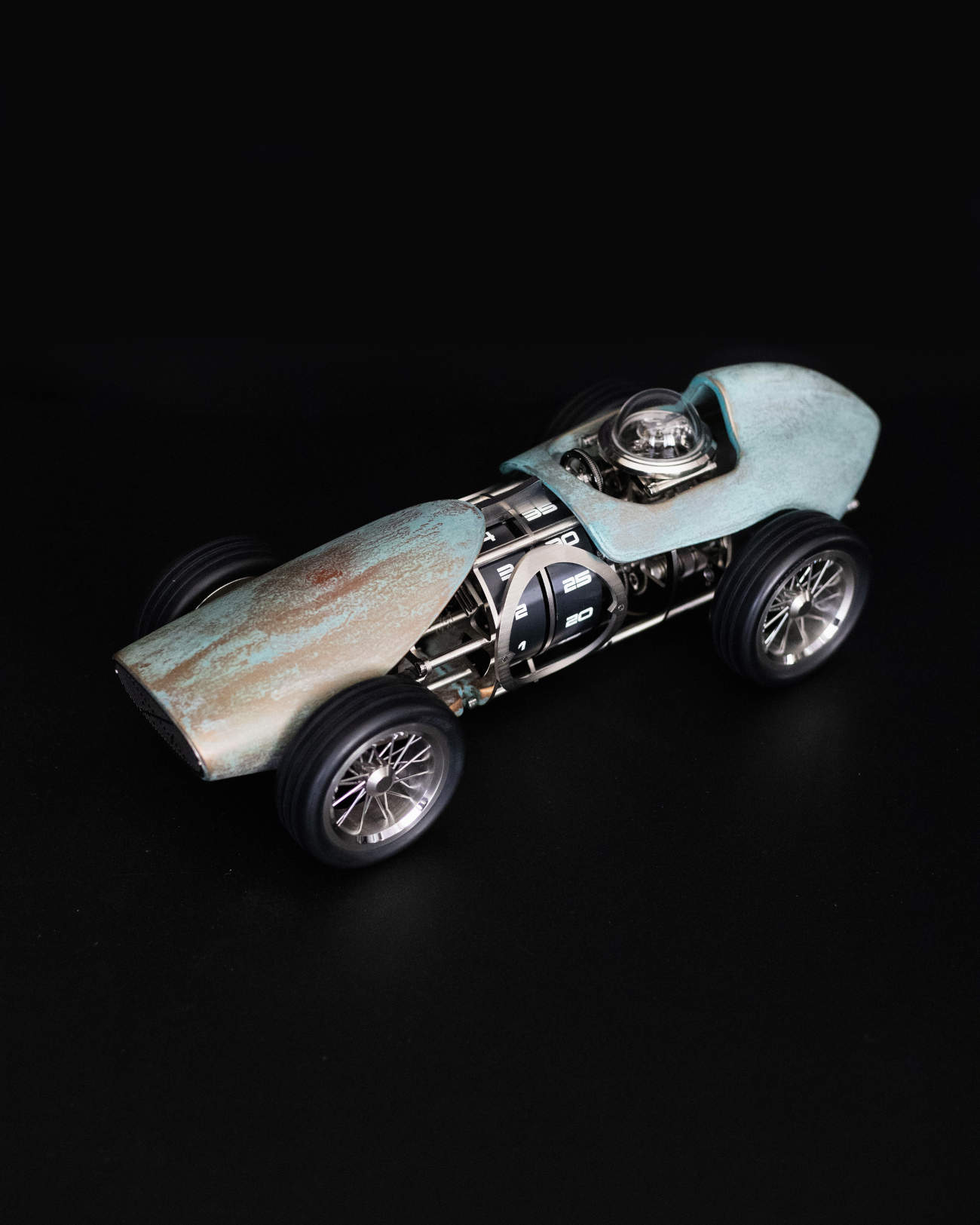
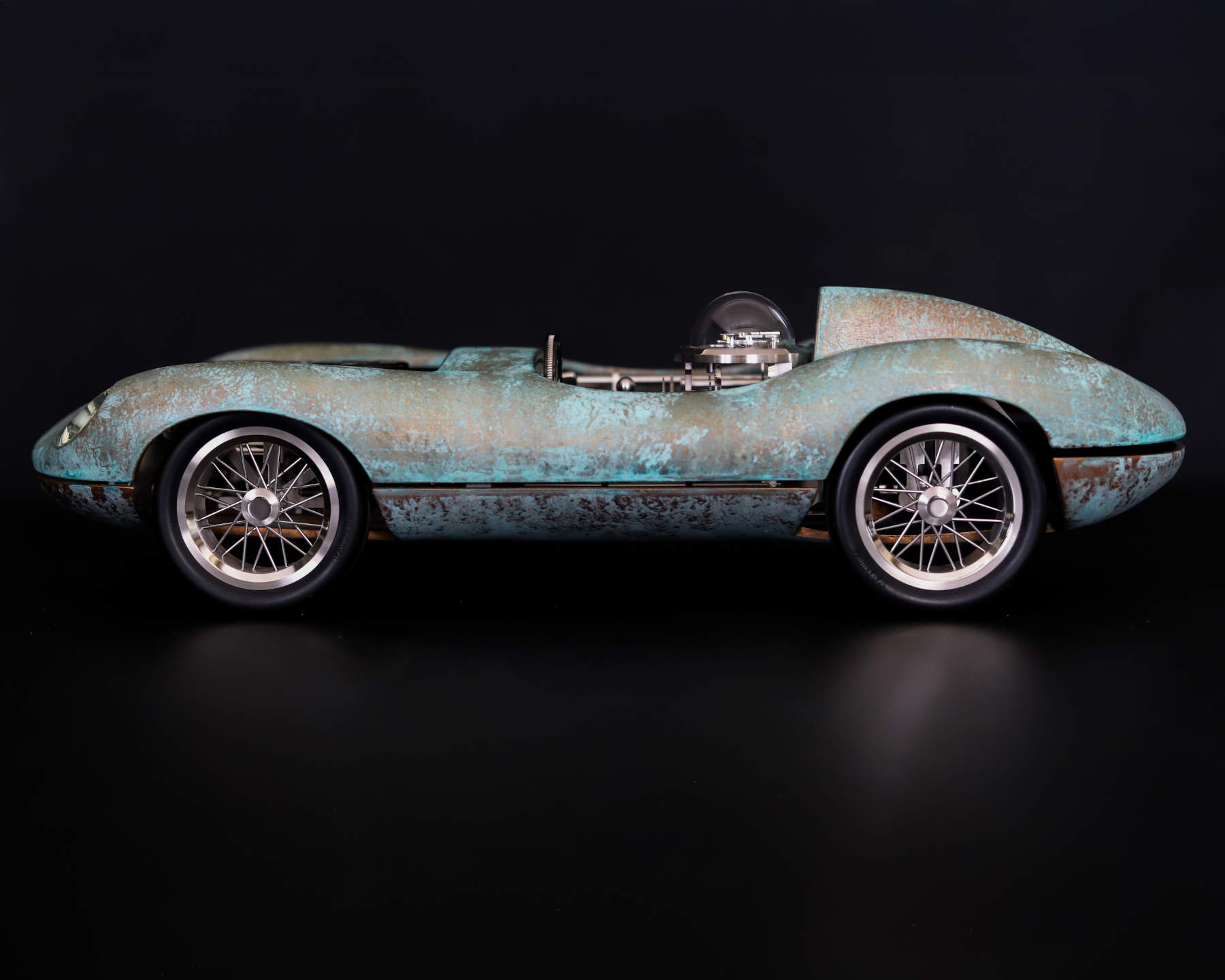
If you’re not familiar with L’Epée’s Time Fast collection, imagine a vintage Formula 1 car from the golden age of racing – say, 1930s to 1960s – but it’s actually a clock. Not just any clock, mind you, but one that works like those pull-back toy cars you had as a kid. Push it backward, and you wind the eight-day movement. Want to set the time? Turn the three-spoke steering wheel. It’s the kind of thing that makes you grin every time you look at it.
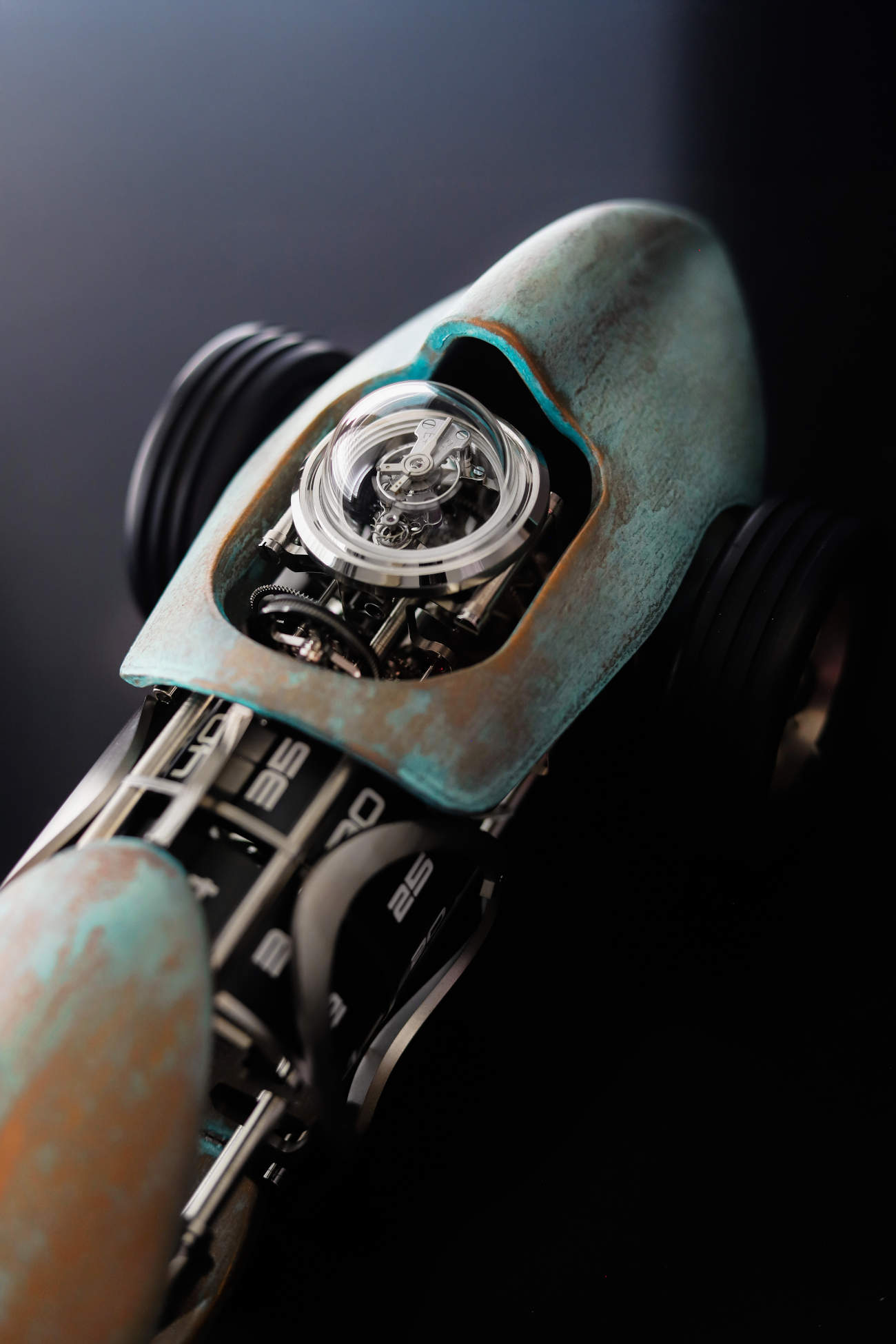
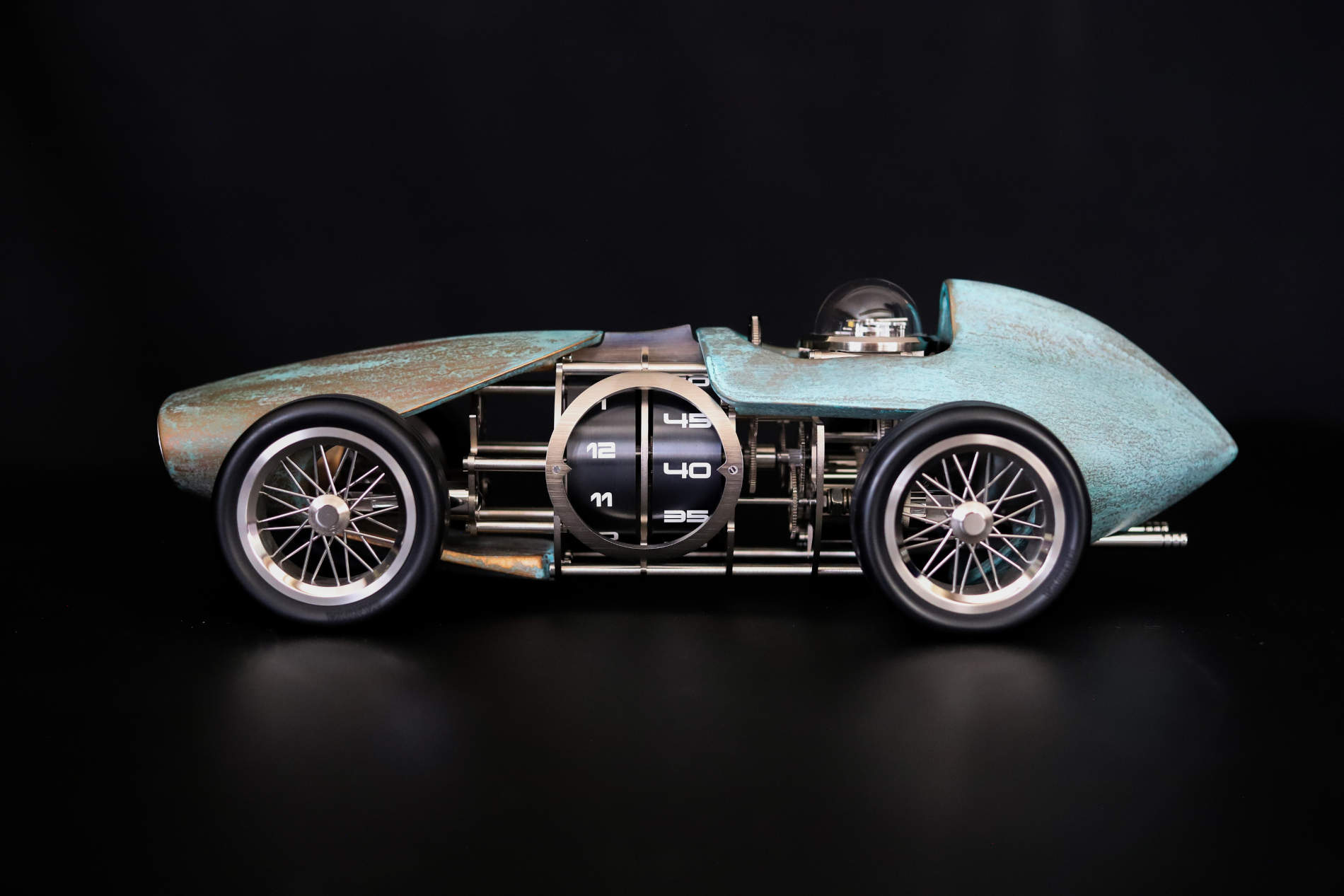
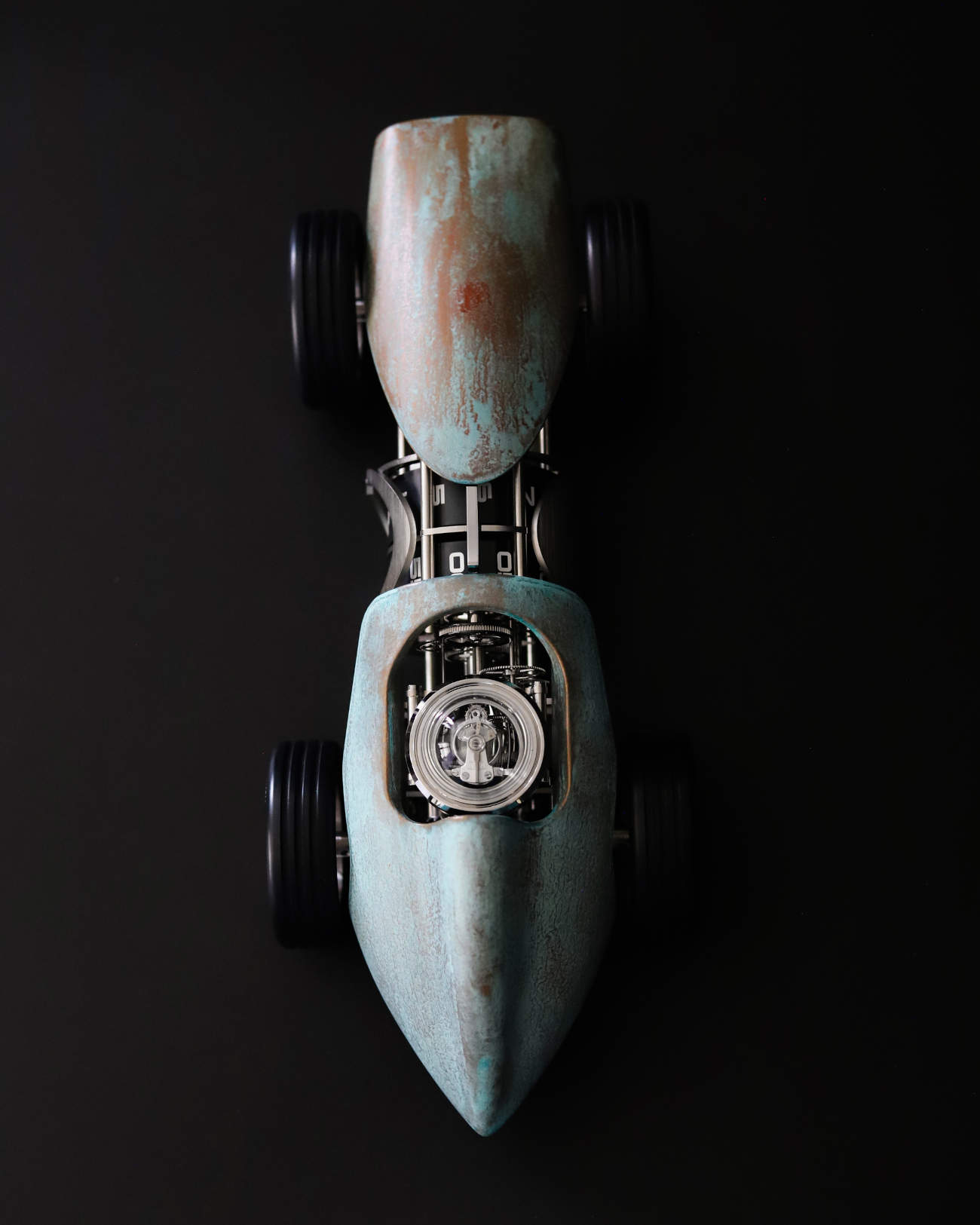
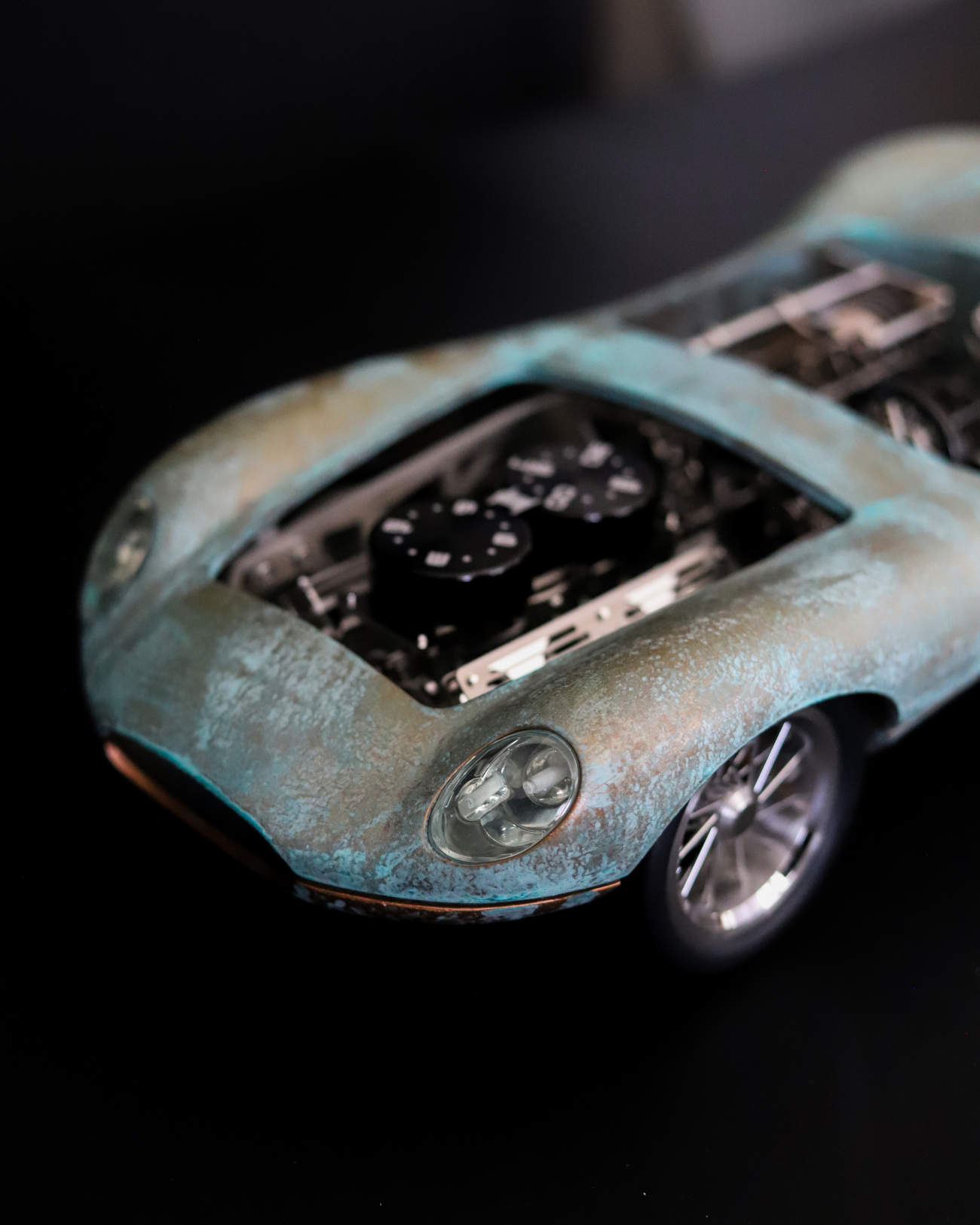
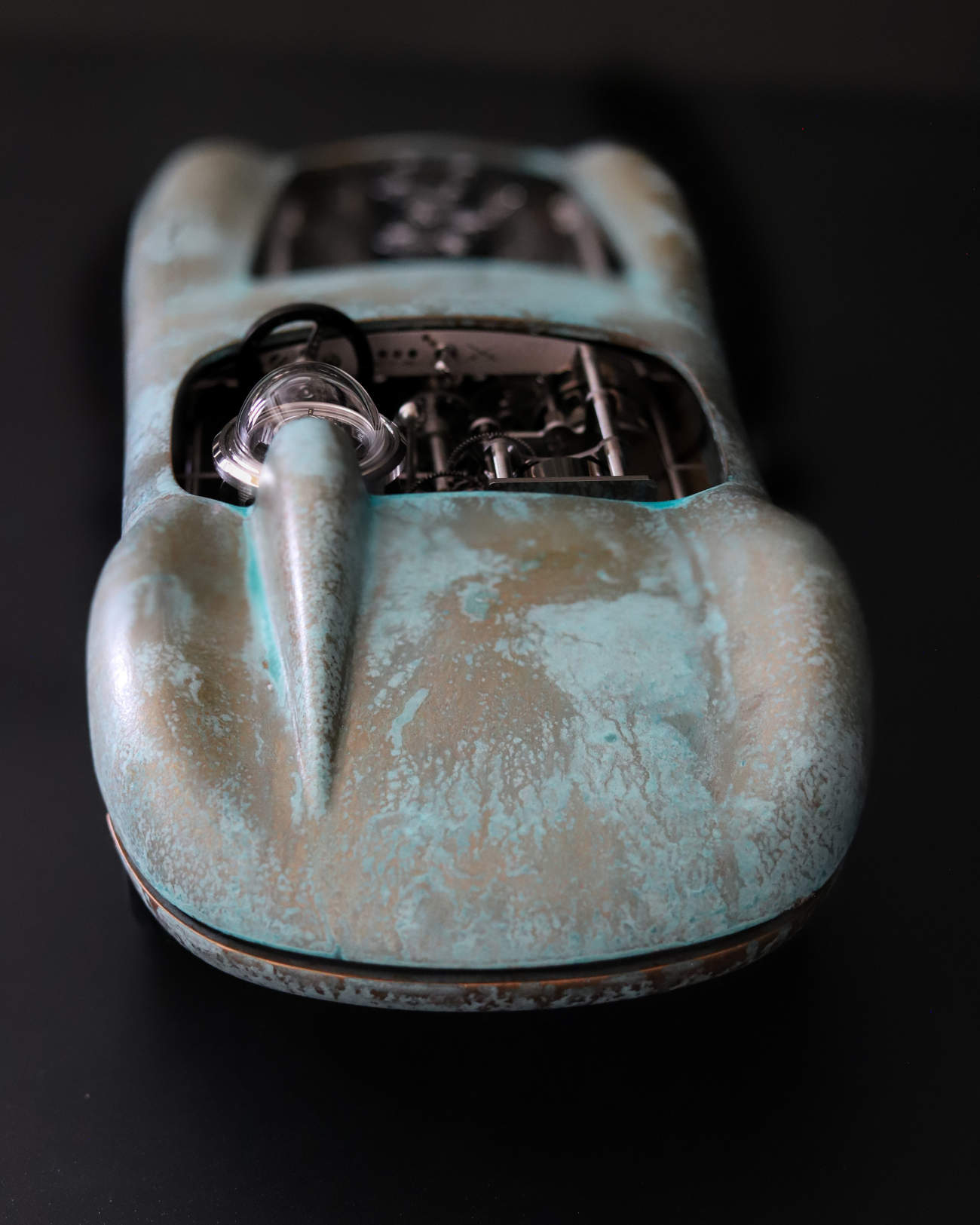
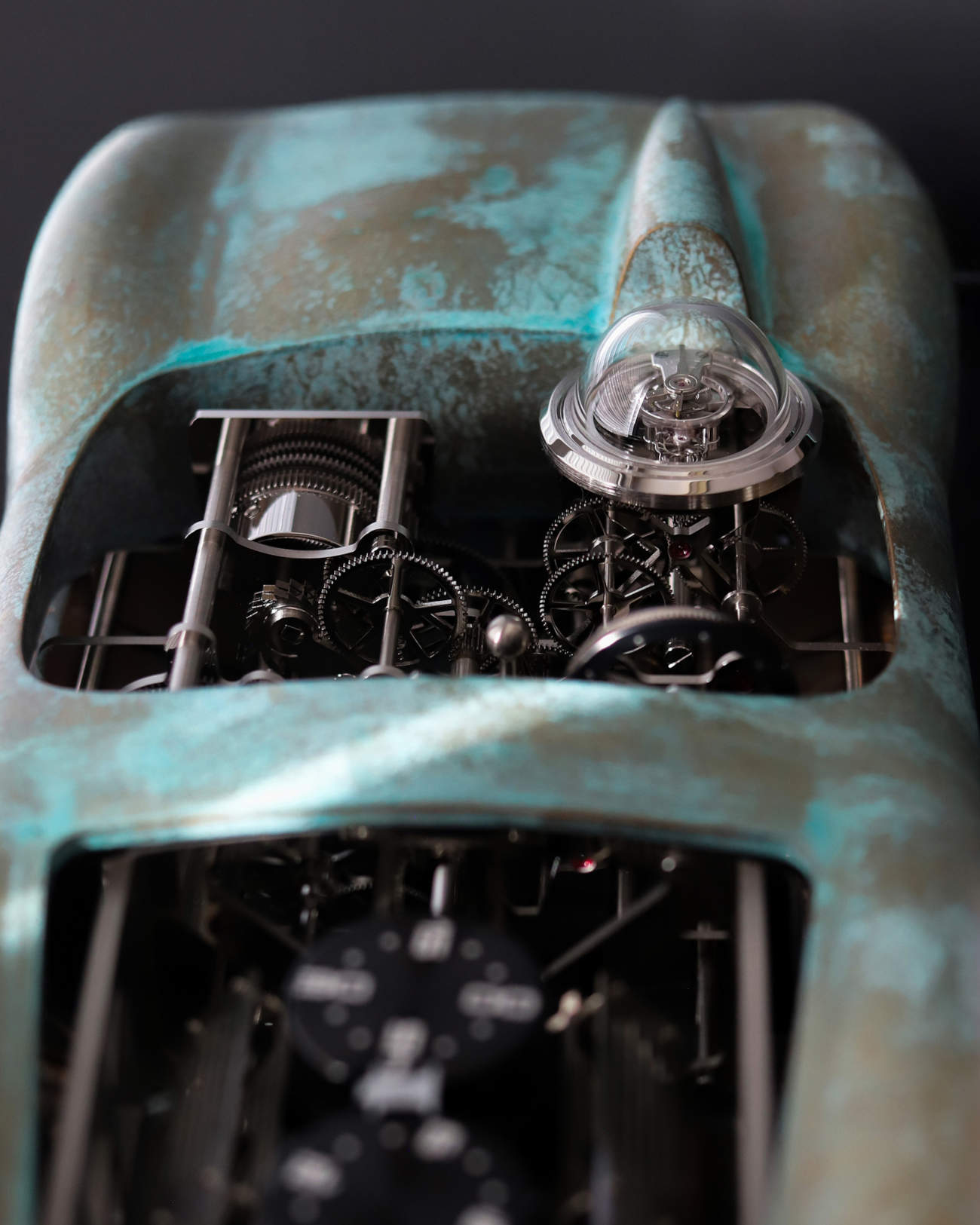
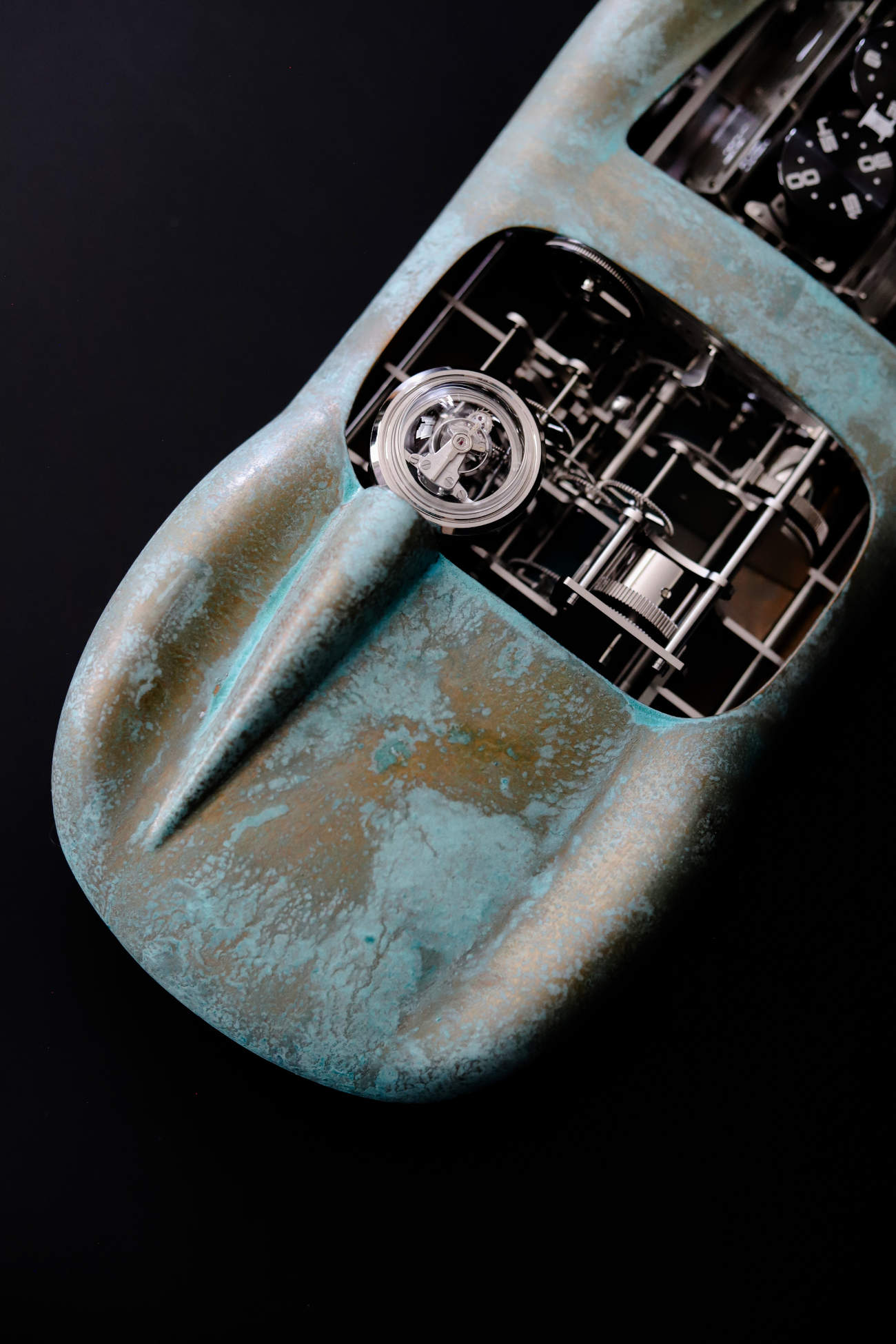
The Time Fast D8, the first model in the collection, became an instant hit. Its clean lines and understated elegance captured the spirit of vintage racing perfectly. The time displays on rotating disks positioned like a racing number on the bodywork. It sits on an aluminum H-chassis, features handcrafted stainless-steel wheels with actual rubber tires (filled with foam for that authentic squish), and even has a glass dome polished to look like a driver’s helmet protecting the escapement.
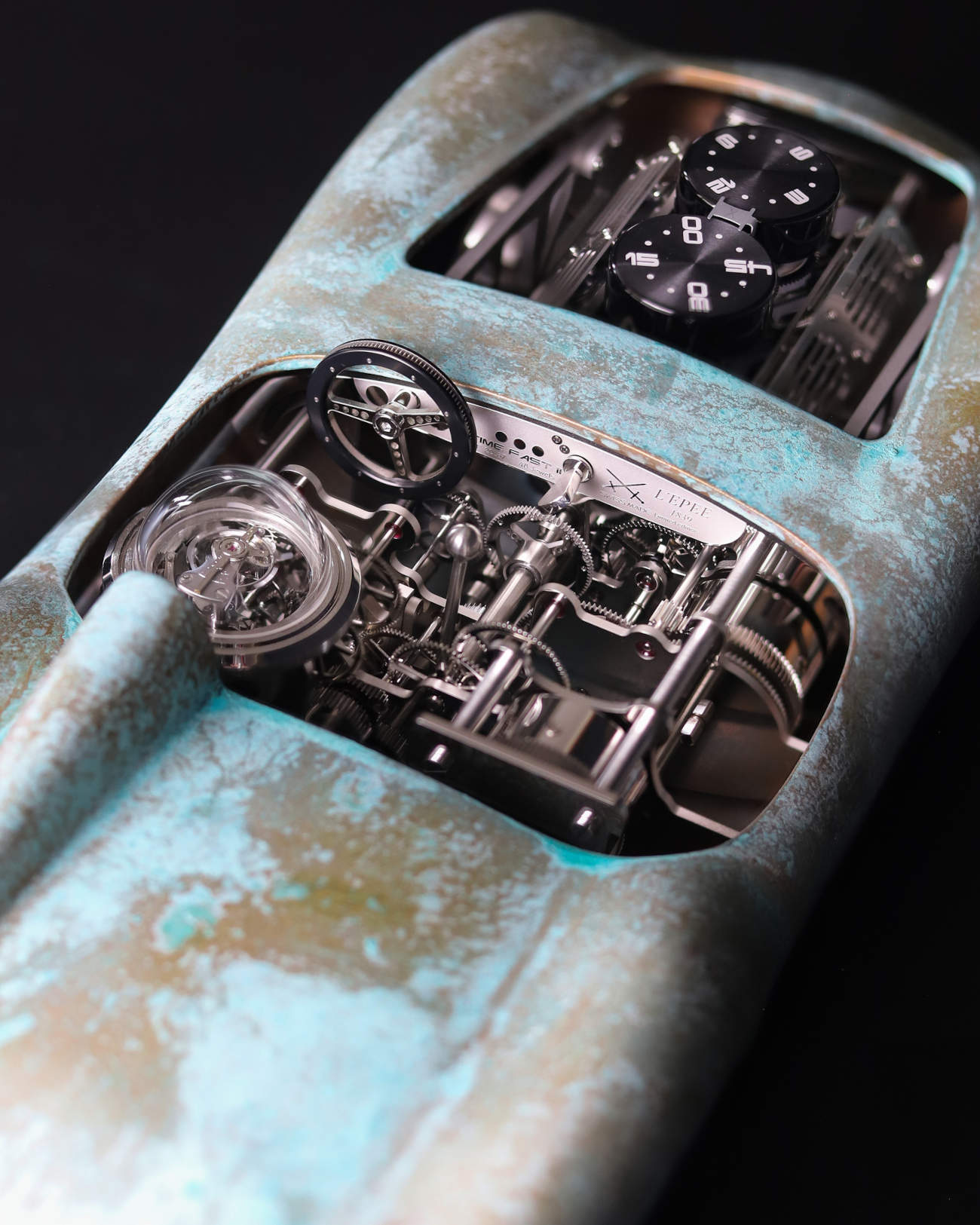
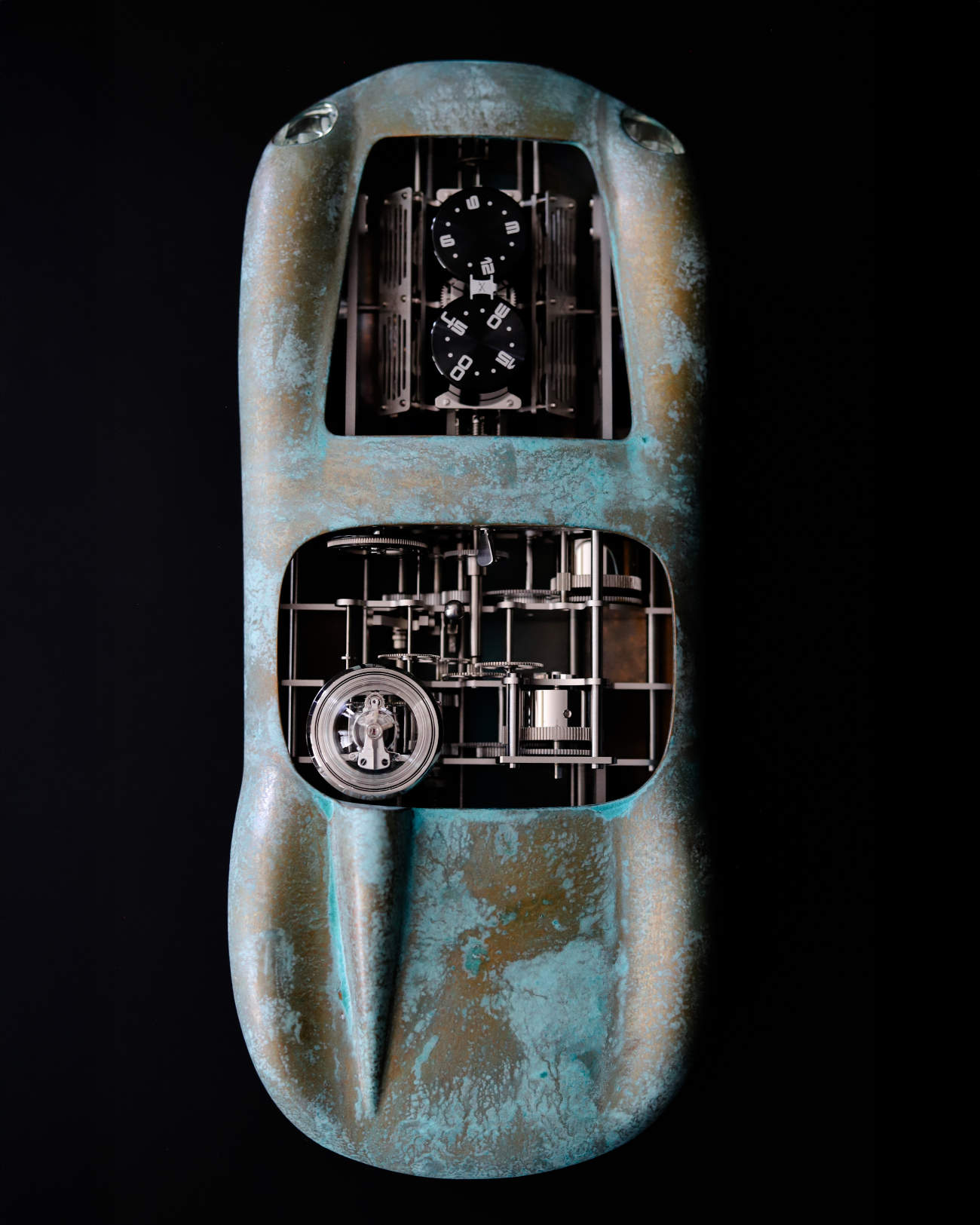
The Time Fast II takes things further with dual movements – one for telling time, another for animating a miniature V8 engine. There’s a functional gear stick to switch between modes, and when you turn the dashboard key, the pistons come alive in a mesmerizing mechanical dance. It’s part timepiece, part sculpture, part toy for grown-ups who never quite grew up.
Enter the Artist
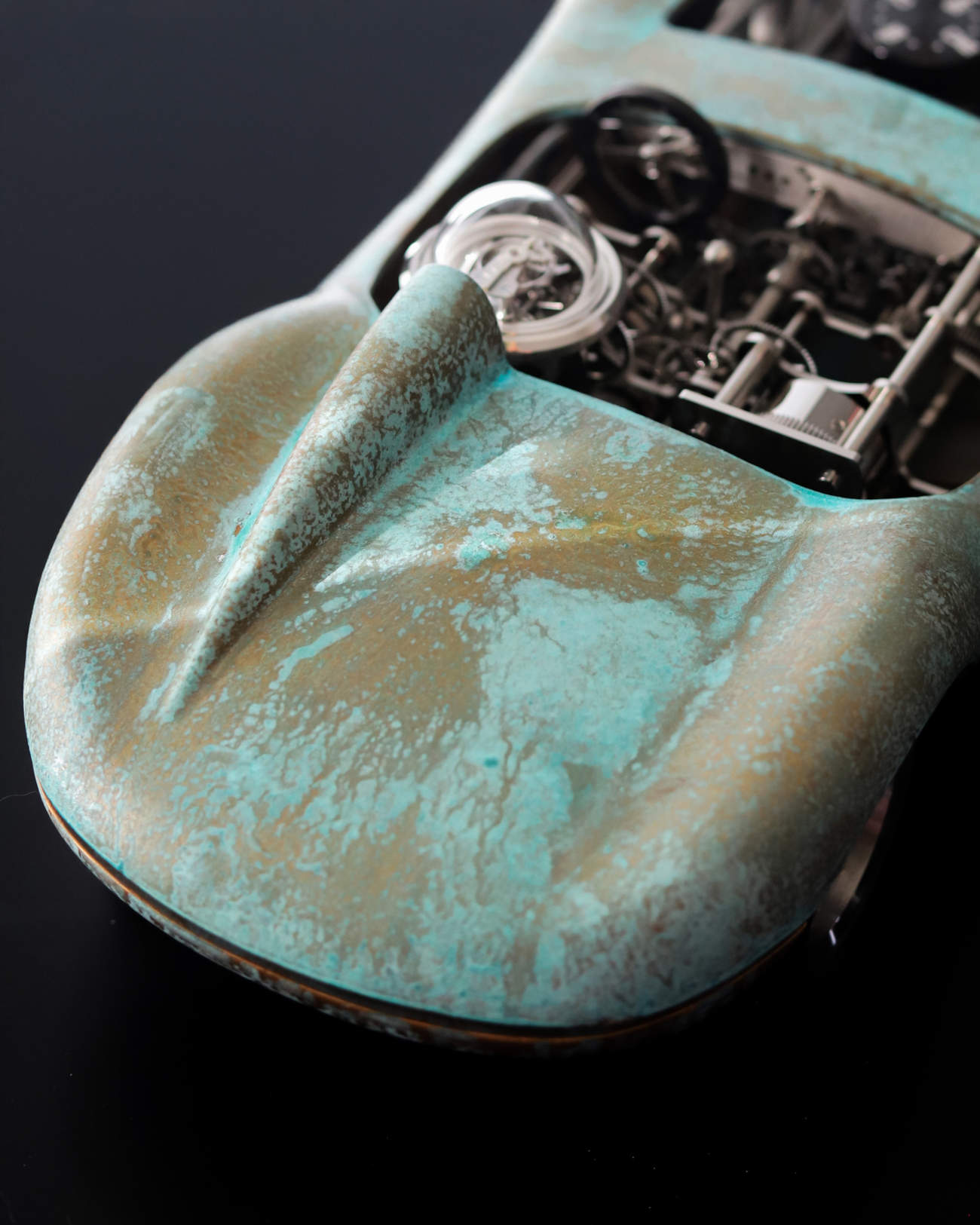
Now comes Chris Alexander‘s artistic twist. The Scottish-based artist, who cut his teeth in luxury miniature car modeling, spent years perfecting techniques for creating aged, weathered finishes. Think “barn find” automobiles – those legendary discoveries of forgotten race cars tucked away in old garages, wearing decades of patina like badges of honor.
For the Marks of Time series, Alexander developed a copper oxidation process that transforms each Time Fast into a one-of-a-kind piece. The bodywork gets coated with several layers of copper-based paint, then oxidized by hand. The result? Every single piece shows unique patterns and color variations. No two are alike, just like no two barn finds have weathered time in quite the same way.
This isn’t about making something look old for old’s sake. It’s about celebrating the poetry of time itself – how it shapes materials, creates memories, and reveals new layers of meaning. Each mark, each variation in color, tells its own story of endurance and emotion.
The Technical Side
Let’s talk mechanics for a moment. The Time Fast houses L’Epée 1839’s in-house movement, good for eight days of running. The movement follows the aerodynamic curves of the bodywork, integrating seamlessly with the design rather than fighting against it. Setting the time is intuitive: turn the steering wheel counterclockwise to set, clockwise to reposition.
Winding happens through those rear wheels. Roll the car backward, and you’re loading the mainspring barrels. On the Time Fast II, a gearbox lever lets you select which barrel gets wound – a delightful bit of mechanical theater.
The dimensions are substantial: the D8 measures 385 x 160 x 120 mm, while the Time Fast II stretches to 450 x 189 x 120 mm. These aren’t desk trinkets; they’re statement pieces.
Materials include palladium-plated brass, stainless steel, and anodized aluminum, finished with a mix of polishing, satin-finishing, and sand-blasting. Alexander’s lacquered bodywork sits atop this precision engineering like a custom paint job on a restored racer.
Why It Works
The beauty of the Marks of Time series lies in its contradictions. It’s precise yet weathered, modern yet nostalgic, mechanical yet artistic. It celebrates both the technical perfection of Swiss clockmaking and the organic randomness of natural oxidation processes.
Alexander describes his work as a collaboration between client, artist, and watch (or in this case, clock). Each Marks of Time piece becomes a unique creation – a frozen moment where racing history, horological craft, and contemporary art meet on your shelf.
It’s the kind of object that rewards closer inspection, revealing new details each time you look. And isn’t that exactly what time does?
Leave a Reply