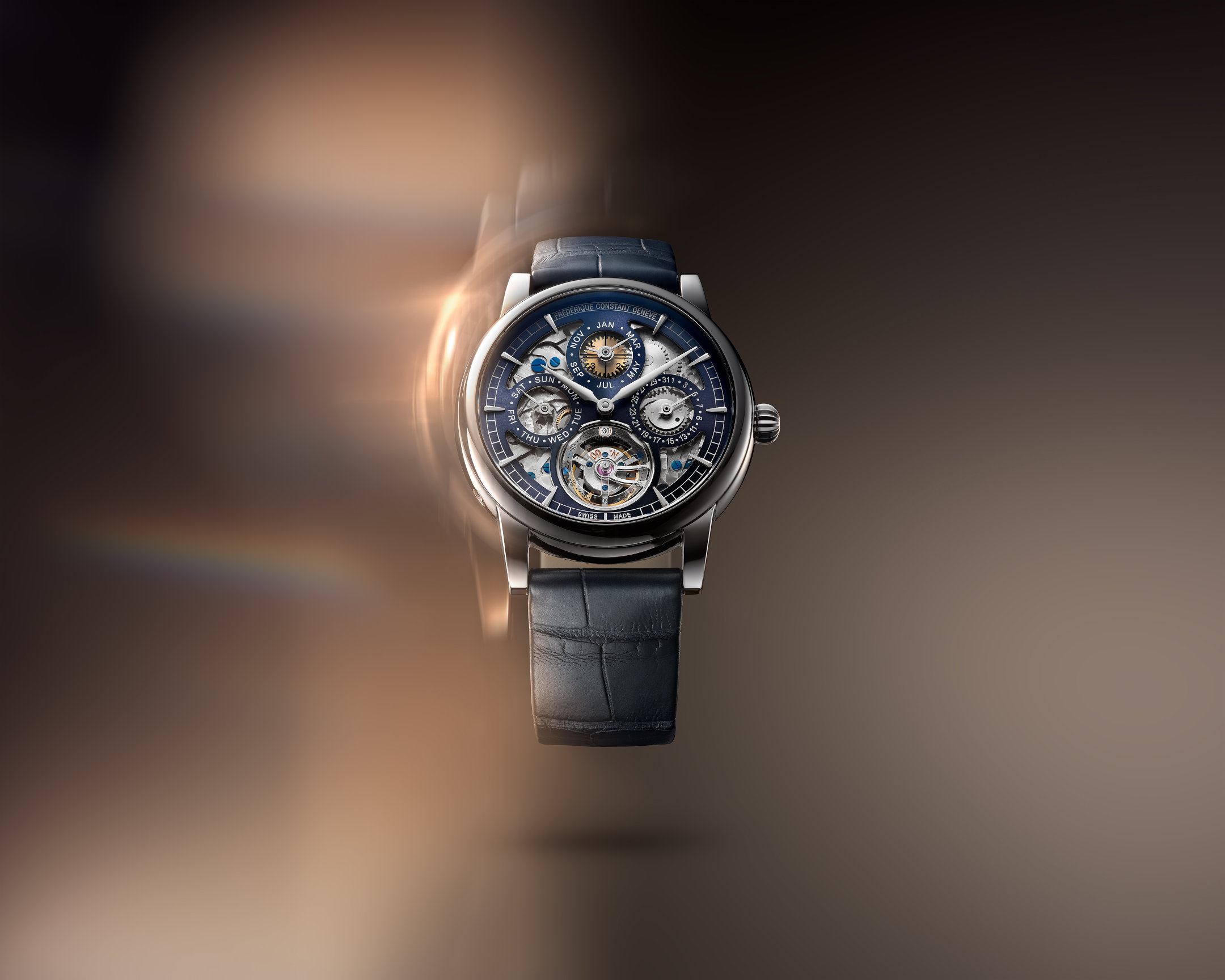
Frederique Constant unveils a Classic Tourbillon Perpetual Calendar Manufacture limited to 88 numbered pieces, its perpetual calendar and tourbillon staged beneath a dial built from seven sections of sapphire. It is a calm kind of spectacle – transparency serving function, not fireworks.
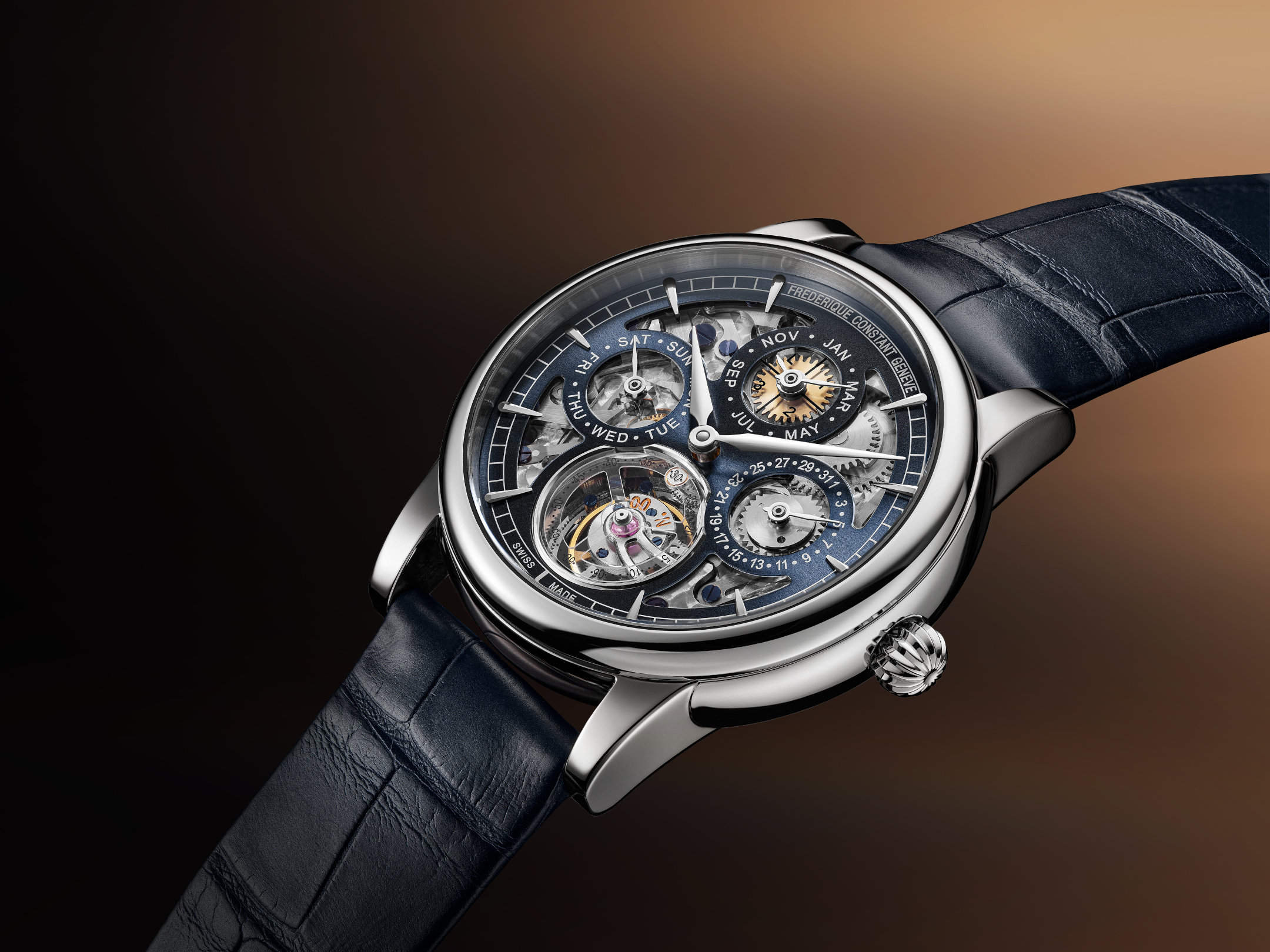
Rather than the usual multilayered openworked plate over a single sapphire disc, the brand uses sapphire marquetry: three circular panes for the calendar subdials at 9, 12, and 3 o’clock, framed by four crescent pieces. The result is a thinner construction by tenths of a millimeter and a livelier play of reflections that shifts with angle and depth.
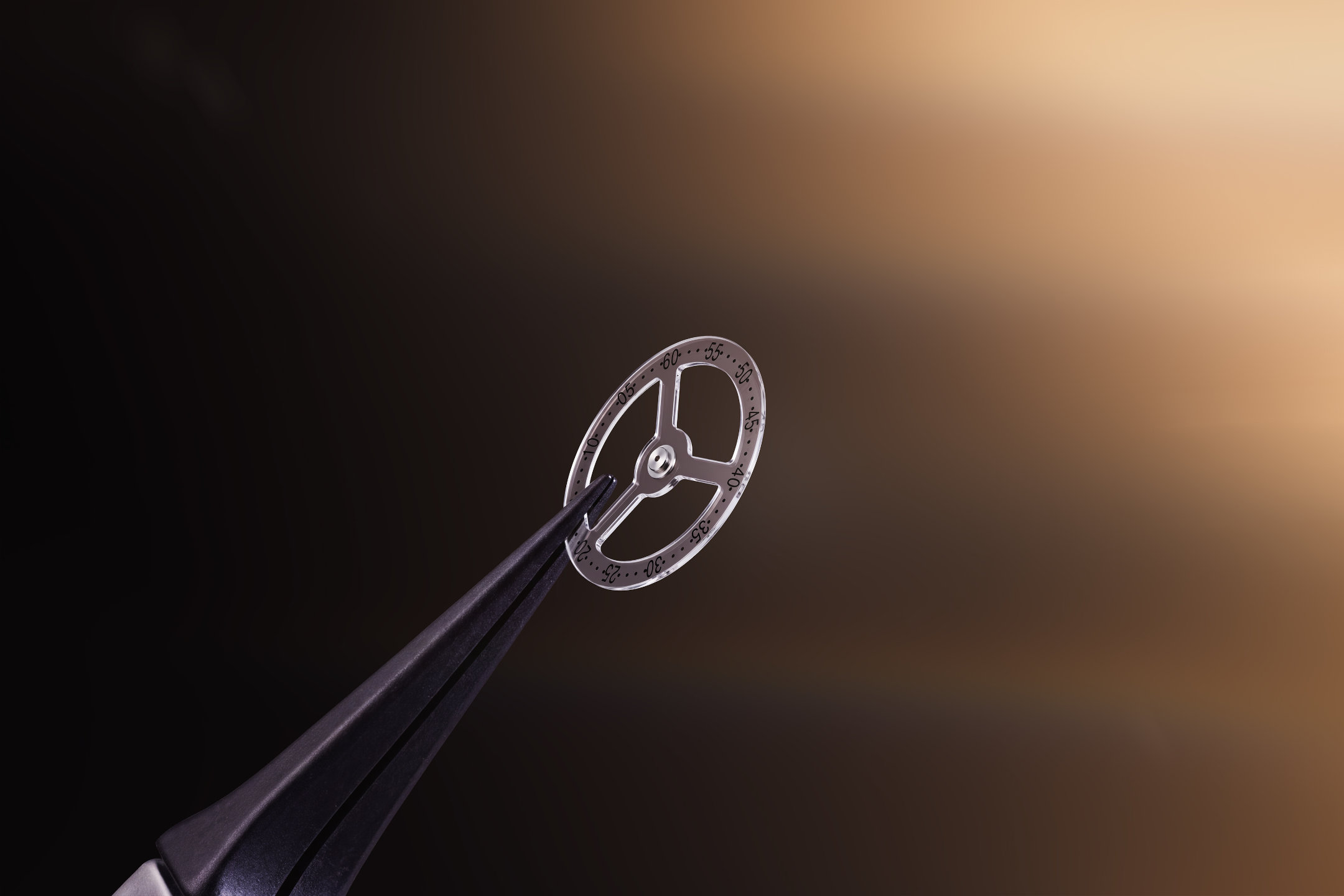
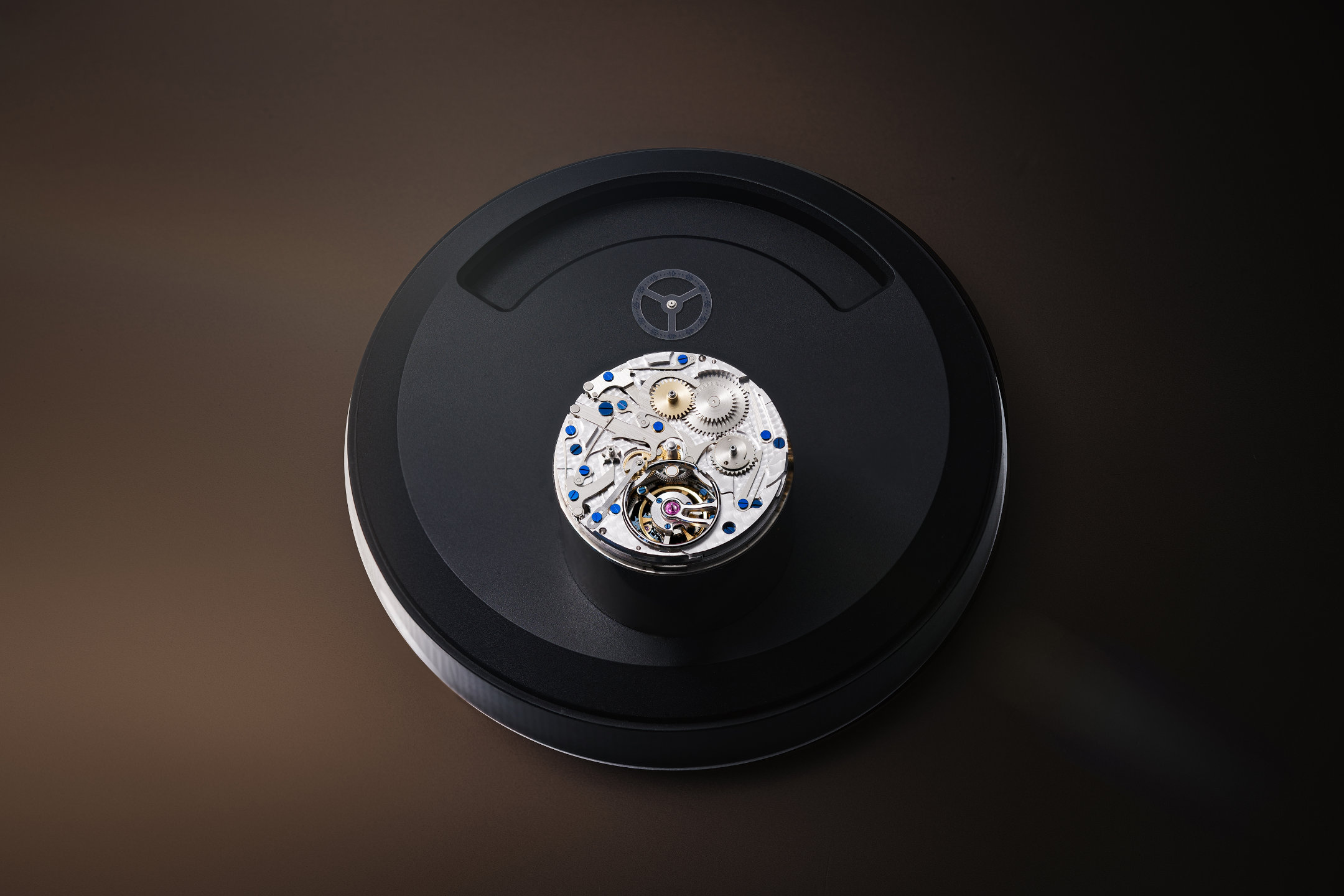
At 6 o’clock, the tourbillon carries a new “discreet seconds” idea. A transparent quartz disc, thinner than a human hair, is fixed to the cage and turns once per minute. The seconds scale itself rotates, passing before a fixed aperture at 12 o’clock, read at the tip of the tourbillon bridge’s vertical arm. It is neat, legible, and avoids cluttering the dial.
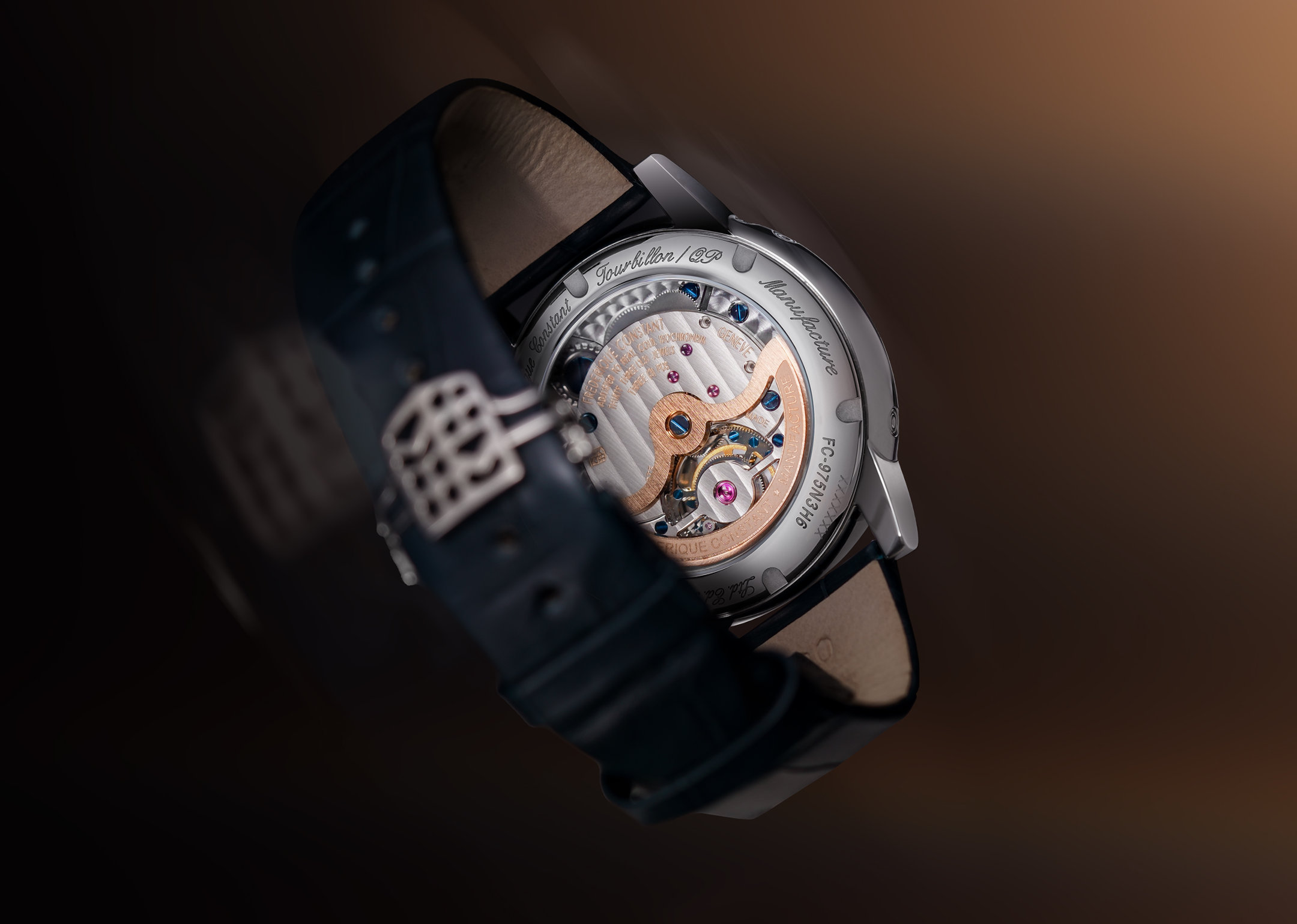
The in-house automatic FC-975 anchors the piece with a tourbillon and perpetual calendar offering a 38-hour power reserve. Indications are by hands: day at 9, date at 3, month at 12, with the month hand also pointing to the leap year cycle marked 1 to 3 and “L” for the fourth year.
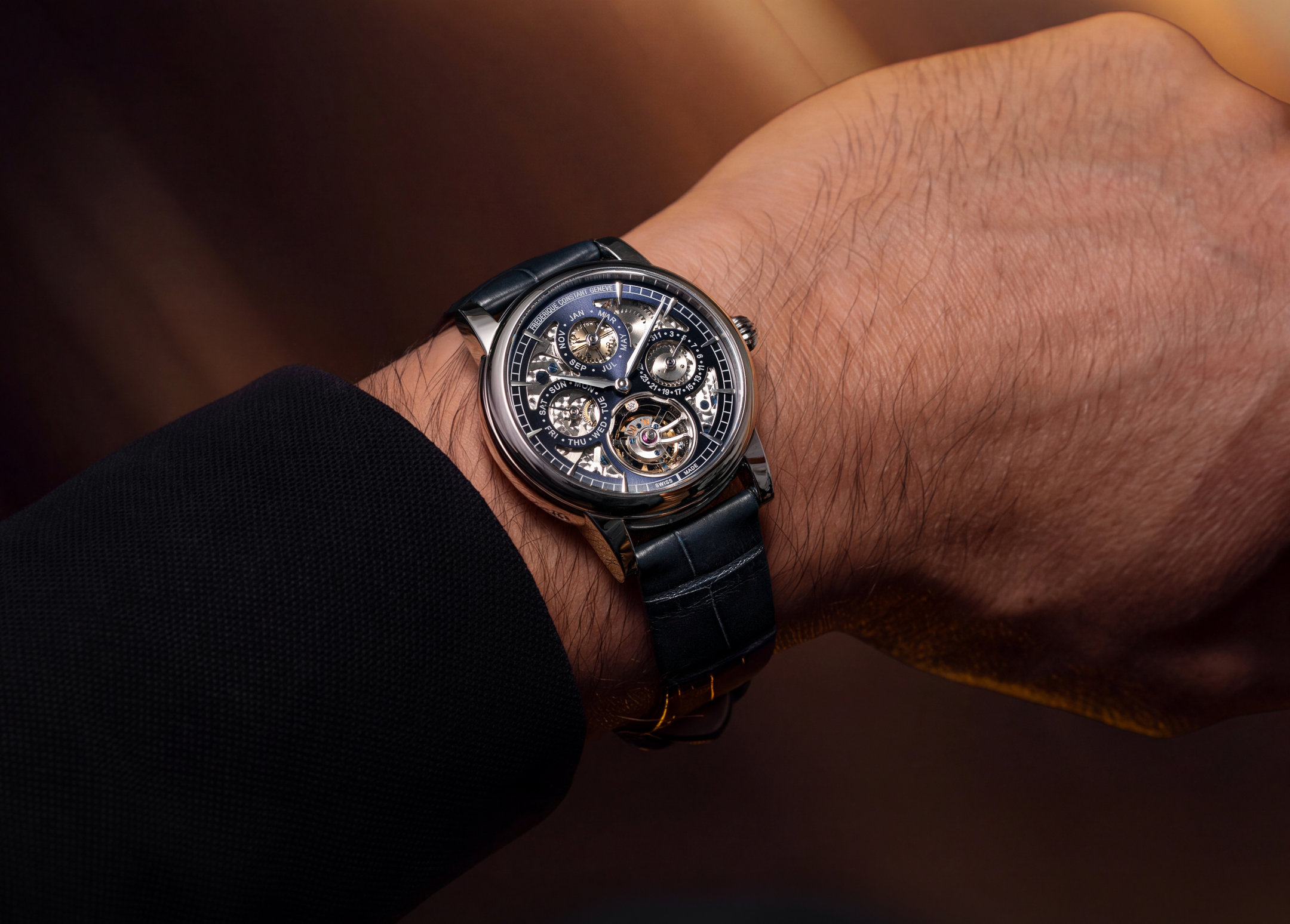
Finishing is shown without shyness on both sides: perlage on the mainplate, vertical C’otes de Gen’eve on the winding works, and a rotor with rose gold galvanic finish. Each watch is individually numbered on the tourbillon cage and the stainless steel caseback. The case measures 40 mm.
The slate-blue dial color and matching padded, seamless alligator strap keep the tone restrained. The architecture does the talking. Opening the dial with seven sapphire islands preserves the crucial calendar legibility while genuinely reducing visual mass.
It is a thoughtful evolution for the manufacture: classic complications, revealed with precision and a little wit, rather than noise.
Leave a Reply